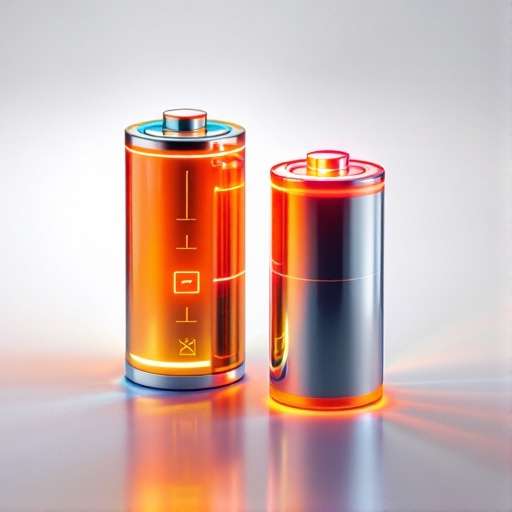
Recent advancements in battery technology have unveiled a groundbreaking potential in hard carbon anodes, particularly for sodium-ion batteries (SIBs). Researchers from Japan have demonstrated that these innovative anodes can charge faster than their lithium-ion counterparts, challenging longstanding perceptions in the battery research community.
Understanding Hard Carbon Anodes
Hard carbon anodes are unique materials derived from biomass or synthetic precursors through pyrolysis processes. Unlike traditional graphite, hard carbon features an irregular structure with expanded interlayer spacing (0.37-0.4 nm), enabling effective sodium ion intercalation and adsorption. This configuration allows hard carbon to achieve a reversible capacity of approximately 250-350 mAh/g, positioning it as a promising alternative for SIBs, especially given the low cost and abundance of sodium compared to lithium. The charge-discharge profiles of hard carbon exhibit distinct sloping and plateau regions, where the plateau effectively contributes to high capacity at lower potentials.
The Superiority of Sodium-Ion Batteries
Sodium-ion batteries offer a sustainable alternative to lithium-ion batteries, particularly in applications such as grid storage and electric vehicles (EVs). The intrinsic properties of sodium, including its larger ionic radius, facilitate faster charge kinetics within the unique microstructure of hard carbon. This advancement could significantly enhance the fast-charging capabilities of SIBs, allowing them to match or even exceed the performance of conventional lithium-ion batteries. As noted in recent studies, these improvements come at a crucial time when lithium supply chains face increasing pressures.
Innovative Production Techniques
The production of hard carbon anodes involves several advanced methods, including pyrolysis at high temperatures (1000-1500°C) and innovative techniques like waste material sintering and doping. These methods optimize the anode’s pore structure and initial Coulombic efficiency, achieving rates up to 80-90%. For instance, the two-step carbonization process can create closed pores conducive to low-voltage capacity, while pre-treatments are used to enhance open pore structures that improve rate performance.
Overcoming Challenges in Performance
Despite their advantages, hard carbon anodes face challenges such as low initial Coulombic efficiency and sluggish sodium ion diffusion. Researchers are actively working on optimization strategies, which include:
- Expanding interlayer spacing for better sodium ion transport
- Engineering hierarchical pore structures to enhance fast ion mobility
- Matching electrolytes—such as using ether-based solutions—to improve overall performance
These strategies have shown promise, achieving capacities exceeding 300 mAh/g and maintaining 90% efficiency over 700 cycles.
Commercial Viability and Future Prospects
The commercial potential of hard carbon anodes is becoming increasingly evident, with recent breakthroughs in energy density (up to 129 Wh/kg) and high retention rates. Collaborations, such as between Faradion and Phillips 66, aim to scale production, positioning SIBs for widespread use in EVs and renewable energy applications. This shift could disrupt the current dominance of lithium-ion batteries, particularly amid growing concerns over lithium shortages.
Conclusion: A Step Towards Sustainable Energy Storage
The findings on hard carbon anodes signal a pivotal shift in battery technology, highlighting the feasibility of fast-charging sodium-ion batteries as a viable alternative to lithium-ion systems. As research progresses and production methods become more refined, hard carbon anodes may play a crucial role in advancing energy storage solutions that are both economically sustainable and environmentally friendly. For battery enthusiasts and industry stakeholders, the implications are clear: the future of fast charging is here, and it’s made from hard carbon.