Government Commitment to Affordable Energy Storage
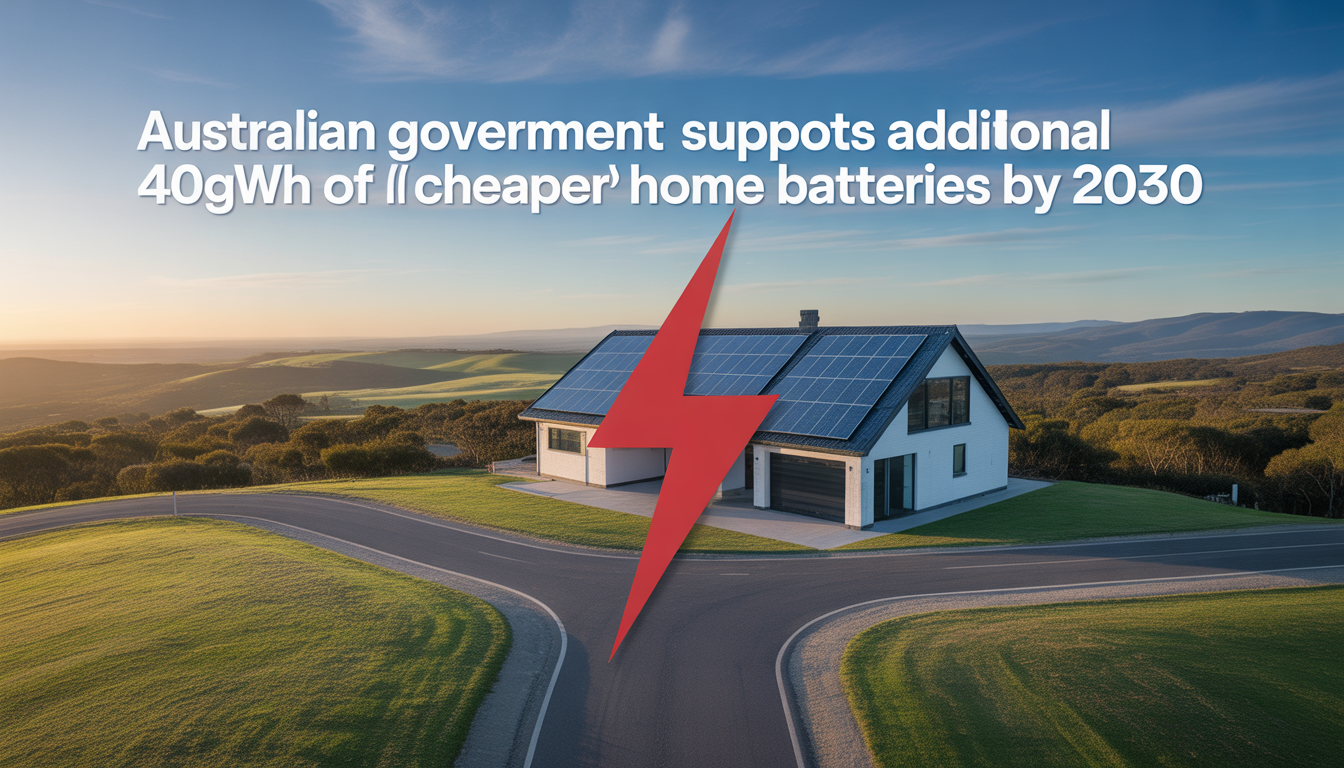
The Australian government has unveiled an ambitious plan to expand its Cheaper Home Batteries Program, aiming to add an additional 40GWh of battery capacity by 2030. This expansion comes as part of a broader strategy to enhance energy efficiency and sustainability across the nation, with a projected budget increase from AU$2.3 billion to AU$7.2 billion.
Program Success and Rapid Adoption
Since its launch in July 2025, the Cheaper Home Batteries Program has gained significant traction, facilitating over 160,000 installations and contributing more than 3.6GWh of energy storage capacity within just six months. With approximately 8,000 applications processed weekly, this initiative is not only empowering homeowners but also addressing the growing need for energy storage solutions in Australia, which boasts over 4.2 million rooftop solar PV systems.
- Discounts Offered: The program provides rebates of around 30% on battery systems ranging from 5kWh to 100kWh, making solar energy more accessible.
- Target Audience: The initiative is designed for households, businesses, and communities, potentially equipping up to two million homes with energy storage solutions.
Funding and Structure Changes
The government’s Department of Climate Change, Energy, the Environment and Water (DCCEEW) will integrate this program into the existing Small-scale Renewable Energy Scheme (SRES). This integration will enable the purchase of small-scale technology certificates (STCs) to fund the discounts, ensuring sustainability without transferring costs to retailers.
Changes slated for implementation on May 1, 2026, include:
- The STC factor will be adjusted to decline every six months, promoting appropriately sized systems.
- Support levels will vary by battery size, maintaining around 30% discounts across capacities, with tiered STC factors for different capacity ranges.
Impact on Grid Stability and Future Goals
Energy Minister Chris Bowen heralded the program’s success in nearly doubling the home energy storage capacity in Australia. He emphasized that this initiative not only helps households lower their energy bills but also stabilizes the grid by providing fast, dispatchable solar energy during peak demand times.
Bowen stated, “Australia is a solar nation—we’ve got more solar on our roofs than pools in our backyards, and we want to match that success with home batteries to cut bills for everyone, for good.” This sentiment underscores the government’s commitment to pairing solar energy with battery storage for enhanced reliability and economic benefits.
Conclusion: A Bright Future for Renewable Energy
The expansion of the Cheaper Home Batteries Program represents a significant leap toward a sustainable energy future in Australia. As battery costs continue to decline and technology improves, the initiative not only promises to make energy storage more affordable but also aims to support the growing demand for renewable energy solutions.
Homeowners and businesses alike can look forward to a future where clean energy is not just a possibility but a practical reality.