Unprecedented Growth in Solar Capacity
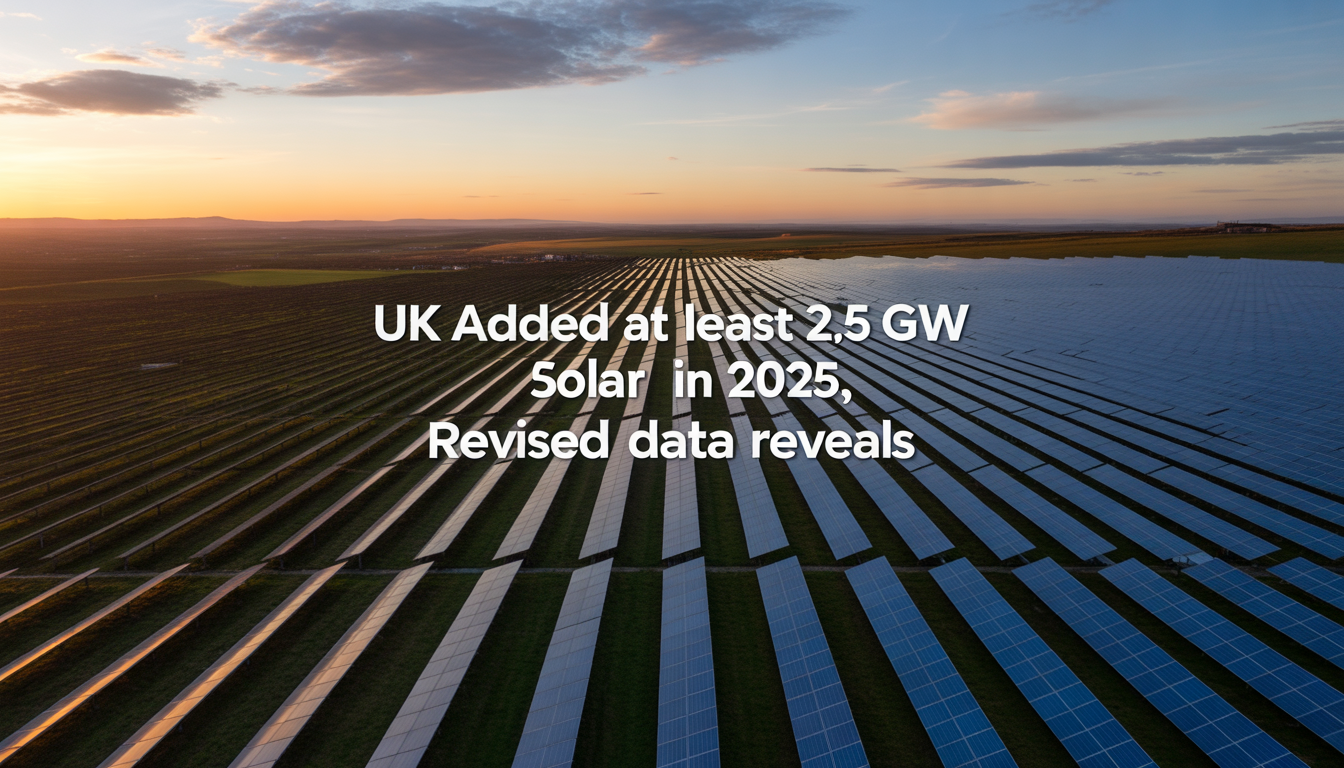
Recent revisions to provisional capacity data reveal that the UK added a remarkable 2.5 gigawatts (GW) of solar energy in 2025, marking one of the strongest annual growth rates in the nation’s solar market history. This significant addition stems from a combination of newly reported large projects and previously uncounted rooftop installations, pushing the UK’s operational solar fleet to new heights. According to the PV Magazine, the revisions reflect a more accurate account of the UK’s solar capabilities and their role in future energy planning.
Types of Installations Driving Growth
The 2.5 GW increase encompasses a diverse array of solar projects, including:
- Utility-scale solar farms: These projects accounted for a significant portion of the new capacity, featuring the UK’s largest operational solar plant, which came online in 2025.
- Rooftop installations: A record year for residential and commercial installations was driven by decreased costs and increased corporate procurement of on-site generation.
- Repowering existing arrays: Upgrades with higher-efficiency panels and inverters contributed to capacity growth.
These diverse project types not only enhance energy generation but also provide flexibility in meeting local demand and sustainability goals.
Factors Behind the Surge
Several key policy and market drivers have facilitated this impressive growth in solar capacity:
- Contracts for Difference (CfD): These contracts have de-risked revenues for larger projects, making investments more appealing.
- Declining costs: Continuous reductions in module and balance-of-system (BOS) costs have improved the economics of solar energy.
- Procurement programs: Initiatives by corporate and local authorities have spurred rooftop solar uptake.
- Grid investments: Enhanced infrastructure has enabled quicker connections for new capacity.
According to the latest government statistics, these factors collectively explain the recent revisions in capacity reporting and the significant growth in solar installations.
Implications for Grid Management and Storage Needs
With the addition of 2.5 GW of solar in a single year, the UK faces new challenges in integrating this variable generation into its energy system. Operators must now address:
- Grid flexibility: Increased solar capacity requires improved management of generation peaks and demand fluctuations.
- Energy storage solutions: The need for grid-scale battery energy storage systems (BESS) becomes critical to balance supply and demand effectively.
- Smart technologies: The rapid growth of rooftop installations calls for enhanced grid planning and the adoption of smart inverters.
As the share of solar energy grows, the UK’s energy infrastructure will need to adapt to ensure stability and reliability.
Future Outlook: A Path Towards Net-Zero
The addition of 2.5 GW of solar energy not only bolsters the UK’s ambitions for a sustainable energy future but also sets the stage for larger-scale deployments in the coming years. Achieving the government’s goal of tens of gigawatts of solar by 2035 will require:
- Accelerated grid upgrades: Faster improvements in infrastructure are essential to support ongoing growth.
- Clearer planning frameworks: Simplified land-use policies will facilitate the development of utility-scale projects.
- Incentives for rooftop solar: Continued support and market mechanisms are needed to encourage more residential and commercial installations.
As investors seek clarity in regulations and data, timely revisions and transparent reporting will be crucial for maintaining momentum in the solar sector.
As we look ahead, the impressive growth of solar capacity in the UK serves as a testament to the potential of renewable energy technologies to address climate change while meeting energy demands.