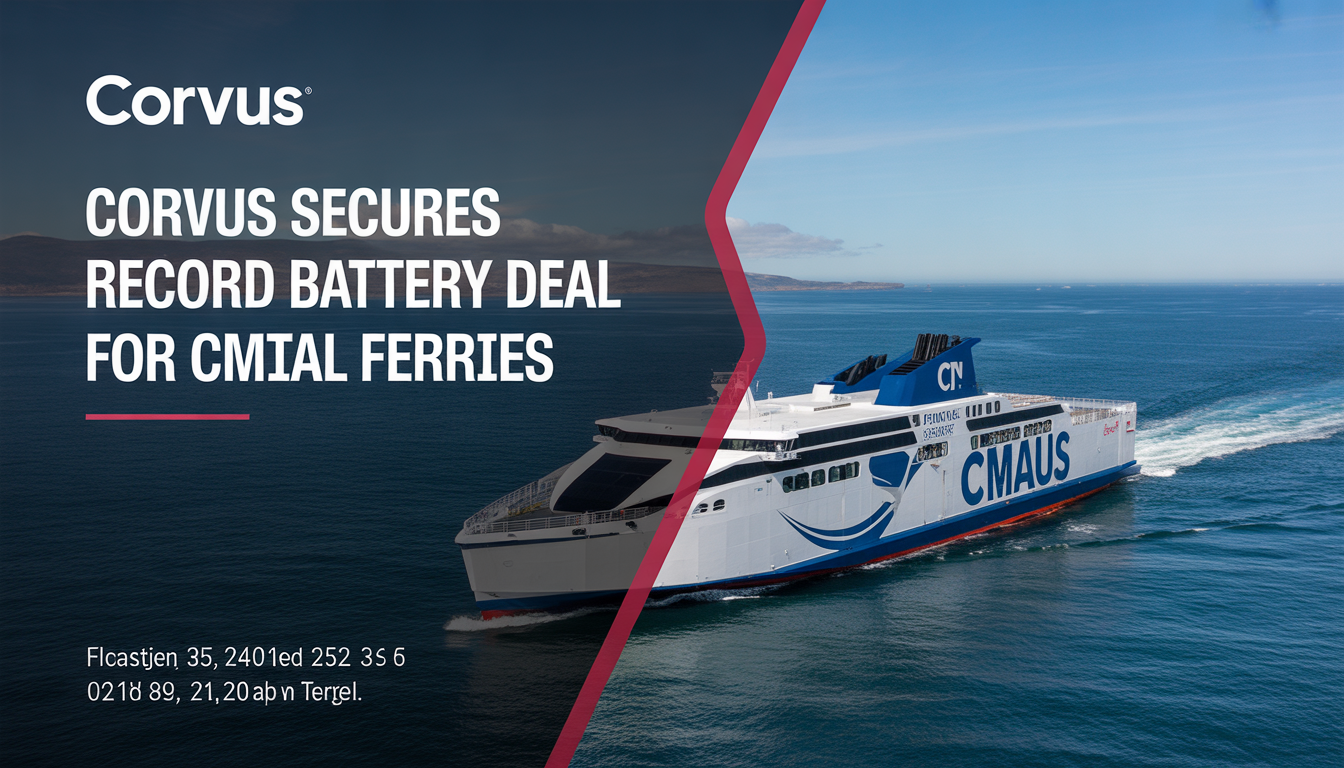
Corvus Energy has made waves in the maritime battery sector by securing its largest-ever contract to supply cutting-edge energy storage systems for seven fully electric ferries being constructed for Caledonian Maritime Assets Limited (CMAL). This landmark deal, executed through Remontowa Shipbuilding in Poland, positions Corvus at the forefront of the UK’s transition to zero-emission ferry operations, significantly impacting both local transport and environmental sustainability.
The Scale of the Deal: A Milestone in Maritime Energy Storage
The contract involves outfitting each of the seven ferries with a robust 5.7 MWh Corvus Dolphin NxtGen Energy Storage System. Collectively, the vessels will achieve a remarkable 40 MWh of installed capacity, marking a significant step towards the electrification of maritime transport. Deliveries are scheduled from 2026 to 2028, distributed to align with the shipbuilding timeline, showcasing an innovative approach to project execution.
Stein Ruben Larsen, Corvus Energy’s Senior Vice President of Sales, emphasized the collaborative spirit driving this project, stating, “It’s truly remarkable to witness seven identical ferries being constructed at the same shipyard.” This collaboration includes key players like ABB, responsible for systems integration, and Remontowa Marine Design & Consulting, overseeing electrical design.
Technical Insights: Performance and Integration
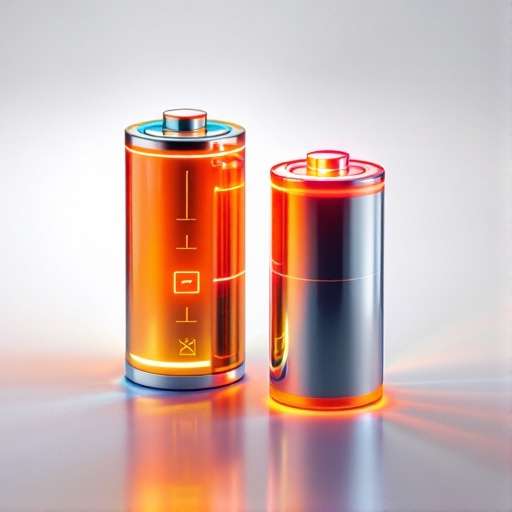
Each ferry will utilize the advanced Corvus Dolphin NxtGen system, designed specifically for maritime applications. This large-format lithium-ion battery system features:
- Energy Density: Optimized for efficient energy storage and retrieval.
- Thermal Management: Ensures safe operation even during high-demand cycles.
- Lifecycle Performance: Built to withstand the rigors of frequent charge and discharge typical of ferry operations.
This project reflects a growing trend in maritime electrification, underscoring the importance of innovative energy solutions in reducing greenhouse gas emissions from short-sea and ferry operations.
Policy Context: A Commitment to Decarbonization
The ferries are part of CMAL’s Small Vessel Replacement Program, aimed at modernizing the Loch-class fleet and enhancing connectivity for Scotland’s island communities. The Scottish Government’s commitment to decarbonizing domestic shipping aligns with broader climate goals, as moving towards fully electric vessels is crucial for reducing transport emissions.
This initiative not only addresses environmental concerns but also supports the economic resilience of island economies dependent on reliable transport links.
Market Implications: Setting New Standards in Battery Procurement
The cumulative 40 MWh order for a single ferry series signifies a substantial shift in maritime battery procurement, showcasing the maturation of large lithium-ion energy storage systems. This development has far-reaching implications:
- Supply Chain Dynamics: Increased demand for battery components and systems integration, emphasizing the need for robust supply chains.
- Operational Efficiency: The integration of new technologies necessitates updated design and safety protocols for shipyards and operational teams.
- Competitive Landscape: As competition among battery suppliers intensifies, innovation in battery technology will become paramount.
Environmental and Community Impact: A Cleaner Future
Transitioning to fully electric ferries will significantly reduce local air pollutants and carbon emissions, particularly when powered by low-carbon grid electricity. The benefits extend beyond environmental improvements:
- Noise Reduction: Electric propulsion systems promise a quieter, more comfortable experience for passengers.
- Lower Operating Costs: Potential reductions in fuel costs and maintenance expenses over the vessels’ lifetimes.
- Support for Local Economies: The project bolsters local shipbuilding industries and prepares ports for the infrastructure needed to support electric ferries.
While the successful implementation of this project depends on the development of adequate charging infrastructure and competitive electricity tariffs, the outlook for electrification in maritime transport is increasingly optimistic.
Conclusion: A Step Towards Sustainable Maritime Transport
Corvus Energy’s record-breaking battery deal represents a pivotal moment for the maritime industry, underscoring the potential of electric ferries to redefine transportation in coastal and island communities. As the world moves towards sustainable practices, this initiative not only highlights technological advancements but also reaffirms the industry’s commitment to reducing environmental impacts while enhancing community connectivity.