Understanding the WTO Complaint
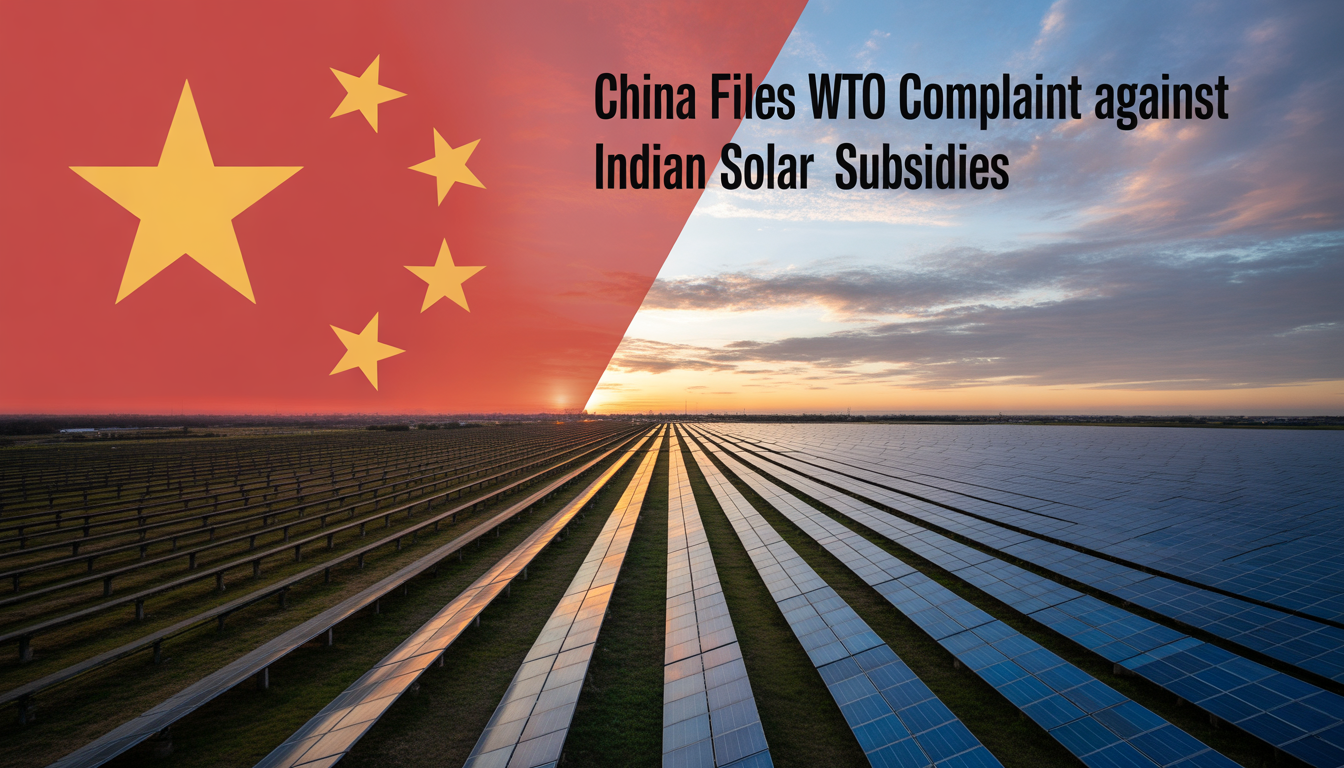
On December 19, 2025, China’s Ministry of Commerce initiated a formal complaint with the World Trade Organization (WTO) against India, alleging that the country’s solar subsidies and tariffs on information and communication technology (ICT) products violate international trade rules. This complaint highlights ongoing tensions in the renewable energy sector, as China asserts that India’s protective measures unfairly disadvantage Chinese exporters and contravene the national treatment principle established by the WTO.
The Core of the Dispute
At the heart of this dispute are India’s subsidies aimed at bolstering its domestic solar industry. These include Production Linked Incentive (PLI) schemes designed to promote local manufacturing of photovoltaic cells and modules. Critics argue that such subsidies favor Indian companies over foreign competitors, particularly from China, which dominates the global solar supply chain. As China produces over 80% of the world’s polysilicon, wafers, cells, and modules, it views India’s measures as protectionist barriers that hinder its market access despite its competitive pricing advantages [IEA].
Current State of the WTO Process
The complaint marks the beginning of a 60-day consultation period, during which both nations can engage in discussions to resolve the issue amicably. If these talks do not yield a resolution, a panel may be formed to examine the complaint in detail, a process that typically takes between 6 to 9 months. According to WTO regulations, while subsidies can be permissible, they must not cause adverse effects such as import displacement, which China claims is occurring in this instance [WTO].
Implications for Renewable Energy and Trade
This dispute is not an isolated incident; it follows a series of challenges and complaints between China and India, particularly as India ramps up its ‘Make in India’ initiative. In October 2025, China raised concerns over India’s electric vehicle battery subsidies, reflecting a broader pattern of trade frictions between these two nations. Previous disputes have included India’s solar cell safeguards that were ruled against in 2016, highlighting a historical context of trade tensions [WTO].
The Path Forward
As the global renewable energy landscape evolves, the outcome of this WTO complaint could significantly impact not only China and India but also the broader trade relations involving solar technologies. The situation underscores the critical balance between fostering local industry and adhering to international trade commitments. Stakeholders in the solar energy field should closely monitor developments, as they may lead to shifts in market dynamics, pricing strategies, and long-term investments.
Conclusion: A Call for Strategic Dialogue
In navigating these complex trade issues, both China and India must engage in constructive dialogue that prioritizes fair competition while supporting sustainable energy goals. The renewable energy sector is poised for growth, and how these nations resolve their trade differences will significantly shape the future of global solar markets.