
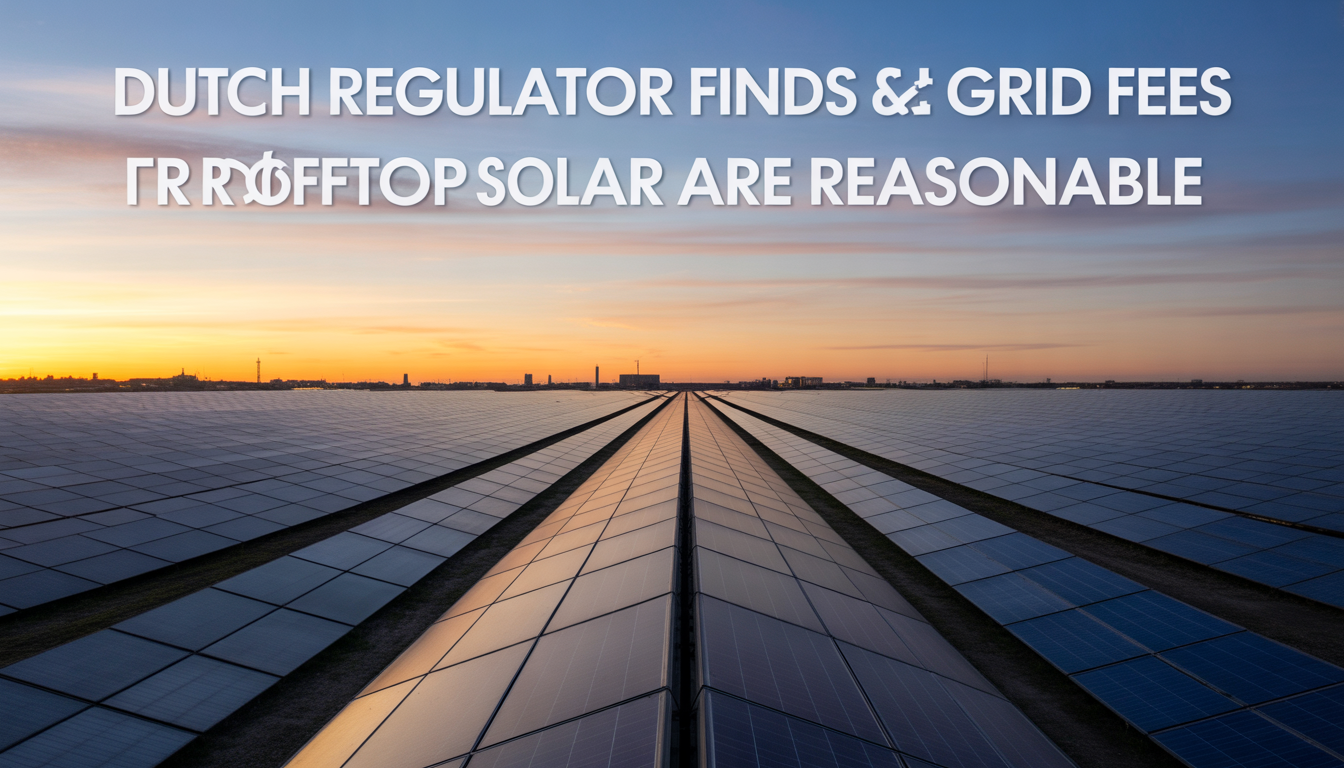
Regulatory Findings on Grid Fees
The Dutch Authority for Consumers and Markets (ACM) has recently completed its comprehensive investigation into the grid fees charged to homeowners with rooftop solar panels. The results indicate that these fees—known as ‘terugleverkosten’—are not excessively high, reflecting the actual costs incurred by energy suppliers in managing the nation’s electrical grid infrastructure. Currently, these fees range between €100 and €697 annually, depending on the size of the solar installation according to the ACM.
The Growing Solar Market and Its Challenges
As the Netherlands has embraced solar energy, nearly one million households have installed rooftop solar panels over the past decade. This rapid adoption has led to a significant challenge for the power grid, particularly during peak solar generation times when excess electricity is fed back into the grid. The ACM’s findings underscore the need for a more uniform approach to grid fee structures, which would facilitate easier comparisons for consumers and provide greater transparency in solar ownership costs.
Impact of Net Metering Phase-Out
Compounding these challenges is the impending phase-out of the net metering scheme (‘salderingsregeling’), which currently allows homeowners to receive credit equivalent to the retail price for electricity fed back to the grid. As this incentive is set to conclude by the end of 2026, many analysts predict a dramatic shift in the solar market. The ACM has highlighted that without net metering, solar households will only receive modest feed-in compensation, which could lead to a projected 72% decline in new solar installations by 2025 according to industry forecasts.
Battery Storage: The Key to Future Sustainability
In light of these changes, the adoption of home battery systems is anticipated to surge, with projections indicating a 140% increase in installations by 2025. These batteries will enable homeowners to store excess solar generation for later use, thereby maximizing self-consumption and reducing reliance on grid electricity. For example, a household generating 10 kWh of solar energy daily could significantly reduce their exports to the grid by using battery storage effectively. This shift not only benefits individual consumers economically but also enhances grid stability by alleviating congestion during peak production times as reported by various experts.
Broader Implications for Renewable Energy Integration
The situation in the Netherlands reflects a larger trend across Europe, where countries are grappling with similar challenges related to distributed renewable energy integration. The ACM’s findings regarding grid fees and the phase-out of net metering highlight a critical juncture in the solar market, as consumers and regulators alike seek to adapt to the evolving energy landscape. The combination of reasonable grid fees and the rise of battery storage technologies suggests a maturing regulatory framework that balances cost fairness and sustainability goals.
Conclusion: Navigating the Future of Solar Energy
The recent regulatory insights from the ACM provide a clear pathway for consumers and industry stakeholders to navigate the shifting landscape of rooftop solar in the Netherlands. As the market adapts to the end of favorable net metering policies, the role of battery storage will be pivotal in enhancing energy independence and ensuring grid stability. For homeowners, understanding these dynamics will be essential in making informed decisions about solar investments and energy management strategies.