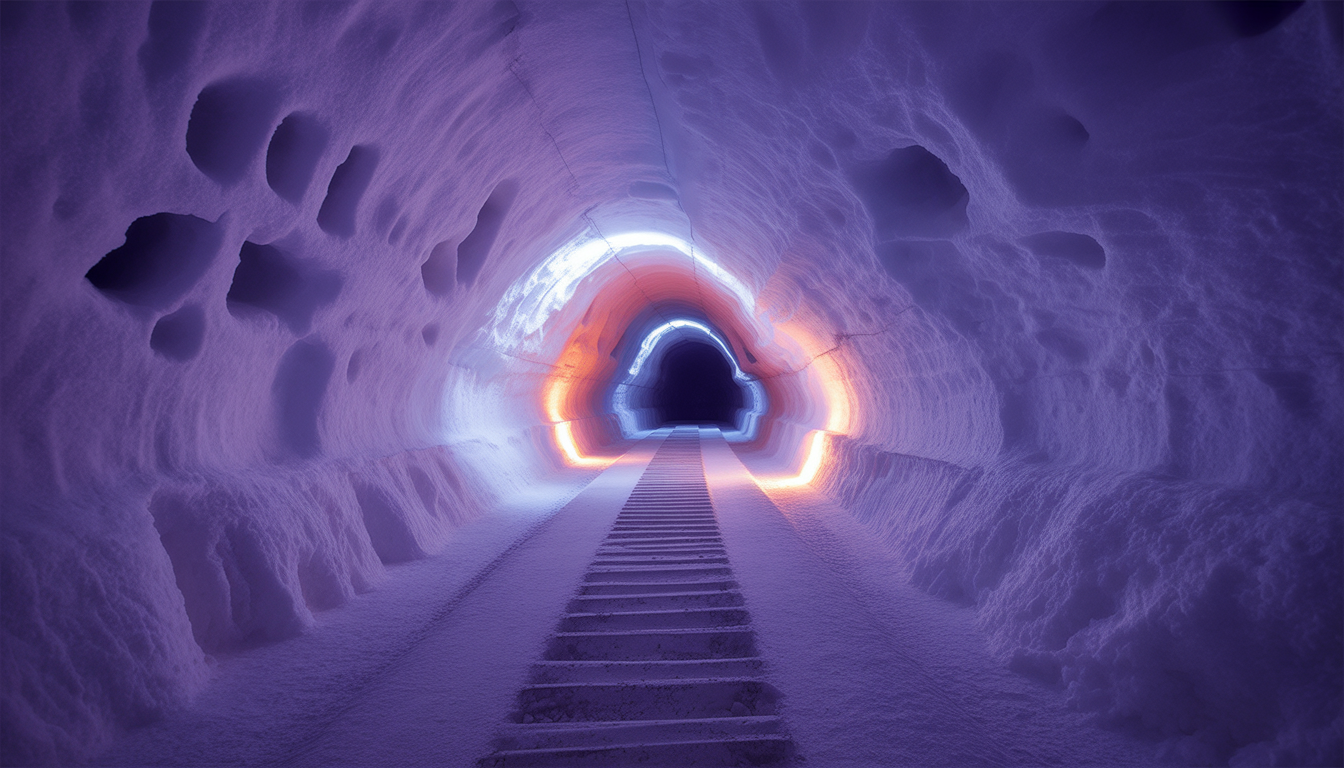
Revolutionizing Energy Storage with Salt Caverns
As the renewable energy landscape evolves, the necessity for efficient energy storage solutions becomes increasingly critical. One innovative approach gaining traction is the use of horizontally connected salt caverns for Compressed Air Energy Storage (CAES). This technology not only addresses the intermittent nature of renewable sources like wind and solar but also leverages the natural properties of salt formations to create a sustainable energy future.
Understanding Compressed Air Energy Storage
Compressed Air Energy Storage (CAES) operates on a straightforward principle: excess electricity is used to compress air, which is then stored in underground formations. When energy demand peaks, the compressed air is released, expanded through turbines, and converted back into electricity. Traditional CAES facilities typically utilize salt caverns or hard rock formations, offering capacities ranging from 100 to 500 MW. Additionally, advancements in heat recovery during the compression process have significantly enhanced system efficiency.
Why Salt Caverns Are Ideal for CAES
Salt caverns, formed through solution mining, provide a unique storage solution due to their large volume and stability. Key benefits include:
- High Storage Capacity: Salt caverns can accommodate hundreds of thousands of cubic meters of compressed air, making them ideal for large-scale energy storage.
- Pressure Tolerance: These formations can withstand high pressures, crucial for storing compressed air effectively.
- Environmental Safety: The inert nature of salt minimizes environmental risks, ensuring safe long-term storage.
Consequently, salt caverns outperform conventional above-ground tanks or porous reservoirs, particularly for applications requiring daily or seasonal storage cycles.
The Innovation of Horizontally Connected Caverns
Recent research highlights the potential of horizontally connected salt caverns, often referred to as two-butted-well horizontal (TWH) caverns. This configuration involves linking adjacent caverns, which is particularly beneficial in regions like China where high-quality salt sites are scarce. Approximately 85% of existing salt caverns in China are suitable for this type of configuration, making it a viable option for expanding CAES capabilities.
Studies indicate that these caverns can be modeled as ellipsoids and must be carefully engineered to control deformation, especially in dipping layers. Recommendations suggest limiting dip angles to 20° for deep caverns and 30° for those that are shallower, ensuring structural integrity while maximizing storage volume.
Advantages and Challenges of Utilizing Salt Cavern CAES
The benefits of using salt caverns for CAES are compelling:
- Long-Duration Storage: Capable of storing energy for days or even months, surpassing the capabilities of traditional batteries.
- High Cycle Rates: Fast injection and withdrawal rates support both daily and seasonal energy demands.
- Cost-Effectiveness: For grid-scale applications, CAES in salt caverns is more economical than battery storage solutions.
However, challenges remain, including geological suitability for airtight formations, lengthy construction timelines, and the need for effective heat management during air compression and expansion. Addressing these issues is crucial for the successful deployment of horizontally connected salt cavern systems.
Global Developments in CAES Technology
Globally, operational CAES plants in Germany and the U.S. demonstrate the practicality of this technology. Notable advancements, such as China’s Jintan project, incorporate adiabatic CAES principles and have resulted in over 100 patents in this burgeoning field. Ongoing research is also exploring the potential for hydrogen storage in salt caverns, which could further enhance the versatility of these underground resources.
Conclusion: The Path Forward for Energy Storage
As the energy sector continues to transition towards renewable sources, the strategic implementation of horizontally connected salt caverns for compressed air energy storage represents a significant step forward. By harnessing the unique properties of salt formations, this technology not only mitigates the challenges of energy intermittency but also supports sustainability goals. The future of energy storage is bright, with salt caverns poised to play a central role in our transition to a cleaner, more reliable energy grid.