A Brighter Tomorrow Starts Today
The landscape of American energy is undergoing a remarkable transformation, with community solar emerging as the fastest-growing segment of the renewable energy sector. As of 2024, the United States has reached 8.6 gigawatts (GW) of cumulative installed community solar capacity—nearly doubling since 2021, with annual installations surging 35% to 1.7 GW. This explosive growth represents more than just numbers on a chart; it signals a fundamental democratization of our energy system.
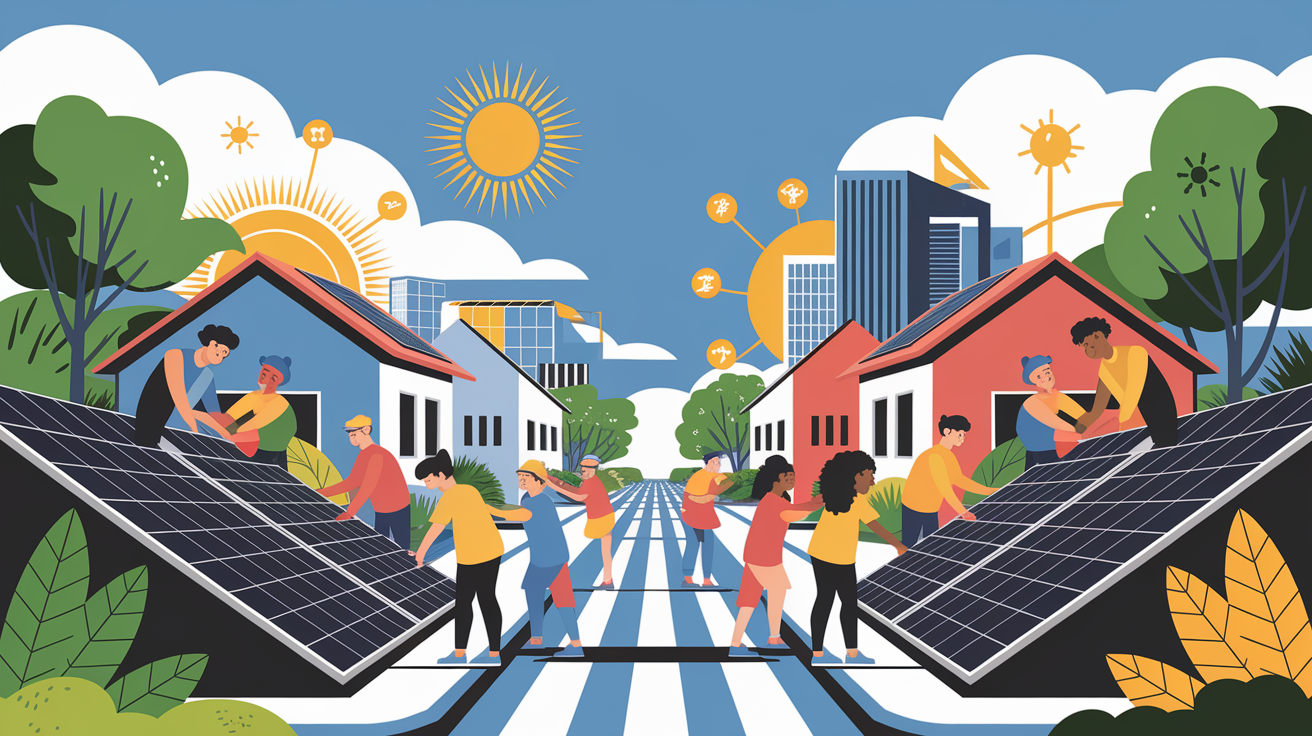
Community solar projects enable households, businesses, schools, and organizations to subscribe to off-site solar arrays and receive bill credits for the electricity generated—no rooftop required. This accessibility is precisely why the Department of Energy has established an ambitious target of 25 GW by 2025, with market projections suggesting we’ll exceed 30 GW by 2030.
The implications extend far beyond clean energy production. These shared solar initiatives are creating pathways to energy independence, economic revitalization, and climate resilience for communities that have historically been left behind in the renewable transition.
Community Benefits of Solar Projects
The advantages of community solar reach deeply into local economies and household budgets alike, delivering tangible benefits that ripple throughout participating regions:
Economic Engine
The financial impact of community solar deployment is substantial and measurable. According to comprehensive economic analyses, a typical 5 MW community solar project generates approximately $14 million in local economic activity while supporting nearly 100 jobs. At scale, 1 GW of community solar supports over 18,000 jobs and creates $2.8 billion in economic impact within states—potentially unlocking $120 billion nationwide as programs expand.
State-specific projections reveal similarly impressive figures:
- Virginia’s community solar program is projected to generate $5.6 billion in economic activity and support 46,000 jobs
- Ohio’s potential impact includes $5.57 billion in economic benefits and 27,000 job-years
- New Mexico stands to gain $517 million in economic activity and 3,760 jobs
These aren’t just jobs—they’re careers in a sector that creates employment opportunities 12 times faster than the broader economy, according to industry analyses.
Equitable Access and Bill Savings
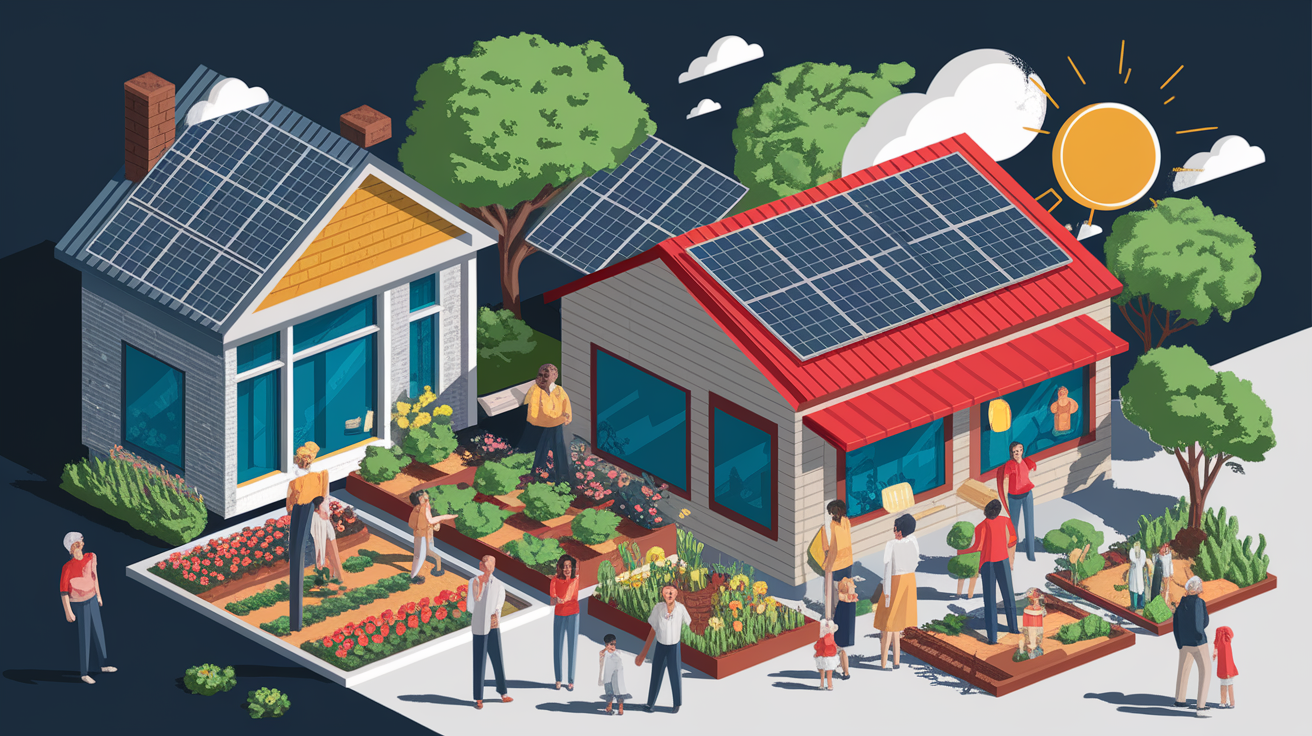
Community solar particularly benefits those previously excluded from solar’s advantages: renters, low-to-moderate income (LMI) households, and residents with unsuitable rooftops. Subscribers typically save 5-20% on electric bills, with average savings between 10-15% or up to $382 annually in programs like Colorado’s.
The impact on energy equity is substantial. Research indicates that community solar could serve more than 53 million U.S. households with guaranteed savings. The National Community Solar Partnership has set an explicit goal of powering 5 million households by 2025, generating $1 billion in collective savings.
Several states have implemented policies specifically targeting underserved populations:
- New Jersey’s program allocates 51% of capacity to LMI subscribers
- Maryland’s projects have generated over $9 million in savings while offering job training
- Many states require subscription portability within utility territories, ensuring benefits continue when residents move
Grid Resilience and Environmental Impact
Beyond individual benefits, community solar enhances grid resilience through distributed generation, avoiding costly transmission infrastructure and supporting utilities’ renewable portfolio standards. These installations reduce carbon emissions while helping stabilize rates and meet growing electrification demands from data centers and extreme weather events.
As NREL’s research demonstrates, the strategic siting of community solar projects often provides greater grid benefits than residential rooftop installations, especially when deployed with storage technologies.
Successful Community Solar Initiatives
Across the country, innovative community solar models are demonstrating what’s possible when policy, technology, and community engagement align:
New York’s Solar For All
New York continues to lead the nation in community solar deployment, with its Solar For All program specifically designed to eliminate financial barriers for LMI households. The program guarantees 10% bill savings with no upfront costs, no credit checks, and no cancellation fees. This inclusive approach has helped New York maintain its position as one of the top three states for community solar growth through Q3 2025, according to recent industry tracking.
Washington State’s Certified Projects
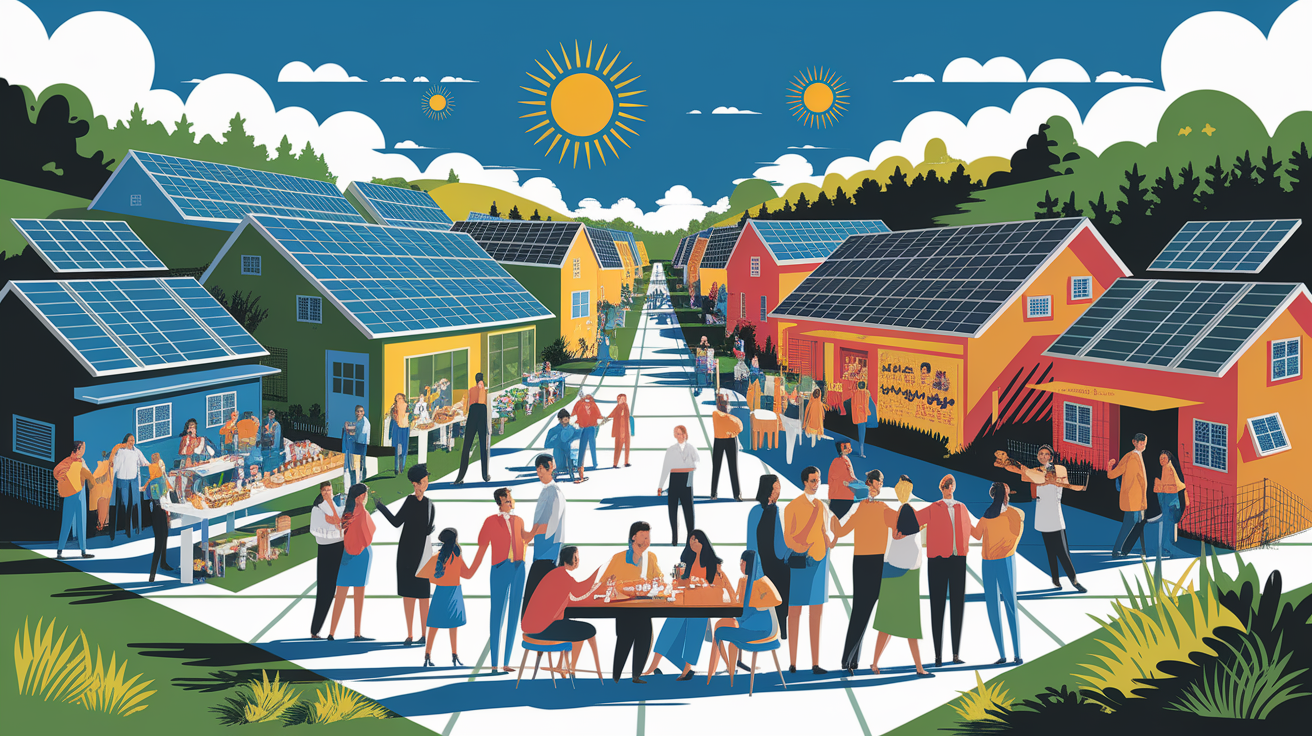
Washington’s community solar program certified $17.2 million in incentives by August 2025, with a particular focus on projects benefiting local organizations. As documented by SolarWA, these initiatives have included school-based installations that combine educational opportunities with community benefit—delivering both immediate savings and workforce development through associated training programs.
New Jersey’s Permanent Program
After a successful pilot phase, New Jersey launched its permanent community solar program serving 96% of ratepayers with over 90% of capacity allocated. The program’s design, highlighted by GRESB’s market analysis, includes exemplary features like guaranteed savings for all subscribers, strong consumer protections, and significant capacity carve-outs for environmental justice communities.
Overcoming Challenges in Solar Implementation
Despite remarkable growth, community solar still faces significant hurdles to reaching its full potential:
Policy Landscape Fragmentation
As of February 2025, only 24 states and the District of Columbia have enacted enabling policies for community solar, according to the National Renewable Energy Laboratory. While 83% of these policies include provisions for LMI households, the patchwork nature of regulations creates barriers to scale and standardization.
The most effective policies emphasize:
- Meaningful financial benefits for participants
- Flexible ownership models including third-party development
- Broad eligibility requirements and subscription portability
- Program transparency and consumer protections
Interconnection Bottlenecks
Grid interconnection delays and costs have emerged as critical challenges, with project queues extending years in some regions. Recent tracking data shows that Q3 2025 growth was limited primarily to three states—New Jersey, New York, and Oregon—partly due to interconnection constraints elsewhere.

Utilities and regulators are increasingly exploring streamlined processes, cluster studies, and grid modernization investments to address these barriers while maintaining system reliability.
Financing and Subscriber Acquisition
While the economics of community solar have improved dramatically, subscriber acquisition and management costs remain significant. Innovative approaches including partnerships with community organizations, anchor tenants, and digital platforms are helping developers reach diverse subscribers while reducing customer acquisition expenses.
The $7 billion in federal funding allocated specifically for low-income community solar access has begun catalyzing new financing models and risk mitigation strategies to further expand the market.
The Future of Community Solar Projects
The trajectory for community solar points toward continued innovation and expansion:
Technology Integration
Next-generation community solar projects increasingly incorporate battery storage, grid services, and agrivoltaics (combining agricultural use with solar production). These hybrid approaches maximize land value, enhance grid benefits, and create additional revenue streams—making projects more economically viable even in challenging regulatory environments.
Market Expansion
While currently concentrated in 10 states (with New York, Illinois, and Maine leading), community solar is poised for geographic expansion. Several states including Pennsylvania, Michigan, and Wisconsin are actively developing enabling legislation, potentially opening significant new markets by 2026.
According to industry forecasts, if current growth trends continue, the U.S. could exceed 40 GW of community solar capacity by 2030—representing over $150 billion in investment and millions of subscriber households.
Equity-Centered Models
The future of community solar increasingly emphasizes community ownership, wealth-building, and integrated approaches to energy justice. Emerging models include cooperative ownership structures, community benefit agreements, and workforce development programs designed to ensure that economic advantages flow directly to residents.
The DOE’s focus on equitable access is accelerating this trend, with dedicated funding for innovative deployment models that center historically marginalized communities.
Shining a Light on Community Empowerment
Community solar represents far more than an alternative deployment model—it’s a fundamental reimagining of how energy systems can serve community needs while addressing climate imperatives.
For communities seeking to explore their own solar initiatives, resources and support continue to expand. The National Community Solar Partnership provides technical assistance, best practices, and peer networking opportunities, while state-level solar organizations offer localized guidance on available programs.
As we move toward a more distributed, democratic energy system, community solar offers a powerful template for how technological innovation can align with community empowerment. The most successful projects don’t merely generate clean electricity—they generate economic opportunity, energy democracy, and resilience in the face of climate uncertainty.
By harnessing sunshine as a community resource rather than an individual asset, these initiatives are illuminating a path toward a more equitable clean energy transition—one solar array, one community, and one subscription at a time.