
The Power of Solar in Healthcare
Healthcare facilities are discovering a powerful ally in their mission to provide uninterrupted, quality care while managing operational costs: solar energy. The integration of photovoltaic (PV) systems into hospitals and clinics is transforming how these essential services power their operations, from critical medical equipment to everyday lighting and climate control.
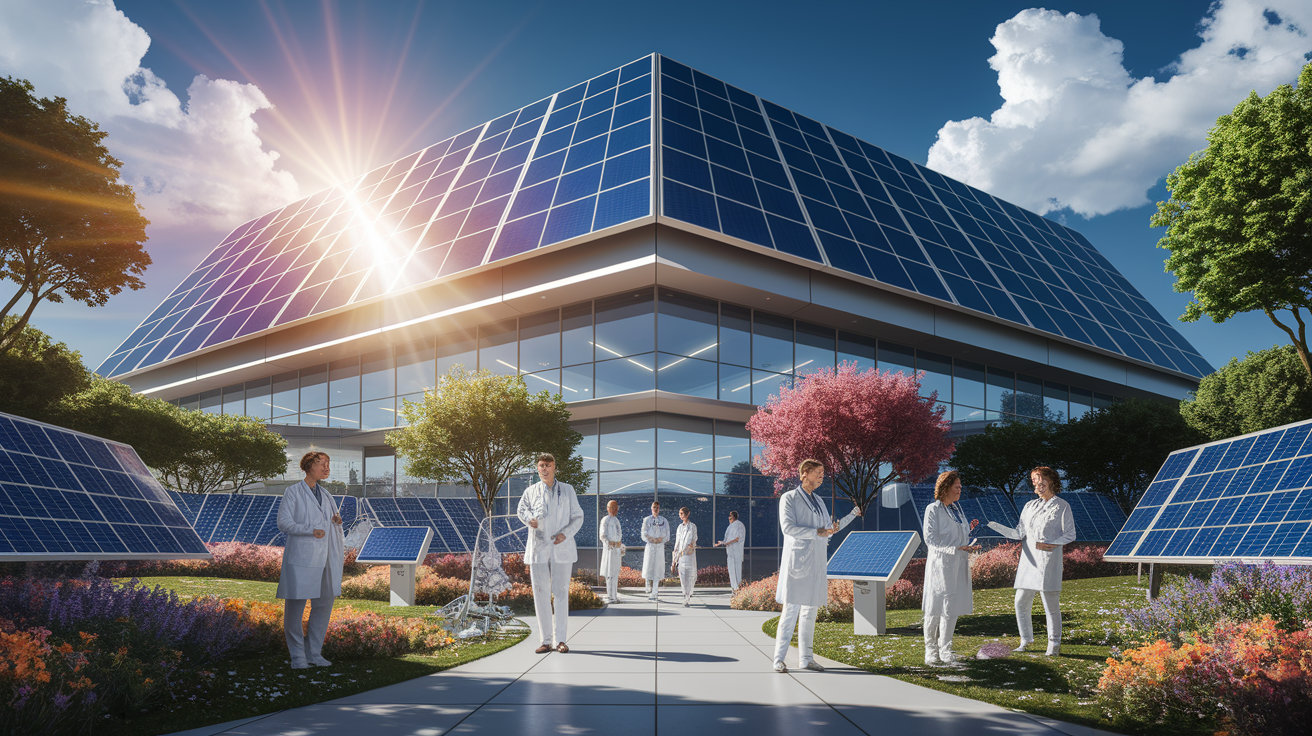
Modern healthcare facilities primarily implement three types of solar technologies:
- Photovoltaic (PV) systems that directly convert sunlight into electricity for powering medical equipment, lighting, and air conditioning
- Solar thermal systems that provide heating and hot water for facility operations
- Concentrated solar power (CSP) that generates steam for larger facilities with substantial energy demands
These implementations are remarkably versatile, with installations ranging from rooftop panels to solar carports and ground-mounted arrays, adapting to various facility sizes and available space. The primary appeal is clear: reducing grid dependency while enhancing resilience during power outages—a crucial factor when lives depend on uninterrupted power for life support systems, medication refrigeration, and diagnostic equipment.
Cost-Effectiveness and Efficiency
The financial case for solar in healthcare settings has become increasingly compelling as technology costs decrease and energy prices rise. Hospitals and medical centers are among the most energy-intensive commercial buildings, often operating 24/7 with strict temperature, air quality, and lighting requirements.

A healthcare facility that implemented a 182 kW DC bifacial panel system with SolarEdge inverters demonstrates the tangible benefits. This customized solution significantly reduced grid dependency while providing substantial utility bill savings. The economics are particularly favorable when considering that:
- Solar installations protect healthcare facilities from energy price volatility
- Systems typically pay for themselves within 5-10 years while lasting 25+ years
- Maintenance costs are relatively low compared to traditional power systems
- Available incentives and financing options improve return on investment
Consider the Sanford Burnham Prebys research institute that installed solar carports with battery storage, projected to save approximately $7 million over the system’s lifetime while cutting carbon emissions by 700 metric tons annually. These numbers illustrate how solar energy transcends being merely an environmental choice—it’s becoming a financial imperative for forward-thinking healthcare administrators.
Enhancing Healthcare Access in Remote Areas
Perhaps the most transformative impact of solar energy in healthcare is its ability to bring modern medical services to remote and underserved communities. In regions where grid infrastructure is unreliable or nonexistent, solar power creates possibilities that were previously unimaginable.
UNICEF’s global initiative exemplifies this potential, having supported the installation of over 80,000 solar refrigerators across more than 80 countries. These systems ensure vaccines remain viable even in the most isolated clinics, directly improving immunization rates and public health outcomes.

Solar-powered healthcare facilities in developing nations offer:
- Reliable power for diagnostic equipment that would otherwise be unusable
- Energy for telemedicine capabilities, connecting remote patients with specialists
- Lighting for emergency procedures and nighttime care
- Power for sterilization equipment, improving infection control
The decentralized nature of solar energy perfectly matches the needs of distributed healthcare delivery models in rural areas. A solar microgrid can power a small clinic indefinitely, requiring only minimal maintenance and no fuel deliveries, creating healthcare resilience where it’s needed most.
Environmental and Health Benefits
The healthcare sector, dedicated to healing, has paradoxically been a significant contributor to environmental harm through its energy consumption. Solar energy offers emission-free operation that aligns with the medical principle of “first, do no harm.”
When healthcare facilities adopt solar power, they achieve multiple interconnected benefits:
- Reduced carbon footprint, directly addressing climate change—a recognized public health crisis
- Elimination of local air pollutants associated with fossil fuel generation
- Alignment with sustainability goals and corporate social responsibility initiatives
- Leadership by example in community environmental health efforts
Research facilities like Sanford Burnham Prebys demonstrate that substantial environmental impacts are achievable, with their solar installation eliminating 700 metric tons of carbon emissions annually—equivalent to removing approximately 150 cars from the road each year.

Beyond direct environmental benefits, studies examining solar PV and thermal systems’ viability in GCC healthcare facilities highlight how clean energy contributes to improved air quality both inside and surrounding medical facilities. This creates a healthier environment for patients with respiratory conditions and supports better recovery outcomes.
Overcoming Challenges and Looking Ahead
While solar energy offers tremendous potential for healthcare facilities, implementation challenges remain. The intermittent nature of solar generation presents the most significant technical hurdle, especially for facilities that cannot tolerate power interruptions. Battery storage systems are increasingly addressing this concern by providing continuous power during nighttime hours or cloudy days.
Advanced energy storage solutions now enable healthcare facilities to maintain critical operations even during extended periods without sunlight. These systems are particularly valuable for:
- Ensuring continuous operation of life-support equipment
- Maintaining temperature-sensitive medications and samples
- Providing backup power during grid outages and extreme weather events
- Managing peak demand to optimize energy costs
The initial investment remains substantial, though increasingly offset by long-term savings. Maintenance requirements present challenges particularly in remote locations where technical expertise may be limited. Despite these obstacles, technical and economic barriers are consistently outweighed by efficiency gains and operational benefits.
Future developments hold significant promise for further integration of solar in healthcare:
- Building-integrated photovoltaics (BIPV) that incorporate solar generation directly into architectural elements
- AI-optimized energy management systems that predict usage patterns and maximize efficiency
- Hybrid renewable systems that combine solar with other clean energy sources for 24/7 reliability
- Integration with electric vehicle charging infrastructure for comprehensive energy management
A Brighter Future for Healthcare
Solar energy is not merely an alternative power source for healthcare—it’s increasingly becoming a strategic imperative. As climate change intensifies grid vulnerabilities and energy costs continue rising, solar power offers healthcare facilities a path toward energy independence, operational resilience, and financial sustainability.
The evidence from implementations worldwide demonstrates that solar-powered healthcare is not a futuristic concept but a present reality delivering tangible benefits. From major hospitals achieving millions in energy savings to remote clinics providing life-saving care where it was previously impossible, solar energy is fundamentally transforming healthcare delivery.
For healthcare administrators and facility managers, the question is no longer whether solar makes sense, but rather how quickly and effectively it can be implemented. As technology continues advancing and costs decline further, we can expect solar energy to become as fundamental to healthcare infrastructure as backup generators and HVAC systems are today—an essential component of responsible, resilient, and sustainable care delivery.