
Transforming Floating Photovoltaic Systems
In a groundbreaking development, scientists have unveiled a new digital twin system designed specifically for floating photovoltaic (FPV) applications. This innovative technology leverages artificial intelligence (AI) to enhance the performance and efficiency of solar energy systems deployed on water bodies, marking a significant leap forward in renewable energy technology.
Understanding Floating PV Technology
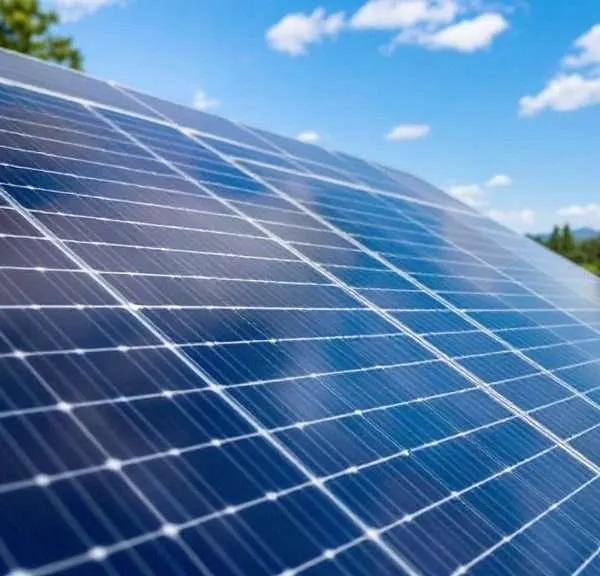
Floating photovoltaic systems involve the installation of solar panels on buoyant structures in reservoirs, lakes, and ponds. This method not only conserves land resources but also improves solar panel efficiency through natural cooling from water evaporation. Additionally, FPV systems help reduce water loss from reservoirs and can be integrated with hydropower to create hybrid energy solutions. As of 2023, global FPV capacity has surpassed 5 GW, with rapid growth seen particularly across Asia, as outlined by the World Bank.
The Role of Digital Twins in Renewable Energy
A digital twin serves as a virtual model of a physical asset, utilizing real-time data from sensors and simulations to replicate and predict system behavior. In the context of solar PV, digital twins support performance monitoring and predictive maintenance, potentially reducing operational costs by 20-30%. They integrate 3D models, weather data, and operational metrics for optimized energy generation and maintenance strategies, as detailed by the National Renewable Energy Laboratory.
Artificial Intelligence Enhancing Performance
The newly developed FPV digital twin employs a two-tier artificial neural network (ANN), combining a high-fidelity model with a reduced-order model for rapid computations. This dual approach has achieved remarkable predictive accuracy, with R² values reaching 0.9996 for PV surface temperature and 0.9189 for power output. Such precision is crucial in addressing the complex dynamics of floating solar systems, which face unique challenges such as wave-induced motions and variable water cooling effects, as identified by research from ScienceDirect.
Addressing Challenges in Floating PV Systems
FPV installations encounter various operational challenges, including difficult access for maintenance, mooring stresses, and environmental factors like wind and currents. Traditional modeling techniques often struggle to predict energy yields accurately due to these complexities. The introduction of AI-driven digital twins represents a significant advancement, enabling better risk management and operational strategies, which can help reduce maintenance costs and improve system reliability.
Future Potential and Applications
The future of floating PV technology is promising, particularly with AI-enhanced digital twins driving predictive analytics and real-time optimization. As research continues to evolve, innovations such as edge computing for remote monitoring and multi-physics simulations are expected to expand the adoption of FPV systems, potentially reaching 10% of global PV capacity by 2030, according to projections by the IEA PVPS.
Conclusion
The integration of AI with digital twin technology for floating photovoltaic systems not only enhances efficiency but also represents a significant step towards sustainable energy solutions. As this technology matures, it promises to reshape the future of solar energy, driving down costs and maximizing energy output from one of the most innovative applications of renewable energy.