
A New Dawn for Solar Manufacturing
The solar industry stands at a critical inflection point. While photovoltaic technology has revolutionized clean energy production, its manufacturing processes have largely followed the outdated “take-make-dispose” linear model that characterizes much of our industrial economy. Today, forward-thinking manufacturers are embracing a transformative approach: the circular economy.
Unlike traditional linear production, a circular economy in solar manufacturing creates a regenerative system that designs out waste and pollution from the start, keeps products and materials in continuous use, and regenerates natural systems. This represents a fundamental shift in how we conceptualize the entire solar value chain—from raw material sourcing to end-of-life management.
The timing couldn’t be more critical. With annual solar installations reaching record highs globally and the first generation of solar panels now approaching retirement age, the industry faces both an opportunity and an imperative to rethink its approach. Estimates suggest that by 2050, end-of-life solar panels could represent approximately 78 million tons of waste globally—or they could become a valuable material resource for next-generation production.
Key Strategies for Circular Solar Manufacturing
Leading manufacturers are implementing several proven approaches to circular solar production:
Design for Longevity and Disassembly
Forward-thinking manufacturers are reimagining module architecture from the ground up, designing panels specifically for eventual disassembly. This approach facilitates easier separation of components when panels reach end-of-life, dramatically improving material recovery rates. Design for disassembly includes innovations like using alternative encapsulants that allow components to be separated without energy-intensive thermal processes.
Advanced Recycling Technologies
New recycling processes are emerging that can recover high-purity silicon, silver, copper, and other valuable materials from retired panels. These technologies move beyond simple glass and aluminum recovery to target the high-value materials that represent both environmental risk and economic opportunity. Silicon recycling advances are particularly promising, as they address one of the most energy-intensive components of panel production.
Take-Back and Refurbishment Programs
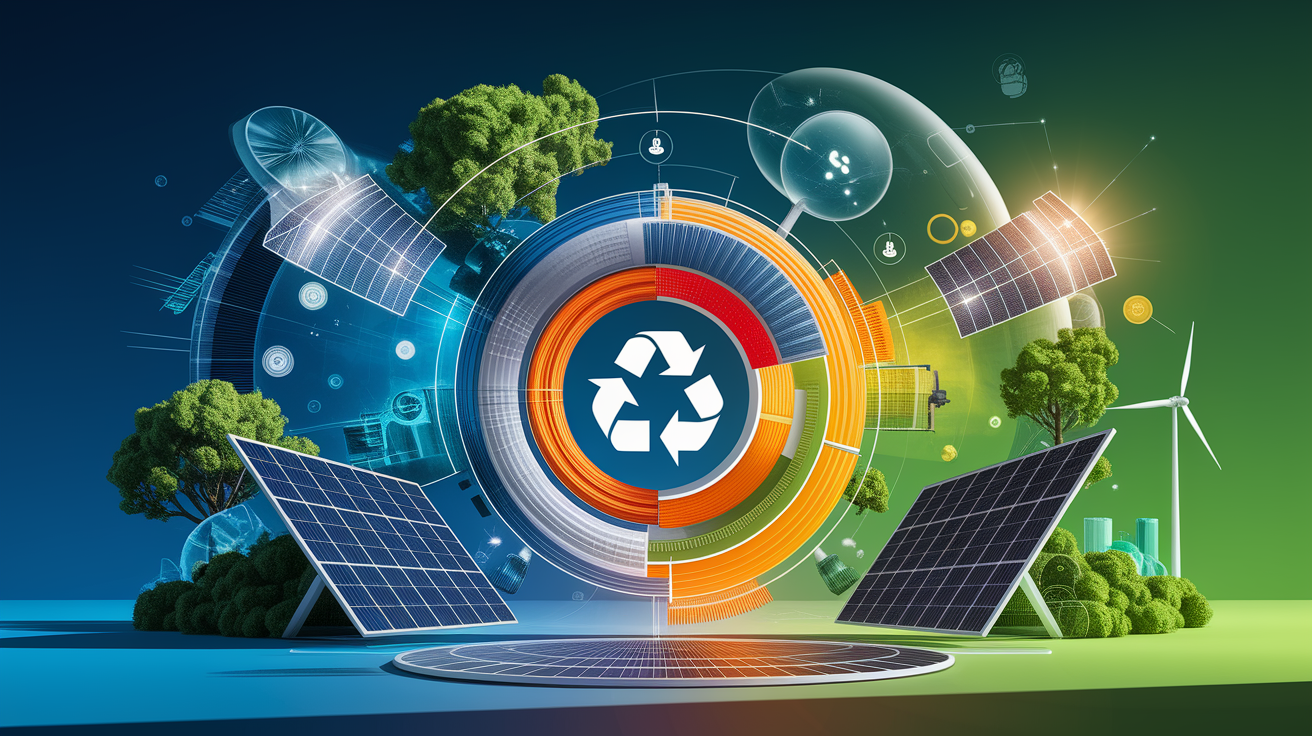
Manufacturers are increasingly implementing comprehensive take-back programs that create clear pathways for panels at end-of-life. Some components, particularly mounting hardware and electronics, can be refurbished and redeployed, extending useful life and generating additional value streams while reducing waste.
Closed-Loop Production Systems
The most advanced circular manufacturing models create true closed loops where recycled silicon and other materials are refined and reintroduced into new production. These systems dramatically reduce dependence on virgin raw materials while maintaining the high performance standards required for solar technology.
Benefits of Circular Economy in Solar
The transition to circular solar manufacturing delivers multi-faceted benefits that extend well beyond waste reduction:

Environmental Advantages
- Reduced landfill waste: Circular practices significantly reduce solar panel waste reaching landfills, addressing a growing concern as early installations reach end-of-life.
- Lower carbon footprint: By reducing the need for virgin material extraction and energy-intensive primary production, circular manufacturing can substantially lower embodied carbon in solar panels.
- Conservation of critical materials: Recycling processes recover valuable materials like silver, copper, silicon, and aluminum, reducing pressure on limited natural resources.
- Reduced mining impacts: Decreasing the need for raw material extraction minimizes habitat disruption and pollution associated with mining activities.
Economic and Strategic Benefits
- New revenue streams: Recycling and refurbishment create additional revenue opportunities beyond initial panel sales.
- Reduced production costs: As recycling technology matures, using recovered materials can lower manufacturing costs, particularly as raw material prices fluctuate.
- Job creation: The circular solar economy creates new employment in recycling, remanufacturing, and reverse logistics sectors.
- Supply chain resilience: Reducing dependency on imported raw materials enhances supply chain stability and security—a critical consideration given recent global disruptions.
The economic potential is substantial—industry analysts estimate the recoverable value from end-of-life solar panels could exceed USD 15 billion by 2050, creating both business opportunities and pathways to lower-cost solar energy.
Challenges and Opportunities
Despite its promise, implementing circular economy principles in solar manufacturing faces several significant hurdles:
Technical Challenges
Current panel designs prioritize durability and low cost over recyclability, making material separation difficult. High-quality recovery of silicon, in particular, remains technically challenging and energy-intensive. However, these challenges are driving innovation in both panel design and recycling technology.
Infrastructure Limitations
The recycling infrastructure for solar panels remains underdeveloped in most regions. Building out efficient collection networks and processing facilities requires significant investment but creates opportunities for first-movers in this emerging sector.

Economic Barriers
In some cases, virgin materials remain less expensive than recovered alternatives, particularly while recycling processes are still scaling up. This gap is narrowing as technologies mature and economies of scale take effect.
Regulatory Landscape
Policy frameworks vary widely globally, with some regions leading with extended producer responsibility requirements while others lag. Companies navigating these disparate requirements can gain competitive advantage by developing unified, forward-looking approaches that anticipate regulatory evolution.
Each of these challenges represents an innovation opportunity. Companies that solve these problems stand to benefit from both operational advantages and enhanced brand value as sustainability becomes increasingly important to customers.
The Future of Solar Manufacturing
The trajectory is clear: circular principles will increasingly define solar manufacturing excellence. Several key trends will shape this evolution:
- Material innovation: New materials and module designs will improve both performance and recyclability, with some manufacturers already developing frameless panels and alternatives to conventional backsheets.
- Digital tracking: Blockchain and digital passport technologies will enable better tracking of materials throughout their lifecycle, enhancing recovery rates and verifying sustainability claims.
- Policy harmonization: Global standards for solar recyclability are emerging, reducing fragmentation and creating clearer market signals for manufacturers.
- Consumer demand: As sustainability metrics become standardized, buyers are increasingly considering full lifecycle impacts in purchasing decisions.
Leading manufacturers aren’t waiting for these trends to mature—they’re actively shaping them. Companies that embed circular principles today are positioning themselves advantageously for a market that will increasingly demand comprehensive sustainability.
Shining a Light on Sustainable Solar
The circular economy represents solar energy’s next frontier of innovation—one that addresses the industry’s most pressing sustainability challenges while opening new value opportunities. As recycling technology matures and infrastructure develops, the economics of circularity will only improve.
For industry stakeholders, the implications are clear:
- Manufacturers: Integrate circularity into design now to future-proof products against regulatory changes and consumer demands.
- Installers and developers: Partner with manufacturers offering clear end-of-life pathways, as these will increasingly become competitive differentiators.
- Investors: Recognize that circular capabilities will likely become material factors in company valuations as sustainability metrics gain prominence.
- Policymakers: Develop frameworks that incentivize circular design and create the conditions for recycling infrastructure development.
The transition to truly sustainable solar requires looking beyond the energy generation phase to the full lifecycle of components. By embracing circular principles, the solar industry can ensure that its manufacturing footprint aligns with its operational promise—delivering clean energy through increasingly clean means.