The Synergy of Smart Cities and Solar Power
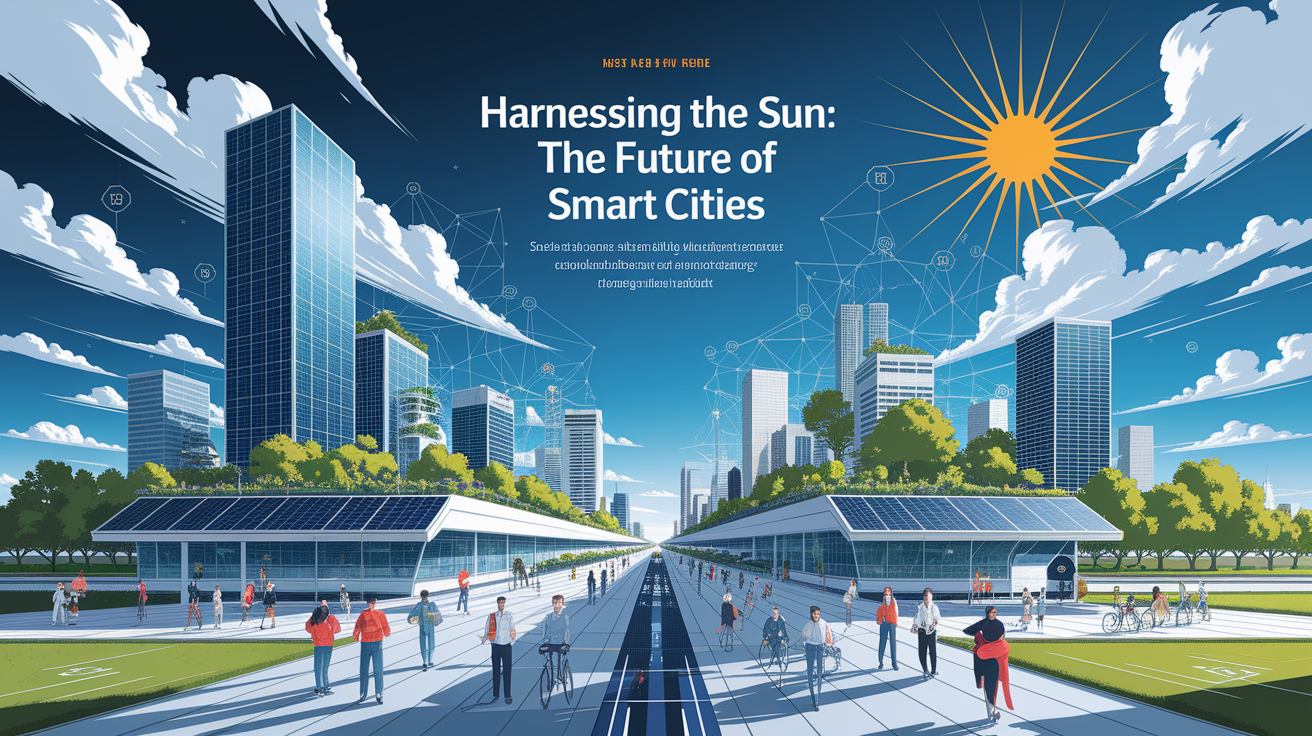
Smart cities represent the convergence of technology and urban planning, using data, connectivity, and innovative infrastructure to create more efficient, sustainable, and livable environments. At the heart of this evolution sits solar energy—a decentralized, clean power source perfectly positioned to transform urban spaces.
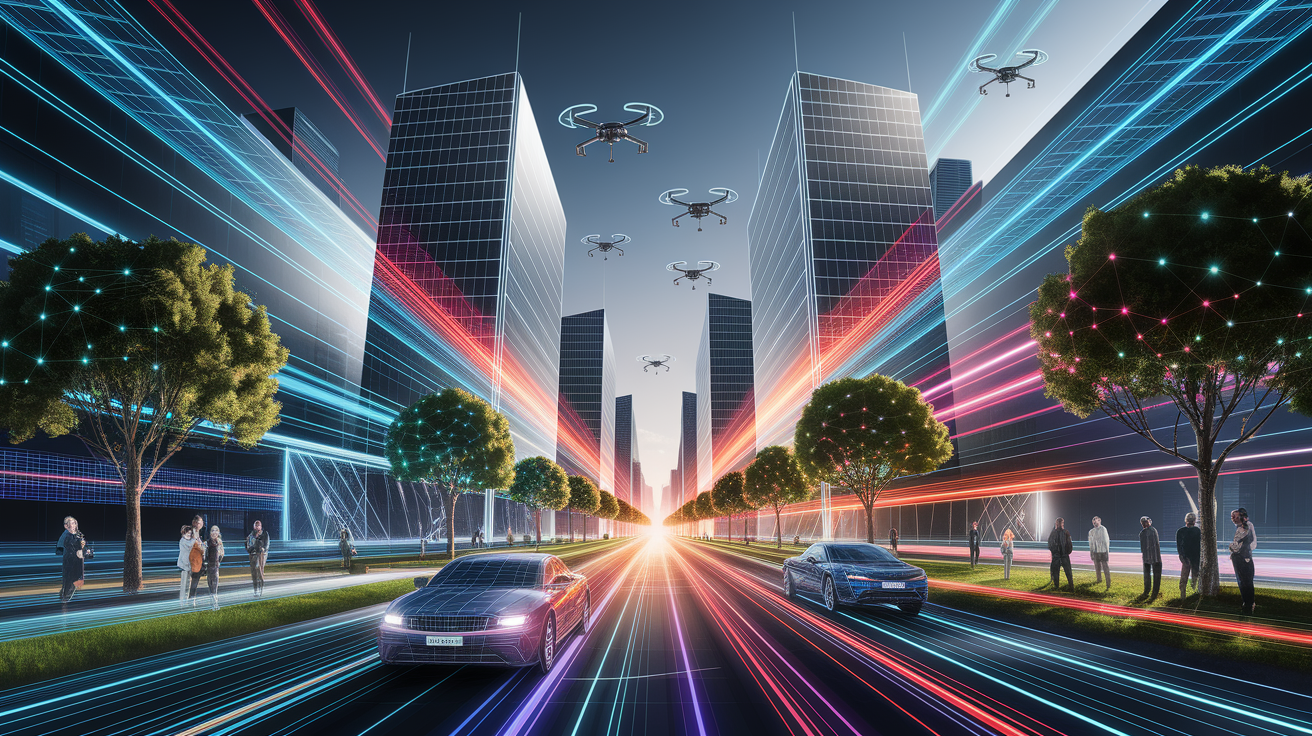
Cities across the globe are increasingly recognizing that solar integration serves as a cornerstone of truly smart urban development, providing not just energy but intelligence to municipal systems. This integration manifests in three key dimensions:
- Physical integration — embedding photovoltaic systems into buildings (BIPV), street furniture, pavements, and public spaces
- Digital systems — deploying monitoring platforms and predictive maintenance tools that optimize energy production and consumption
- Social frameworks — implementing community solar projects that democratize energy access and production
Urban centers qualify as smart renewable cities (SRCs) when they integrate at least 1% solar or wind into their energy mix while maintaining clear expansion plans. This benchmark represents not just an achievement but a starting point for deeper transformation.
Technological Innovations Driving Integration
The technological advancements powering solar integration in smart cities have accelerated dramatically in recent years. Modern photovoltaic systems now regularly achieve efficiency rates exceeding 25%—a substantial improvement from the 15% standard just a decade ago.
Perhaps most promising is the development of perovskite solar cells, which have leaped from 3.8% efficiency in 2009 to over 25% today, signaling a new era of high-performance, potentially lower-cost solar technology suitable for diverse urban applications.
The marriage of solar with digital intelligence has been equally transformative:
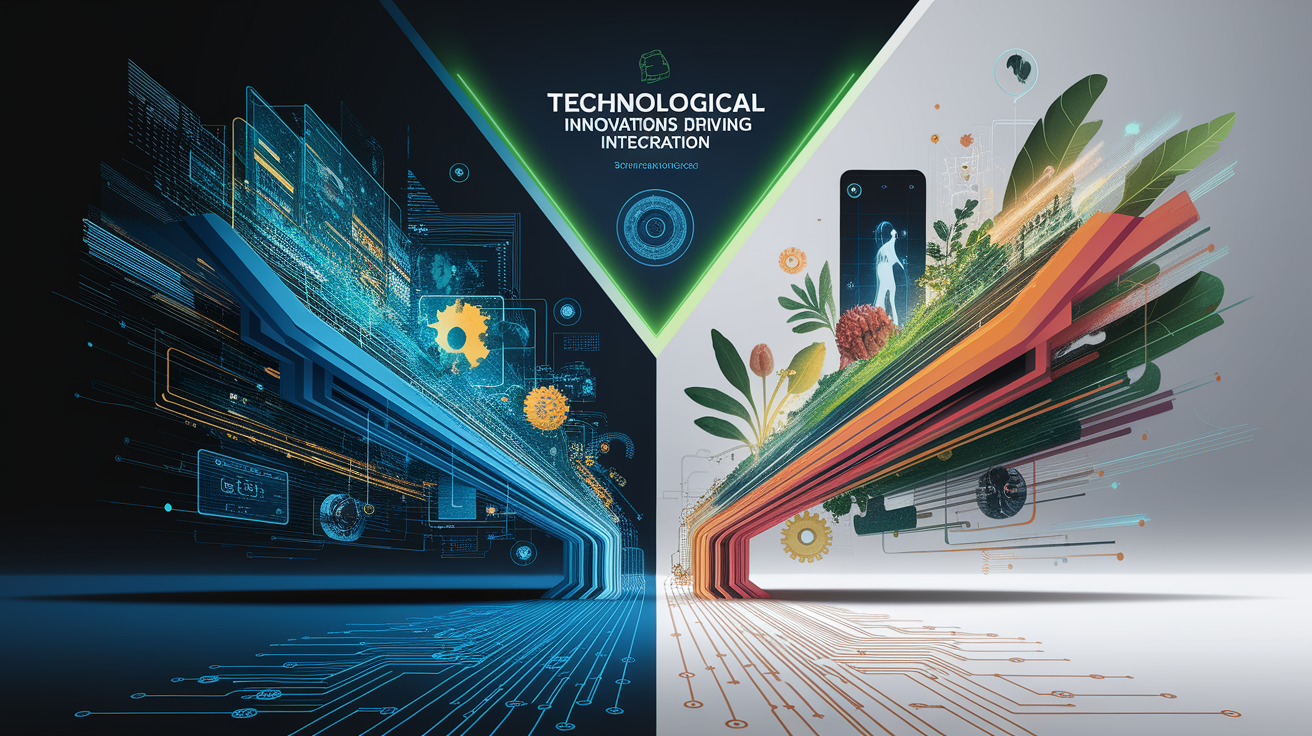
- AI systems forecast energy demand and analyze weather patterns to optimize solar harvesting
- IoT devices enable real-time monitoring and automated responses across distributed solar assets
- Advanced battery storage solutions, particularly improved lithium-ion technologies, ensure reliability despite solar’s intermittent nature
Smart grid technologies now facilitate bidirectional energy flow, allowing buildings to both consume and contribute power. Vehicle-to-grid (V2G) systems enable electric vehicles to serve as mobile energy storage units, stabilizing networks during peak demand or low solar production periods.
In Nordic cities, initiatives like Hyllie’s modular energy systems demonstrate how locally produced solar power can be redistributed through neighborhood networks and integrated with other renewable sources like biogas, creating resilient multi-energy systems despite challenging climate conditions.
Benefits of Solar Integration in Urban Environments
The integration of solar technology into urban infrastructure delivers concrete, measurable benefits across environmental, economic, and social dimensions.
On the environmental front, commercial solar installations reduce carbon footprints by 580-750 kg of CO₂ per kilowatt annually. Grid-connected photovoltaic systems demonstrate lifecycle emissions approximately 89% lower than coal-generated electricity, significantly improving urban air quality and public health outcomes.
Beyond emissions reduction, solar integration helps mitigate the urban heat island effect—a critical advantage as cities face rising temperatures and more frequent heat waves. The manufacturing process for solar panels has also become substantially cleaner, with production emissions falling by 60% since 2010.
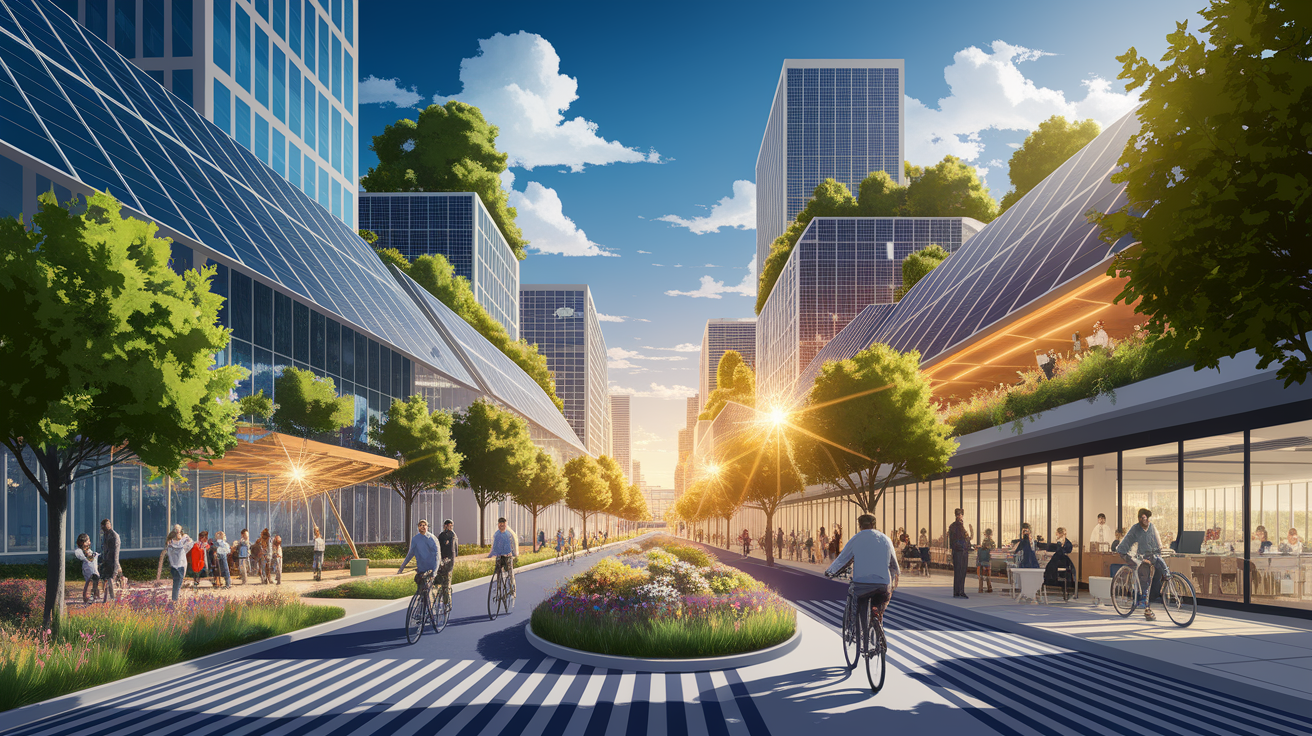
For municipalities, the benefits include:
- Enhanced energy independence and reduced vulnerability to grid failures
- Lower operational costs for public infrastructure like street lighting and municipal buildings
- Support for clean transportation networks through solar-powered charging stations
- Decreased pressure on aging grid infrastructure through distributed generation
These advantages manifest in practical applications like Bengaluru’s solar-powered streetlights and Pune’s building-integrated photovoltaics, creating more sustainable and resilient urban environments while reducing municipal energy costs.
Challenges and Solutions in Solar Integration
Despite its promise, integrating solar power into smart city infrastructure presents significant challenges. Limited urban space, aging grid infrastructure, intermittency issues, and high initial capital costs can impede implementation. Additionally, retrofitting existing buildings with solar capabilities often proves more complex than incorporating such technologies into new construction.
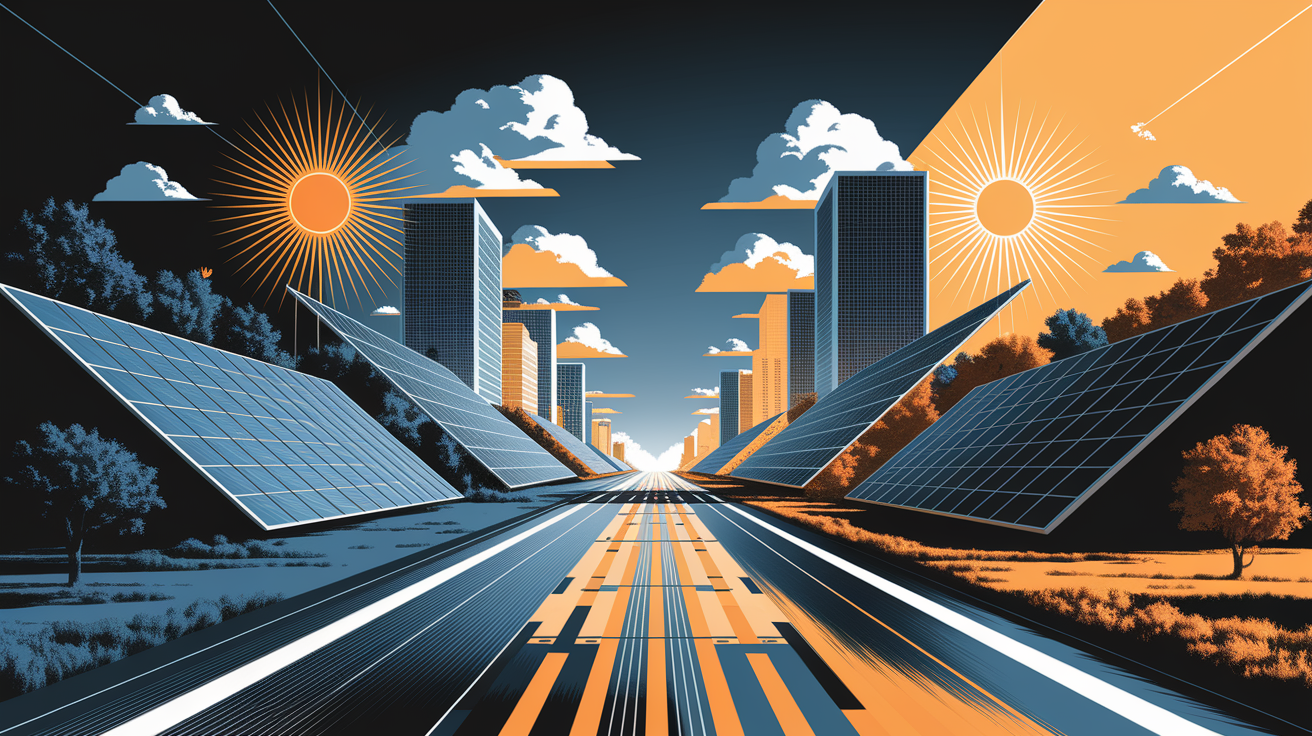
However, innovative solutions are emerging to address these obstacles:
- Space constraints — Cities are adopting creative deployment strategies including solar canopies over parking lots, photovoltaic road surfaces, and vertical solar installations on building facades
- Intermittency — Advanced battery storage systems, combined with AI-powered predictive analytics, help balance supply and demand despite solar’s variable generation patterns
- Capital costs — Community solar projects distribute expenses across multiple stakeholders, while public-private partnerships create viable financing models
- Grid integration — Smart inverters and grid-edge technologies enable seamless connection of distributed solar resources to existing networks
Kerala’s KSEB initiative demonstrates how utilities can optimize transmission and distribution through integrated solar management, while municipalities like Delhi are developing solar-ready building codes that simplify future installations.
Global Examples of Successful Solar Integration
Cities worldwide are demonstrating the practical implementation of solar integration strategies, providing valuable blueprints for others to follow.
In India, several urban centers showcase different aspects of solar-smart city synergy:
- Bengaluru has integrated solar into mobility solutions and public lighting infrastructure
- Nagpur and Delhi are deploying smart grid technologies powered by distributed solar generation
- Pune has embraced building-integrated photovoltaics (BIPV) as standard practice in new construction
- The Bhadla Solar Park supports grid-scale clean energy feeding into urban centers
In Nordic regions, where solar availability presents unique challenges, the Hyllie district project features 120 m² of photovoltaic panels connected to intelligent distribution systems that redirect excess energy to neighboring buildings or electric vehicle charging stations based on real-time demand.
These implementations demonstrate that successful solar integration depends on tailoring solutions to local conditions while maintaining focus on core smart city principles: connectivity, efficiency, and sustainability.
The Road Ahead: Future Trends and Developments
The evolution of solar integration in smart cities continues to accelerate, with several key trends poised to reshape urban energy landscapes:
- Next-generation photovoltaics — Transparent solar cells will transform windows into power generators, while perovskite-silicon tandems push efficiency boundaries beyond 30%
- Enhanced digital twins — Virtual replicas of urban energy systems will optimize solar placement and operation using advanced simulation and modeling
- Decentralized energy markets — Blockchain-based platforms will enable peer-to-peer energy trading between solar-equipped buildings, creating neighborhood-level energy economies
- AI-driven management — Artificial intelligence will coordinate increasingly complex solar ecosystems, balancing production, storage, and consumption in real time
Policy innovations will likely include solar mandates for new construction, streamlined permitting for urban solar projects, and innovative financing mechanisms like green bonds specifically targeting smart city solar infrastructure. These developments will help overcome current adoption barriers and accelerate implementation.
Shining a Light on Tomorrow’s Cities
The integration of solar power into smart city frameworks represents more than just an energy solution—it’s a fundamental rethinking of how urban environments function and serve their residents. By embedding clean energy generation into the fabric of city infrastructure, municipalities create more resilient, sustainable, and economically viable communities.
The most successful implementations share common characteristics: they treat solar not as a standalone technology but as part of an interconnected ecosystem of smart systems. They balance immediate benefits with long-term planning, and they engage communities as active participants rather than passive consumers.
As technology continues to advance and costs decline, the question for urban planners and city leaders shifts from “Should we integrate solar?” to “How quickly and comprehensively can we implement these solutions?” The cities that answer most effectively will be the ones that thrive in an increasingly resource-constrained, climate-challenged future.
The path to truly smart cities is clear—and it’s illuminated by the power of the sun.