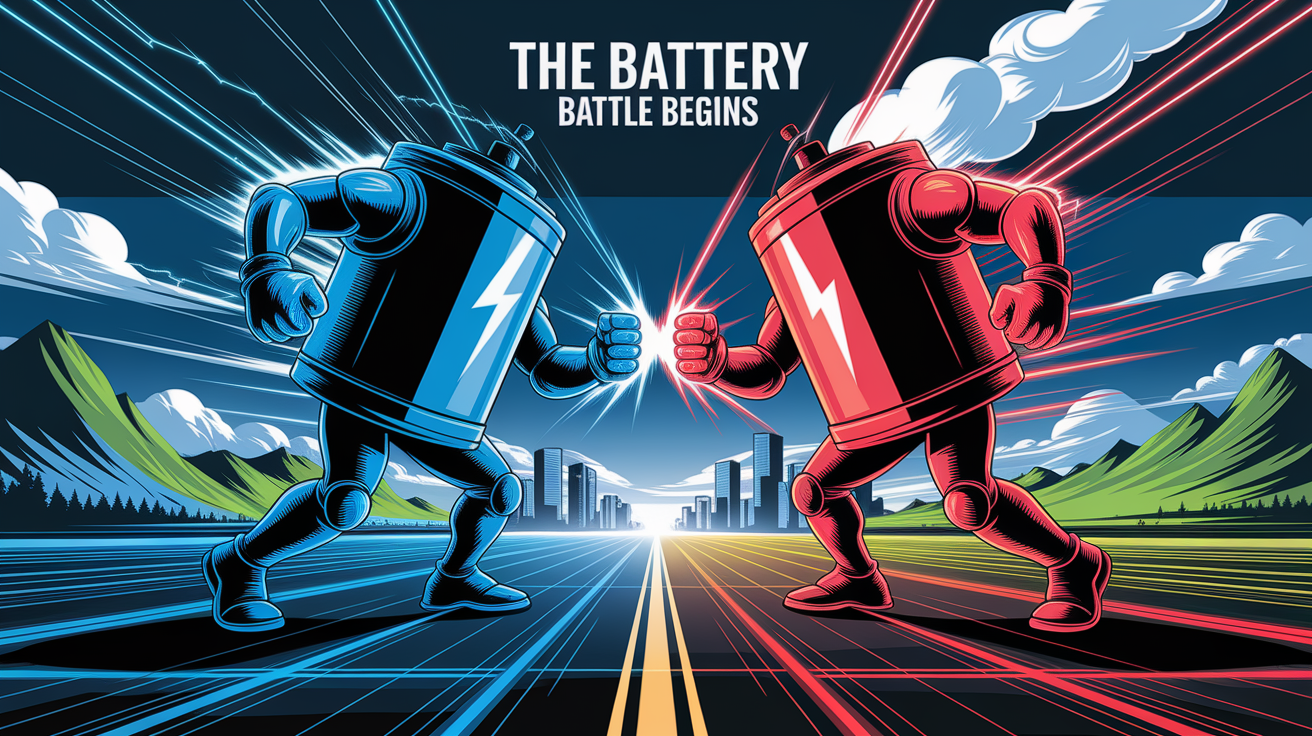
Introduction – The Battery Battle Begins
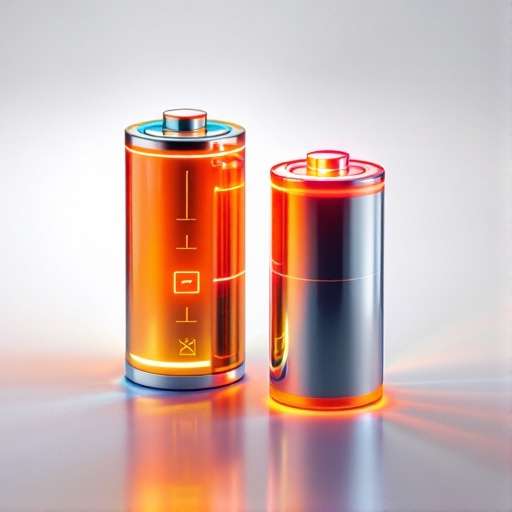
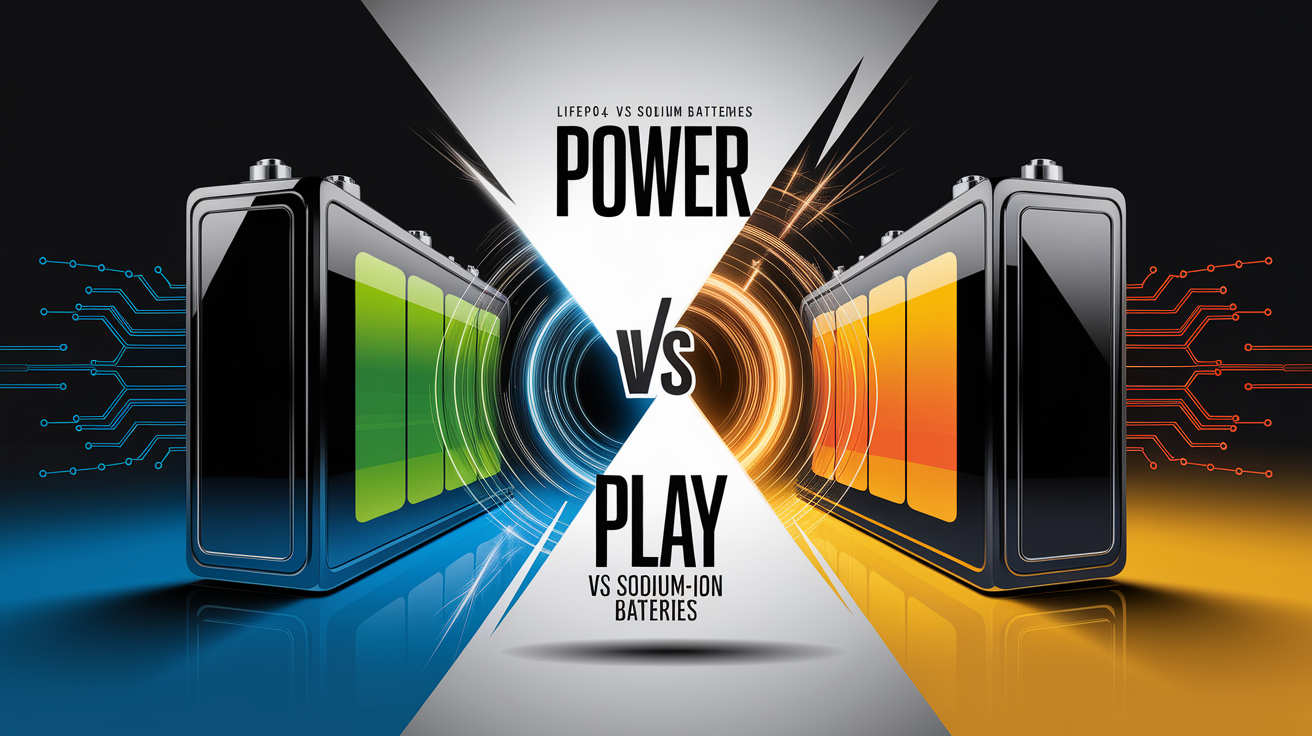
The race for efficient, affordable energy storage is intensifying as renewable energy adoption accelerates worldwide. Two contenders have emerged at the forefront: Lithium Iron Phosphate (LiFePO4 or LFP) and sodium-ion batteries, each with distinct advantages in the evolving energy landscape.
LFP batteries, a well-established lithium-ion variant, have dominated the market with their proven reliability and safety profile. Meanwhile, sodium-ion technology is gaining momentum as a promising alternative that uses more abundant materials.
As grid storage demands grow and electric vehicle markets expand, understanding the differences between these battery chemistries becomes increasingly crucial for consumers, manufacturers and energy planners alike.
Performance Comparison
When comparing raw performance metrics, LFP batteries currently maintain an edge in several key categories. Technical comparisons show LFP batteries generally exhibit higher volumetric and gravimetric energy densities than their sodium-ion counterparts, storing more energy per unit of weight and volume.
In discharge testing, LFP batteries consistently maintain nearly 100% of their rated capacity even at high discharge rates. Sodium-ion batteries perform admirably but slightly lower, typically delivering 90-93% capacity under various loads.

The performance gap is narrowing, however. Next-generation sodium-ion batteries are expected to reach approximately 175 Wh/kg, approaching current LFP levels. This improvement could significantly reduce the performance differential between the technologies.
Cold weather performance represents another important consideration for battery applications. While LFP batteries have established solid low-temperature performance, sodium-ion batteries demonstrate surprising resilience in cold conditions, outperforming lead-acid batteries and showing potential to compete with lithium-based options in challenging environments.
Cost Considerations
Cost advantages significantly favor sodium-ion technology. The fundamental chemistry relies on sodium, an element roughly 1,000 times more abundant in Earth’s crust than lithium.
Sodium hydroxide and sodium salts used in battery production cost substantially less than comparable lithium compounds. This resource advantage translates directly to manufacturing economics, particularly as production scales.

LFP batteries, while more affordable than other lithium-ion variants like NMC (Nickel Manganese Cobalt), still face supply constraints and price volatility due to lithium’s limited availability and concentration in specific geographic regions. This creates geopolitical dependencies that sodium-ion technology largely avoids.
As manufacturers increase sodium-ion battery production volumes, the cost per kilowatt-hour is expected to decrease significantly, potentially undercutting LFP batteries on price while offering comparable performance for many applications.
Environmental Impact
The environmental footprint of battery production and disposal has become increasingly important as deployment scales. Both technologies offer advantages over conventional energy storage but differ in their impacts.
Sodium-ion battery production benefits from using more abundant, widely distributed raw materials. This reduces the environmental damage associated with mining rare elements and decreases transportation emissions in the supply chain.
LFP batteries already represent an improvement over other lithium-ion chemistries by eliminating cobalt and nickel, but still rely on lithium mining operations, which can have significant local environmental impacts including water usage in sensitive regions.

Battery degradation and recycling represent additional environmental considerations. Both chemistries offer relatively long cycle lives, with LFP batteries typically achieving 2,000-4,000 cycles before significant capacity loss. Lifecycle analysis shows sodium-ion batteries demonstrating promising longevity as well, though with less real-world deployment data available.
In terms of safety and thermal stability, both battery types demonstrate advantages over conventional lithium-ion batteries. Sodium-ion batteries present inherently lower risks of thermal runaway, the dangerous condition where batteries can overheat, catch fire or explode. LFP already improves safety compared to other lithium chemistries, but sodium-ion technology pushes these safety advantages further.
Application Suitability
The different characteristics of these battery technologies make each better suited for specific applications.
LFP batteries have established themselves in electric vehicles, residential and commercial energy storage systems. Their higher energy density makes them appropriate where space and weight constraints exist, while their proven safety record has earned regulatory approvals across markets.
Sodium-ion batteries excel in stationary energy storage applications where cost sensitivity outweighs energy density concerns. Grid-scale installations, backup power systems, and renewable energy integration represent ideal use cases.
Certain automakers are exploring sodium-ion batteries for smaller, more affordable electric vehicles. Community discussions highlight how manufacturers like BYD are investigating sodium-ion technology for microcars where ultra-high energy density is less critical than achieving lower price points.
The battery management system requirements differ between the chemistries as well. LFP systems benefit from years of optimization, while sodium-ion battery management continues to evolve as the technology matures, presenting both challenges and opportunities for system designers.
Conclusion – The Final Charge
The competition between LiFePO4 and sodium-ion batteries represents not a winner-takes-all scenario but rather an expanding toolbox for addressing diverse energy storage needs.
LFP batteries maintain advantages in energy density and established manufacturing infrastructure, making them the current preferred choice for electric vehicles and applications with space constraints.
Sodium-ion technology offers compelling cost advantages, reduced environmental impact, and enhanced safety, positioning it strongly for grid storage and price-sensitive applications.
As renewable energy adoption accelerates globally, both technologies will likely find significant market share, with sodium-ion batteries complementing rather than completely replacing LFP in the near term. The ultimate beneficiary of this technological competition will be consumers, who stand to gain access to safer, more affordable and more sustainable energy storage options.