Introduction
Lithium Iron Phosphate (LiFePO4 or LFP) batteries are emerging as a critical technology in the rapidly evolving electric vehicle market. These cobalt-free power sources offer a distinct chemistry characterized by lithium-iron-phosphate cathode material, setting them apart from conventional lithium-ion batteries.

As automakers seek safer, more cost-effective battery solutions, LFP technology has gained significant traction. While they typically provide lower energy density than other lithium-ion variants, their enhanced thermal stability and longer service life have made them increasingly attractive for mass-market electric vehicles and commercial applications.
Main Content
Safety and Stability Advantages
LFP batteries stand out primarily for their safety profile. They demonstrate exceptional resistance to thermal runaway events, the cascading chemical reactions that can lead to fires in other battery types. This stability stems from the oxygen remaining tightly bonded in the phosphate structure during failure scenarios, according to battery safety analyses.
“Unlike nickel-cobalt chemistries, LFP batteries maintain structural integrity even under extreme conditions,” said battery safety experts at a recent industry conference. This characteristic makes them particularly valuable for vehicles operating in demanding environments.
Extended Lifespan and Economic Benefits
The durability of LFP batteries represents a significant economic advantage for EV owners. These power cells consistently achieve between 2,500 to 9,000 complete charge cycles before significant degradation occurs. This longevity far surpasses many competing lithium-ion chemistries, potentially enabling an electric vehicle to operate for over 1 million miles on a single battery pack.
Recent market analyses indicate LFP batteries typically cost approximately 15% less than nickel-manganese-cobalt alternatives. This cost advantage, combined with reduced replacement frequency, substantially lowers the total ownership costs of LFP-equipped electric vehicles.
Environmental and Ethical Considerations
The absence of cobalt in LFP batteries addresses significant ethical concerns associated with traditional lithium-ion production. Cobalt mining has faced scrutiny for human rights abuses and environmentally destructive practices in certain regions.

Additionally, the manufacturing carbon footprint of LFP cells is typically lower than other lithium-ion variants. Their simpler chemistry requires fewer rare earth elements and enables more straightforward recycling processes when batteries reach end-of-life.
Performance Limitations
Despite their advantages, LFP batteries present certain performance trade-offs. Their energy density ranges from 90-160 Wh/kg, notably lower than nickel-based alternatives that can exceed 250 Wh/kg. This density difference necessitates larger, heavier battery packs to achieve comparable driving ranges.
Cold-weather performance represents another challenge. LFP batteries experience more significant capacity and power output reductions at low temperatures than some competitors. Vehicle manufacturers have addressed this limitation by implementing sophisticated battery management systems that precondition cells before operation in cold environments.
Market Adoption and Industry Trends
LFP batteries have rapidly gained market share, accounting for approximately 31% of EV battery deployments as of 2022. Tesla has emerged as a prominent adopter, incorporating LFP technology in standard-range Model 3 and Model Y vehicles.
Other major manufacturers including Ford and Volkswagen have announced similar transitions toward LFP chemistry for their more affordable EV models. This industry shift reflects growing recognition of LFP’s value proposition for mass-market electric vehicles.
Commercial fleet operators have shown particular interest in LFP technology. The chemistry’s durability and safety characteristics make it well-suited for ride-sharing, delivery, and municipal vehicle applications where daily utilization rates are high and operational reliability is paramount.
Integration and Application in Electric Vehicles
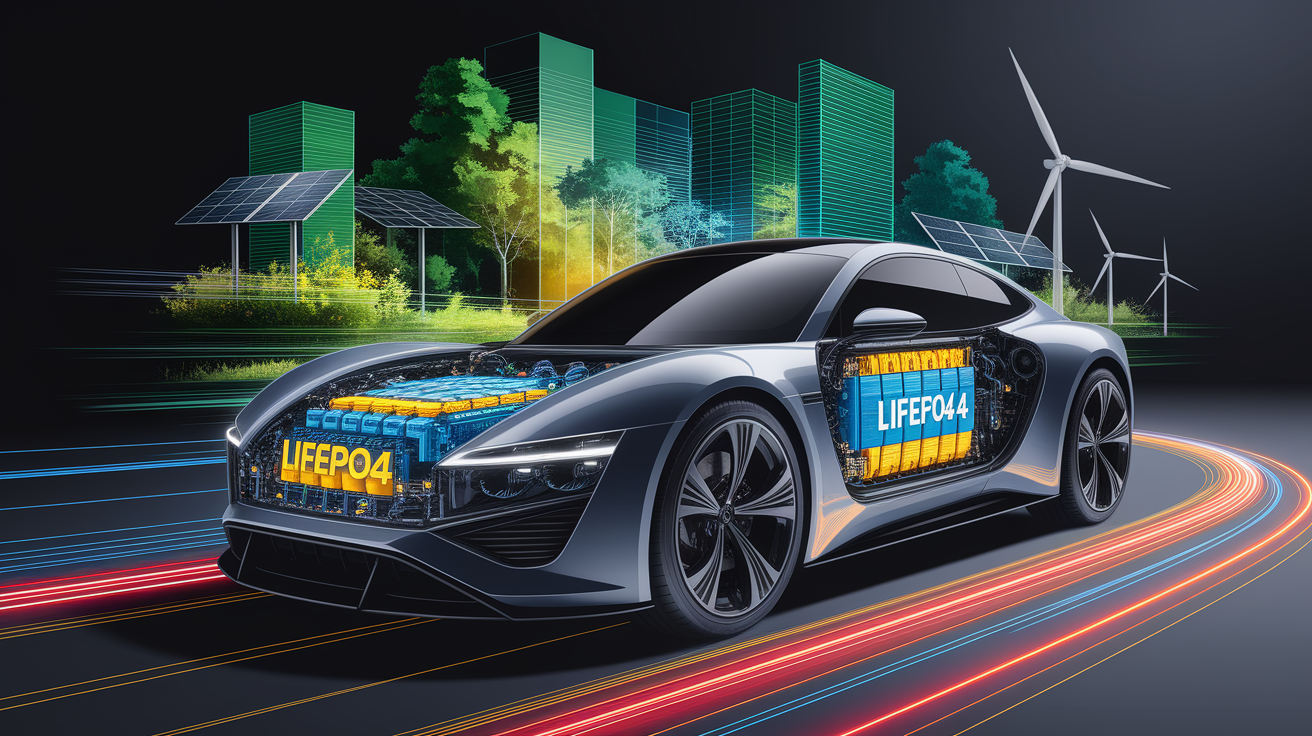
In electric vehicle designs, LFP battery cells are typically arranged in carefully engineered packs that optimize voltage delivery and thermal management. The chemistry’s tolerance for high discharge rates supports robust acceleration, while its resistance to overcharging simplifies battery management system requirements.
LFP batteries demonstrate particular compatibility with fast-charging infrastructure, experiencing less degradation from rapid charging cycles than many alternative chemistries. This characteristic proves especially valuable for vehicles requiring quick turnaround times between operations.
The technology also integrates effectively with renewable energy systems. Solar-powered charging stations paired with LFP-equipped vehicles create particularly sustainable transportation solutions, leveraging the battery chemistry’s efficiency and longevity.
Conclusion
LiFePO4 batteries represent a significant advancement in electric vehicle technology, balancing safety, longevity, and affordability. While energy density limitations persist, their superior thermal stability and cycle life have established them as a cornerstone of the affordable EV segment.

As manufacturing processes continue to evolve and battery management systems become increasingly sophisticated, LFP technology will likely maintain its growing market position. For consumers and fleet operators prioritizing operational costs and reliability over maximum range, LFP-powered electric vehicles offer a compelling and increasingly popular option in the expanding electric mobility landscape.