
The Power of Wind Turbines
Wind energy represents one of humanity’s most successful attempts at harnessing a natural, renewable resource. Modern wind turbines transform the kinetic energy of moving air into electrical power with remarkable efficiency—converting up to 50% of available wind energy into usable electricity, significantly higher than the 1-2% efficiency of early models from the 1970s.
The global wind power capacity now exceeds 837 GW, with a single modern utility-scale turbine capable of generating enough electricity to power approximately 1,500 homes annually. This explosive growth stems from decades of engineering refinement that can be traced back to ancient windmills. The earliest recorded use of wind energy dates to 644 AD in Persia, where vertical-axis windmills with rectangular blades were employed for mechanical tasks like grinding grain.
Today’s wind turbines typically begin generating electricity at wind speeds of 3-4 meters per second (7-9 mph) and reach maximum production at around 12-15 meters per second (27-34 mph). This efficient wind energy conversion has transformed wind power from an alternative energy curiosity to a mainstream generation resource that increasingly challenges conventional power systems on both cost and performance.
Key Components of Wind Turbines
Understanding wind turbines requires familiarity with their core components, each engineered to maximize energy capture and conversion:
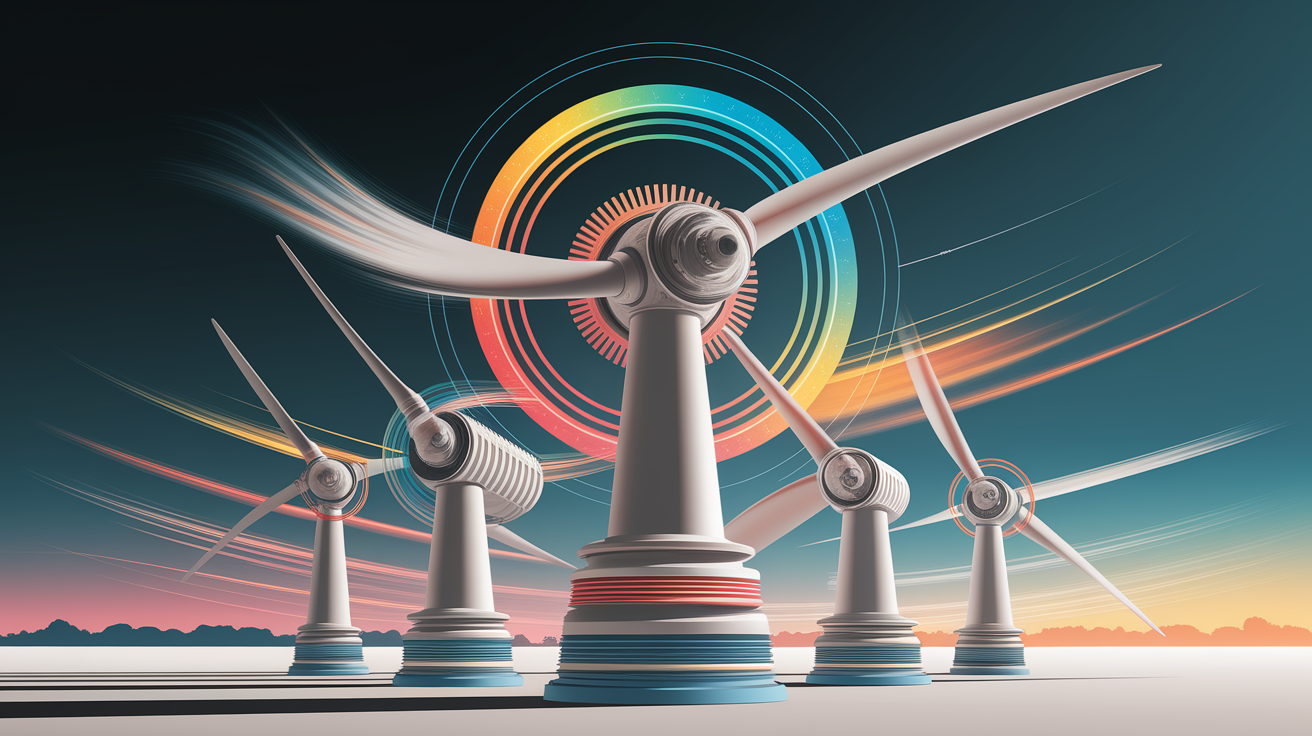
- Rotor Blades: Typically three aerodynamically designed blades that capture wind energy. Modern blades often exceed 80 meters in length for utility-scale turbines, crafted from composite materials like fiberglass and carbon fiber that optimize strength-to-weight ratio.
- Nacelle: The housing that contains the generator, gearbox, and control systems—essentially the powerhouse of the turbine.
- Generator: Converts the mechanical energy of rotation into electrical energy, with capacities ranging from 2-15 MW in modern utility-scale turbines.
- Gearbox: Increases the low rotational speed of the blades (typically 5-20 RPM) to the high speeds required by generators (1000-1800 RPM), though some newer designs use direct-drive systems that eliminate this component.
- Anemometer and Wind Vane: Monitor wind speed and direction, providing critical data for turbine operation and optimization.
- Yaw System: Rotates the nacelle to keep blades facing into the wind for maximum energy capture.
- Pitch Control System: Adjusts blade angles to optimize performance at different wind speeds and protect the turbine during excessive winds.
- Tower: Supports the nacelle and rotor, with heights commonly reaching 80-120 meters to access stronger, more consistent winds at higher elevations.
- Foundation: Provides structural stability, typically requiring 400-600 cubic meters of concrete for a utility-scale turbine.
These components work in concert to achieve what wind turbine designs have sought since their inception: efficient extraction of kinetic energy from moving air and its conversion to usable electricity. Modern turbines typically operate for 20-25 years with proper maintenance, addressing the common question about wind turbine lifespan.
Types of Wind Turbines
Wind turbines come in various configurations, each optimized for specific conditions and applications:
By Axis Orientation
- Horizontal Axis Wind Turbines (HAWTs): The dominant design worldwide, comprising over 90% of installed capacity. These turbines feature blades that rotate around a horizontal axis parallel to the ground. Their high efficiency and proven reliability have made them the standard for utility-scale projects.
- Vertical Axis Wind Turbines (VAWTs): With blades rotating around a vertical axis perpendicular to the ground, these include Darrieus (“eggbeater”) and Savonius designs. Their omnidirectional operation eliminates the need for wind direction control systems, making them suitable for turbulent urban environments and small-scale applications where conventional HAWTs might be impractical.
By Installation Location
- Onshore Wind Turbines: Installed on land, these represent approximately 70% of global wind capacity. Installation costs average $1,300-$1,700 per kW of capacity.
- Offshore Wind Turbines: Placed in bodies of water (typically oceans), these access stronger, more consistent winds and can be scaled larger than land-based counterparts. Offshore wind technology has expanded rapidly in recent years, with installation costs ranging from $2,800-$4,000 per kW but delivering up to 50% more energy than comparable onshore turbines.
By Size and Application
- Utility-Scale: Large turbines (2-15+ MW) connected to the power grid in wind farms.
- Commercial/Industrial: Medium-sized turbines (100 kW-1 MW) for businesses, factories, or institutions.
- Residential/Small-Scale: Smaller turbines (1-20 kW) for homes, farms, or remote applications, with installation costs for residential systems typically ranging from $3,000-$8,000 per kW of capacity.
Wind farm design has evolved significantly from early installations, with modern facilities employing sophisticated wind resource assessment and turbine performance monitoring to optimize power output and reduce maintenance costs.
Technological Advancements
The evolution of wind turbines represents one of renewable energy’s most impressive technological journeys. From simple mechanical windmills to today’s sophisticated power generators, advances in materials science, aerodynamics, and digital control systems have transformed what’s possible with wind energy.
Materials Revolution
The blade manufacturing process has evolved dramatically, moving from wood and metal to advanced composites. Today’s blades incorporate fiberglass, carbon fiber, and thermoplastic materials that maximize strength while minimizing weight. This evolution has enabled blade lengths to increase from 10-15 meters in the 1980s to over 100 meters today, with corresponding increases in energy capture.
Smart Systems Integration
Modern wind turbines feature sophisticated control and monitoring systems that continually adjust operation based on wind conditions. These smart wind systems include:
- Advanced Pitch Control: Real-time adjustment of blade angles to maximize energy capture across varying wind speeds.
- LIDAR Integration: Light detection and ranging sensors that “see” approaching wind patterns and preemptively optimize turbine response.
- Predictive Maintenance: AI-driven systems that identify potential component failures before they occur, reducing downtime and repair costs.
Noise Reduction Technology
Early concerns about turbine noise have driven significant innovations in acoustic engineering. Modern blade designs incorporate serrated trailing edges, inspired by owl wings, that reduce noise by up to 8 decibels while maintaining or improving aerodynamic performance.
Grid Integration Systems
As wind becomes a larger portion of the energy mix, sophisticated power electronics now enable turbines to provide grid stability services rather than just variable power. These systems allow for:
- Reactive power support
- Frequency regulation
- Fault ride-through capability
- Seamless integration with energy storage systems
The National Renewable Energy Laboratory continues to pioneer research in turbine efficiency and power output optimization, pushing the boundaries of what’s possible with wind technology. These advances have helped reduce the levelized cost of wind energy by over 70% since 2009.
Environmental Impact and Benefits
Wind turbines deliver substantial environmental benefits while presenting certain challenges that the industry continues to address through innovation and best practices.
Environmental Benefits
- Carbon Reduction: A single 2 MW wind turbine can prevent approximately 3,000-4,000 tons of CO2 emissions annually compared to fossil fuel generation.
- Water Conservation: Wind power requires virtually no water for electricity generation, compared to thermal power plants that consume 0.2-0.6 gallons of water per kWh.
- Land Efficiency: Wind farms leave 98% of their land area available for agriculture or natural habitat, creating dual-use opportunities.
- Rapid Energy Payback: Modern turbines generate enough energy to offset their manufacturing and installation energy costs within 3-9 months of operation.
Environmental Considerations
- Wildlife Interactions: Bird and bat mortality has been reduced through improved siting practices and technology. Modern turbines have a mortality rate of approximately 0.27 birds per GWh compared to 5.18 birds per GWh for fossil fuel plants.
- Visual Impact: Newer turbine designs and thoughtful placement minimize visual disruption to landscapes.
- Noise Concerns: Advanced blade designs and proper setbacks from residences have addressed most noise issues. At 300 meters distance, modern turbines produce sound levels of about 43 decibels—comparable to a refrigerator’s hum.
The U.S. Department of Energy recognizes these trade-offs while emphasizing wind energy’s net positive environmental impact in its comprehensive assessments of renewable energy sources.
Future Trends in Wind Energy
The wind energy sector continues to evolve rapidly, with several key trends shaping its future development:
Scaling Up: Bigger and More Powerful
Wind turbines continue to grow in size and capacity, with offshore designs now reaching 15+ MW and rotor diameters exceeding 220 meters. By 2030, 20+ MW turbines are expected to enter commercial production, dramatically reducing the levelized cost of wind energy through economies of scale.
Floating Offshore Expansion
Floating platforms are unlocking wind resources in deeper waters previously inaccessible to fixed-foundation designs. This technology will expand the global potential for offshore wind by allowing development in regions with deep coastal waters, such as the Pacific coast of North America, Japan, and portions of Europe.
Advanced Materials and Manufacturing
Emerging materials like thermoplastic composites enable easier recycling of turbine components, addressing end-of-life concerns. Additive manufacturing (3D printing) is beginning to transform blade production, allowing for more complex, efficient geometries that were previously impossible to manufacture.
Integrated Energy Solutions
Wind farms are increasingly being designed as part of integrated energy systems rather than standalone facilities. These hybrid systems include:
- Wind-solar hybrid plants that share transmission infrastructure
- Co-located battery storage systems that firm power output
- Wind-to-hydrogen production facilities that create green hydrogen during periods of excess generation
Wind turbine certification standards continue to evolve to encompass these new configurations and applications, ensuring reliability while enabling innovation.
Catching the Breeze: The Future of Wind Turbines
Wind energy stands at an inflection point. No longer an alternative energy source, it has become a cornerstone of the global energy transition. As grid integration challenges are solved through improved forecasting and storage technologies, wind’s role will continue to expand.
The economics increasingly favor wind power, with unsubsidized costs now competitive or advantageous compared to conventional generation in most markets. This economic reality, combined with corporate sustainability goals and governmental climate commitments, ensures strong demand for continued innovation.
For energy professionals, homeowners, and policymakers alike, wind turbine technology represents one of humanity’s most successful responses to our climate and energy challenges. As the industry matures, its focus is shifting from proving viability to optimizing performance, integration, and lifecycle sustainability.
The winds of change in energy are blowing strongly—and increasingly, they’re being harnessed by ever more sophisticated turbines that turn that invisible force into clean, renewable electricity for generations to come.