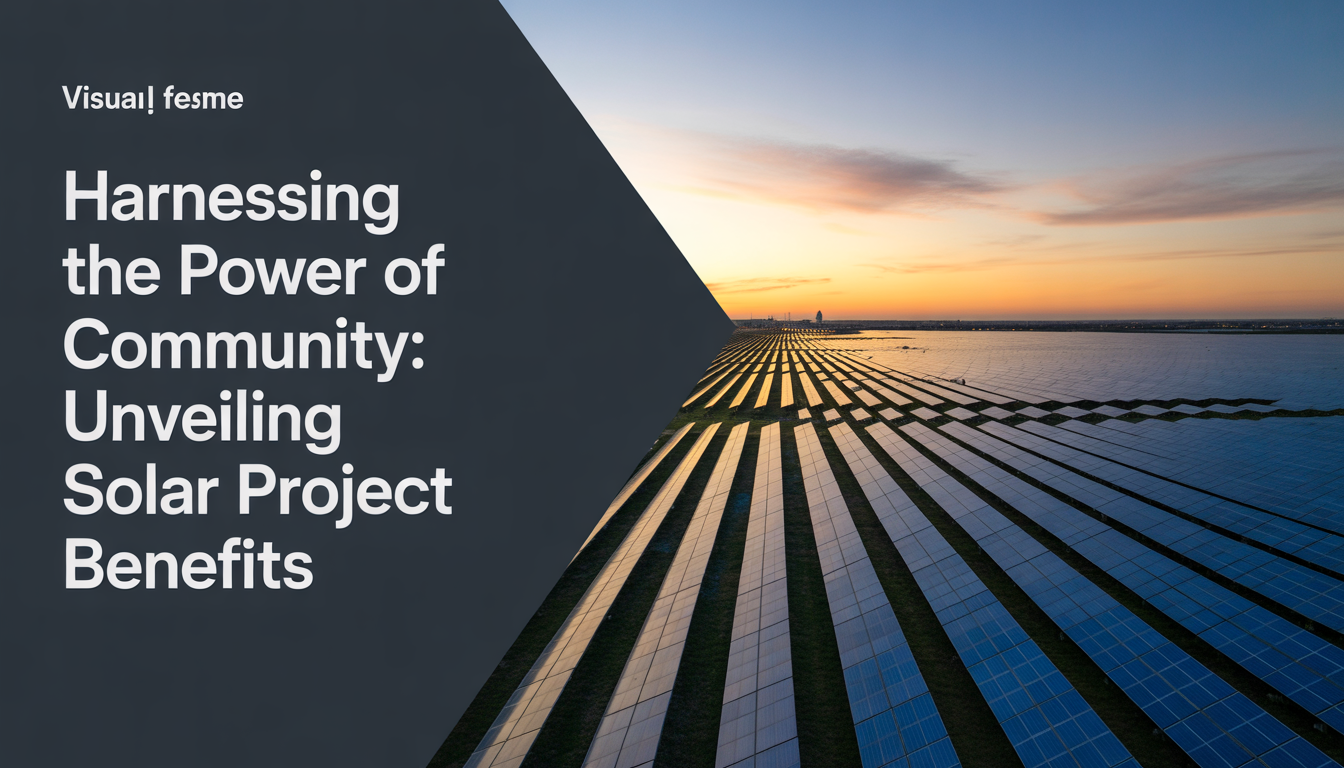
The Bright Side of Community Solar
Community solar represents one of the most significant democratizing forces in the renewable energy landscape today. Unlike traditional rooftop installations, community solar projects enable multiple participants—households, businesses, and organizations—to benefit from a shared solar installation without requiring panels on their own property.

The mechanism is straightforward yet transformative: subscribers purchase or lease portions of a solar farm located within their utility area. The electricity generated flows directly into the grid, and participants receive credits on their monthly utility bills proportionate to their investment. This elegant solution removes traditional barriers to solar adoption while distributing benefits across diverse community segments.
According to the National Renewable Energy Laboratory, this shared solar model addresses a critical gap in renewable energy access—nearly half of American households and businesses cannot host rooftop solar systems due to structural limitations, ownership status, or financial constraints.
Financial Advantages
The economic case for community solar is compelling, delivering tangible benefits without requiring substantial upfront investment:

- Immediate bill reduction: Participants typically enjoy savings between 5% and 20% on their electricity costs from day one of enrollment
- Zero installation expenses: Unlike rooftop installations that can cost $15,000-$25,000, community solar requires no upfront equipment investment
- Predictable energy pricing: Many programs offer fixed rates that protect against utility price volatility
- Enhanced property values: Communities with solar projects often see increased property valuations
Beyond individual savings, these installations drive broader economic development. Community solar projects stimulate local economies through job creation in development, construction, maintenance, and administration sectors. The installations also contribute to local tax bases, funding essential community services while reducing collective energy expenditures.
For many subscribers, the ability to support renewable energy while simultaneously reducing monthly expenses creates a rare win-win financial proposition—particularly important for budget-conscious households and businesses seeking sustainability without premium costs.
Accessibility and Inclusivity
Perhaps the most transformative aspect of community solar is how it extends clean energy access to previously excluded demographics:
- Renters and apartment dwellers who cannot modify their properties
- Properties with unsuitable roof orientation, shading, or structural limitations
- Low and moderate-income households without capital for personal installations
- Small businesses operating in leased facilities
This inclusivity represents a paradigm shift in renewable energy deployment. Community solar removes traditional barriers that have historically limited solar participation to homeowners with suitable properties and financial resources.

Many programs now specifically allocate portions of projects for low-income subscribers, sometimes offering additional incentives or flexible terms. This deliberate emphasis on energy equity ensures that the transition to renewable energy doesn’t leave vulnerable populations behind—instead, it prioritizes their participation and proportionally greater potential savings.
For subscribers concerned about mobility, most programs now offer straightforward transfer or cancellation policies, addressing the common question: “What happens if I move while subscribed to community solar?” Subscribers typically can transfer their subscription to their new address (if within the same utility territory) or cancel with reasonable notice.
Strengthening Community Bonds
Beyond tangible economic and environmental impacts, community solar creates powerful social cohesion through shared purpose and collective action.
Community-driven solar projects often involve local leadership, creating opportunities for civic engagement and collaborative decision-making. These initiatives transform passive utility customers into active energy stakeholders with shared interests in their project’s performance and community impact.
The collaborative nature of these installations fosters relationships between diverse participants—homeowners, renters, businesses, schools, and municipal facilities—who might otherwise have limited interaction. This cross-sectional engagement strengthens community fabric while building resilience through energy independence.

Many projects incorporate educational components, hosting site tours, workshops, and school programs that build energy literacy and inspire future sustainability professionals. These educational initiatives extend benefits beyond subscribers to the broader community, creating a multiplier effect that amplifies project impact.
When local contractors and materials are prioritized during development and maintenance, community solar keeps energy dollars circulating within the local economy rather than flowing to distant utility conglomerates, further strengthening regional economic resilience.
Future-Proofing Energy Needs
Community solar projects deliver immediate benefits while simultaneously building infrastructure for long-term community resilience:
- Grid stability: Distributed generation through community solar reduces grid congestion and vulnerability during peak demand periods
- Environmental protection: Each project reduces fossil fuel dependence and associated emissions, improving local air quality and reducing carbon footprint
- Climate resilience: Increasingly, projects incorporate storage capacity and microgrid capabilities that can maintain critical services during grid outages
- Regulatory compliance: Projects help utilities meet renewable portfolio standards while giving communities agency in how these standards are achieved
The modular nature of community solar allows for incremental capacity expansion as technology improves and community needs evolve. This adaptability contrasts sharply with centralized fossil infrastructure that typically requires massive capital investment and decades-long operational commitments.
As battery storage costs continue to decline, many community solar projects are incorporating storage components that enhance grid services and resilience benefits. These hybrid systems can provide backup power during outages, further increasing their value to both subscribers and the broader community.
Shining a Light on the Path Forward
Community solar represents a transformative approach to energy generation that aligns economic, environmental, and social objectives. By removing traditional barriers to participation, these projects enable broader access to renewable energy benefits while strengthening local economies and community bonds.
For individuals considering participation, the process is straightforward: identify available programs in your area, review subscription terms for savings potential and flexibility, and enroll with your utility account information. No equipment installation or property modifications are required, and most subscribers begin seeing savings on their very first bill after enrollment.
As we navigate an increasingly complex energy landscape, community solar offers a proven model for democratizing clean energy access while building resilience from the ground up—one shared solar array at a time.