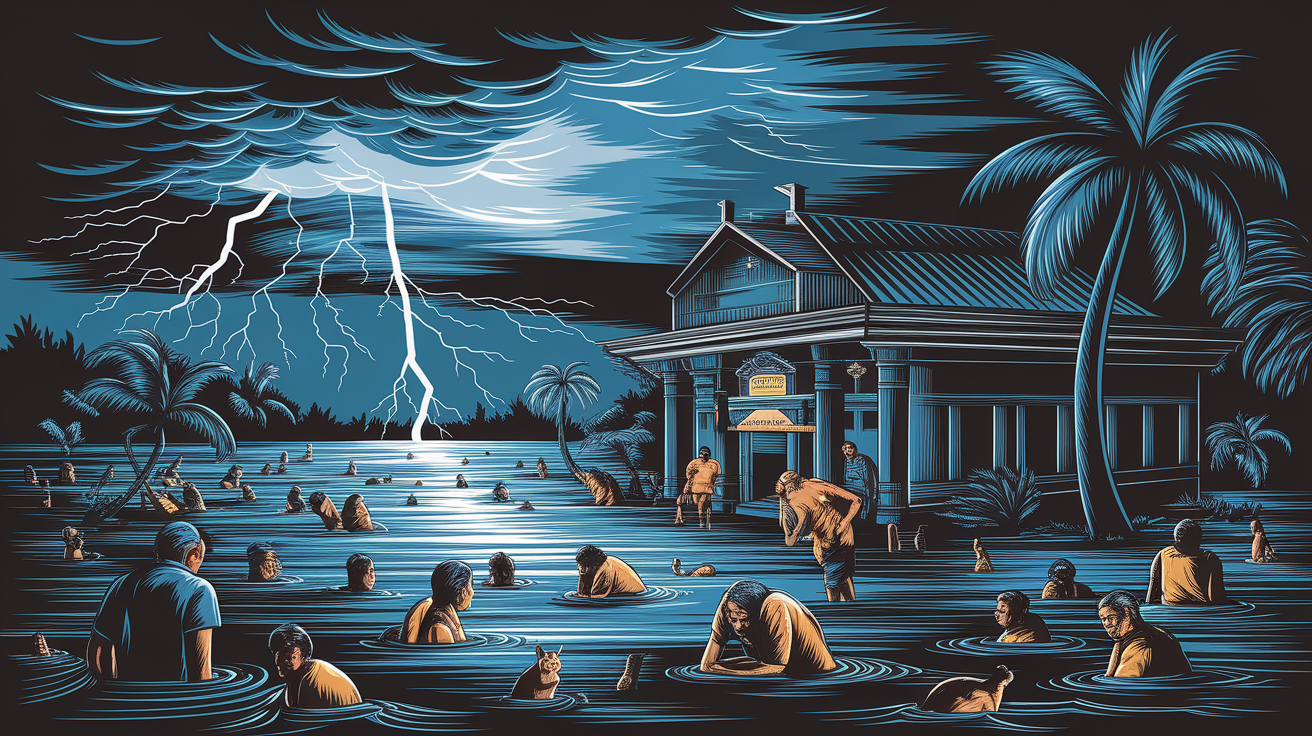
Unprecedented Weather Disasters Expose Urgent Need for Resilient Energy Infrastructure
Late November through early December 2025 brought a devastating convergence of tropical cyclones and monsoon rains to Southeast Asia and Sri Lanka, resulting in catastrophic flooding, landslides, and widespread destruction. According to Business Standard, the death toll has surpassed 1,600 region-wide, with Sri Lanka alone reporting hundreds dead or missing. Millions have been displaced, and the storms have crippled transportation, utilities, and economic activity across multiple countries.
Rare Cyclone Formation Signals Shifting Climate Baselines
Three named tropical cyclones—Ditwah, Senyar, and Koto—formed in rapid succession during the height of the northeast monsoon season. Of particular meteorological significance was Cyclone Senyar’s formation in the Strait of Malacca, a rare occurrence due to its proximity to the equator where the Coriolis effect is weak. As APAC DTN reports, elevated sea surface temperatures and favorable wind patterns amplified the storms’ intensity, while mountain ranges like the Barisan and Titiwangsa boosted rainfall through orographic lift—contributing to totals of up to 800mm over just four days in parts of North Sumatra.
Humanitarian Crisis Deepens Amid Infrastructure Collapse
In Sri Lanka, every one of its 25 districts was affected by flooding or landslides triggered by Cyclone Ditwah. Hill regions such as Kandy, Nuwara Eliya, and Badulla saw plantation communities wiped out, with children and vulnerable populations disproportionately affected. ReliefWeb notes that over 1.4 million Sri Lankans have been impacted, facing destroyed roads, severed water supplies, and prolonged electricity outages. Rescue teams—supported by helicopters and navy ships—are struggling to reach isolated communities as ongoing rains continue to threaten additional flooding.
Energy Resilience: Lessons for Solar and Battery Sectors
For energy professionals, these disasters underscore a critical truth: climate volatility demands resilient, distributed power systems. Grid failures in Sri Lanka and across Southeast Asia during the storms highlight the value of off-grid solar arrays combined with robust battery storage. In remote areas where diesel supply chains were cut off, villages equipped with microgrids powered by photovoltaic systems and lithium iron phosphate (LiFePO₄) batteries were able to maintain lighting, refrigeration for medicines, and communications.
Adopting storm-hardened solar installations—featuring elevated mounting structures, waterproof inverters, and modular battery packs—could dramatically reduce downtime in future events. These technologies also offer scalable solutions for humanitarian relief, enabling rapid deployment of portable solar kits to flood-stricken zones.
Practical Strategies for Resilient Energy Deployment
- Elevated PV Arrays: Protect panels from floodwaters while optimizing exposure to sunlight.
- Weather-Sealed Storage Units: Ensure battery systems remain operational during prolonged rain.
- Hybrid Microgrids: Integrate solar with backup generators for enhanced reliability.
- Rapid-Deploy Kits: Lightweight, portable solar-battery packs for emergency relief missions.
Regional Climate Context and Future Preparedness
The 2025 storms align with UN reports warning of increased climate variability and extreme weather in Asia. As sea temperatures rise and atmospheric patterns shift, unusual cyclone genesis near the equator may become more frequent. For the renewable energy sector, this means factoring intensified rainfall, wind loads, and saltwater exposure into design standards—particularly for coastal installations.
Regional cooperation will be vital. Sharing best practices in disaster-resilient energy systems, pooling resources for rapid deployment, and aligning climate adaptation policies can safeguard both communities and critical infrastructure from future weather extremes.
Key Takeaways for Energy Stakeholders
- Extreme weather is not a distant threat—it’s an operational reality.
- Distributed solar-plus-storage systems can sustain essential services during grid outages.
- Engineering for resilience adds upfront cost but reduces long-term disaster losses.
- Cross-border collaboration strengthens regional response capability.
As Southeast Asia and Sri Lanka begin the long recovery process, the storms of 2025 may become a pivotal moment in rethinking how energy infrastructure is built. For battery and solar enthusiasts, it is a reminder that technological innovation is not just about efficiency—it’s about survival.