
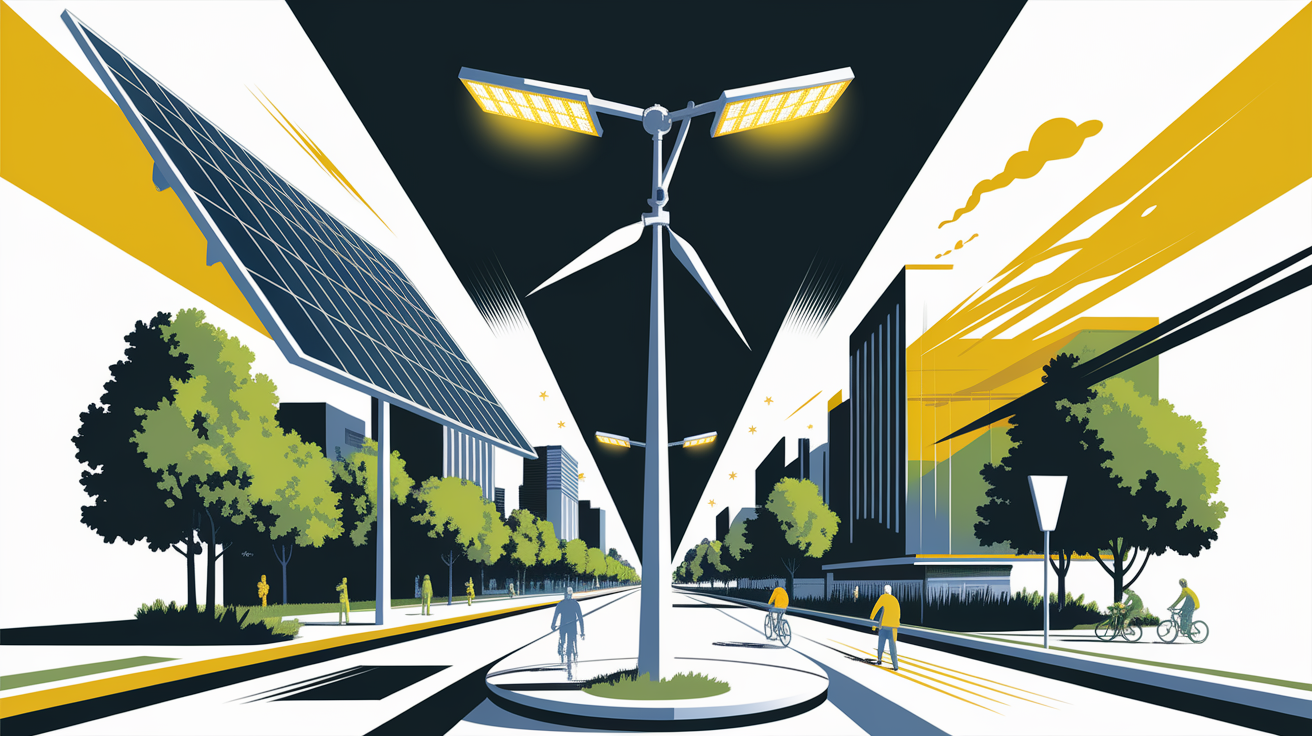
Revolutionizing Urban Lighting with Hybrid Technologies
In an era where urban areas are increasingly seeking sustainable solutions, hybrid solar-wind streetlights are emerging as a beacon of innovation. These multifaceted systems combine photovoltaic solar panels and wind turbines to provide a reliable, renewable power source for outdoor lighting, offering cities a way to reduce their carbon footprint while enhancing public safety. By leveraging both solar and wind energy, these lights ensure constant functionality, even during periods of low sunlight or variable weather conditions.
How Hybrid Solar-Wind Streetlights Work
Hybrid solar-wind streetlights utilize advanced technology to optimize energy generation and consumption. During the day, solar panels—often featuring high-efficiency cells such as Sunpower Maxeon interdigitated back contact (IBC) cells with around 22% efficiency—convert sunlight into electricity. At night, or during cloudy periods, the system seamlessly switches to wind power generated by vertical or horizontal axis turbines. This dual approach not only enhances energy reliability but also allows for energy storage in integrated batteries, ensuring that the lights remain operational around the clock.
Key Technical Features
- Energy-efficient LED luminaires to minimize power consumption.
- Maximum power point tracking (MPPT) controllers for optimal energy harvesting.
- Durable enclosures rated IP55 or higher, providing protection against dust and water.
- Adaptive protection circuitry to safeguard against extreme weather conditions.
- Integrated sensors for dynamic light intensity adjustment based on motion detection.
Beyond Illumination: A Multifunctional Infrastructure
These innovative streetlights are not just about lighting; they represent a shift toward multifunctional urban infrastructure. Many models can be equipped with additional features such as:
- Wireless internet hotspots
- Surveillance cameras for enhanced public safety
- Air quality monitoring tools
- Electric vehicle (EV) charging stations
- Traffic analytics and parking management systems
According to reports, the integration of such functionalities supports the development of smart cities, allowing municipalities to address a range of urban challenges while promoting sustainable practices source.
Environmental and Economic Advantages
The adoption of hybrid solar-wind streetlights yields significant environmental benefits. By reducing reliance on fossil fuels, these systems contribute to lower greenhouse gas emissions, while their energy-efficient LED technology decreases overall energy consumption. Municipalities can enjoy substantial cost savings by minimizing their grid electricity use, which can be particularly beneficial in economically constrained areas.
Additionally, the ability of these systems to function independently of the grid enhances urban resilience, especially in remote or underserved regions. Their versatility allows for deployment in diverse locations, from public parks and marinas to busy urban streets, making them an attractive option for city planners source.
Real-World Applications and Future Prospects
Hybrid solar-wind streetlights are already being implemented across various applications. Projects range from small installations in parking lots to extensive deployments in urban centers, with models tailored to meet specific energy needs. The trend toward retrofitting existing streetlight poles with hybrid systems further demonstrates the potential for sustainable upgrades in urban infrastructure.
As technology advances and becomes more cost-effective, the future of hybrid streetlights looks promising. With increasing global emphasis on sustainability and smart technology integration, these systems are likely to play a pivotal role in shaping the cities of tomorrow.