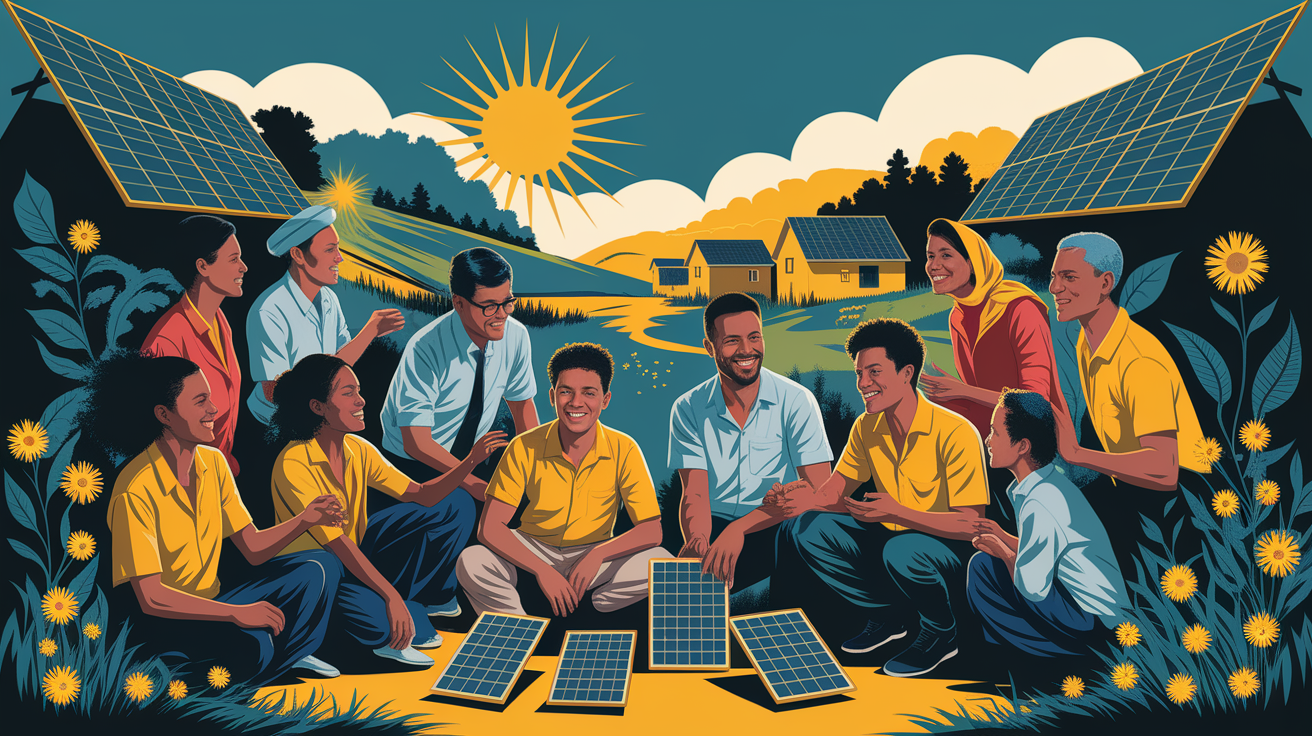
Lighting the Way Forward
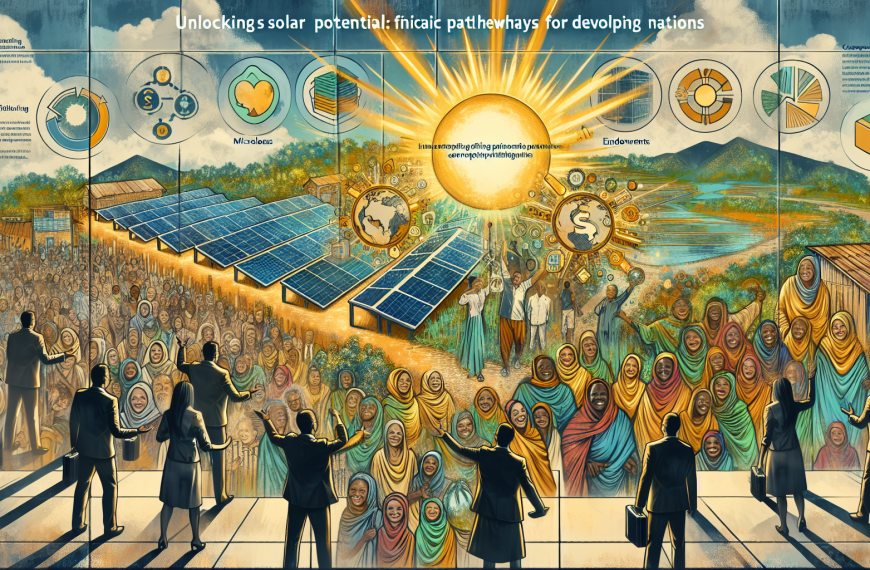
In villages across the developing world, the transformation is unmistakable: areas once plunged into darkness after sunset now hum with productive activity well into the evening. Behind this change lies a powerful innovation in renewable energy deployment—community solar initiatives that are revolutionizing energy access in regions where traditional grid extension remains economically unfeasible.

Community solar initiatives represent a collaborative approach to rural electrification, involving deployments that are collectively owned or shared by local communities through microgrids or cooperative structures. Unlike centralized energy systems, these projects distribute benefits directly to community members while addressing critical energy poverty challenges that affect nearly 800 million people globally.
These installations typically utilize ground-mounted solar farms or strategic rooftop placements to generate clean electricity that’s distributed locally. According to research from The Cooperative Society, such projects require thorough technical, financial, and social readiness assessments—ensuring systems are appropriately designed for community needs and capacities.
Benefits of Community Solar
The advantages of community-based solar power extend far beyond simple electrification, creating cascading benefits throughout local economies and societies:

- Economic Development: Solar energy projects create immediate employment in construction and installation, followed by sustained jobs in operations, maintenance, and administration. This stimulates local economies as new income circulates within communities.
- Poverty Reduction: Access to reliable electricity enables new income-generating activities, extends productive hours, and reduces energy expenditures. Research highlighted by Earth.org demonstrates how micro-renewables directly combat poverty by enhancing community resilience and creating economic opportunities.
- Environmental Benefits: By replacing diesel generators and kerosene lighting, community solar eliminates local pollution while reducing carbon emissions. This delivers immediate health improvements for residents and contributes to global climate goals.
- Energy Independence: Communities gain control over their energy resources, reducing vulnerability to fuel price fluctuations and supply disruptions that plague many developing nations.
- Community Empowerment: When structured as solar cooperatives, these initiatives build local capacity, foster democratic decision-making, and ensure financial benefits remain within the community rather than flowing to external entities.
The energy equity aspect cannot be overstated—community solar provides affordable, reliable power to populations previously excluded from modern energy services. As analysis shows, this equitable distribution of energy resources creates foundations for broader economic development.
Challenges and Solutions
Implementing successful community solar requires navigating substantial challenges, particularly in resource-constrained environments:
Financial Barriers
The upfront capital requirements for solar infrastructure remain a significant obstacle. Many communities lack access to affordable financing options to cover installation costs, even when long-term economics are favorable. Innovative solar financing mechanisms are emerging, including:
- Blended finance models combining grants with commercial funding
- Pay-as-you-go systems aligning payment with community cash flow
- International climate finance channeled through dedicated renewable energy funds
Technical Capacity Gaps
For community ownership models to succeed long-term, local solar maintenance capacity is essential. Comprehensive solar training programs must accompany physical installations, covering both technical skills and business management. Examples from Earth.org’s analysis show how successful projects incorporate capacity building from the outset, training local technicians to ensure systems remain operational.

Regulatory Challenges
Many developing countries lack appropriate regulatory frameworks for community energy systems. Clear policies supporting community ownership, grid interconnection, and fair tariff structures are needed to scale solutions. Thailand’s approach, as detailed by Hunton, provides a valuable model with its comprehensive regulatory framework designed specifically for community-based projects.
Scale and Standardization
Each village electrification project currently requires extensive customization, limiting scalability. Developing standardized models that can be efficiently replicated while allowing for local adaptation represents a critical path toward widespread implementation.
Success Stories
Despite these challenges, inspiring examples demonstrate how community solar can transform lives when properly implemented:
Thailand: National Scale Ambition
Thailand’s Community-based Solar Power Generation Project targets an impressive 1,500 MW capacity through ground-mounted solar farms with substantial local involvement. As detailed in Hunton’s analysis, this initiative strategically combines regulatory support with community engagement, creating a replicable model for other middle-income countries.
Africa: Mini-Grid Revolution
Across Kenya, Ghana, and Rwanda, off-grid solar projects are electrifying entire communities previously without power. These initiatives, supported by a combination of international grants and innovative payment systems, demonstrate how solar grid systems can be deployed even in remote regions with limited infrastructure. Earth.org highlights how these projects not only provide basic lighting but support productive uses that transform local economies.

India: Cooperative Success
In India, solar cooperatives have emerged as powerful vehicles for rural development. The Cooperative Society’s research documents how these member-owned structures ensure equitable benefit distribution while building community cohesion. India’s national electrification programs have strategically incorporated community solar approaches to reach millions of households previously without reliable power.
Liberia: Post-Conflict Rebuilding
Liberia demonstrates how renewable power solutions can accelerate post-conflict development. Community-based installations, documented by The Cooperative Society, have provided reliable electricity in areas where grid reconstruction would take decades, creating immediate quality of life improvements while supporting long-term development goals.
The Future of Community Solar
As technology evolves and implementation models mature, community solar in developing regions stands at a promising inflection point:
Technological Advancements
Continued improvements in solar technology are driving down costs while increasing efficiency. Key developments include:
- More efficient photovoltaic panels that generate more electricity per square meter
- Advanced battery storage solutions extending usable hours
- Smart metering and management systems enabling flexible payment models
- Remote monitoring capabilities reducing maintenance costs
Policy Evolution
Governments increasingly recognize community solar’s potential for achieving national electrification targets. Progressive policies support:
- Streamlined permitting for community-scale projects
- Targeted subsidies reducing initial investment barriers
- Appropriate regulatory frameworks for solar power distribution
- Technical standards ensuring quality and interoperability
Scaling Through Partnerships
The future will likely see increased collaboration between communities, governments, development organizations, and private sector entities. These multi-stakeholder approaches combine community engagement with technical expertise and financial resources—creating pathways to scale that preserve the core community benefits while achieving greater deployment efficiency.
A Brighter Tomorrow
Community solar initiatives represent far more than technical deployments—they embody a fundamental reimagining of how energy infrastructure can be designed to serve human development needs while advancing sustainability goals. The collective evidence from projects worldwide demonstrates that when communities gain agency in their energy systems, outcomes improve across economic, social, and environmental dimensions.
For governments, development organizations, and energy planners, the message is clear: investing in community-based approaches delivers superior results compared to traditional top-down electrification strategies. The pathway to universal energy access—a key Sustainable Development Goal—increasingly runs through locally-owned and operated renewable energy systems that put communities at the center.
As these models continue to evolve and scale, they offer a powerful template for how developing nations can leapfrog traditional energy development pathways, moving directly to distributed, renewable, and community-centered systems that build resilience while advancing climate goals. In this energy transition, communities aren’t merely beneficiaries—they’re the driving force behind a more equitable and sustainable energy future.