
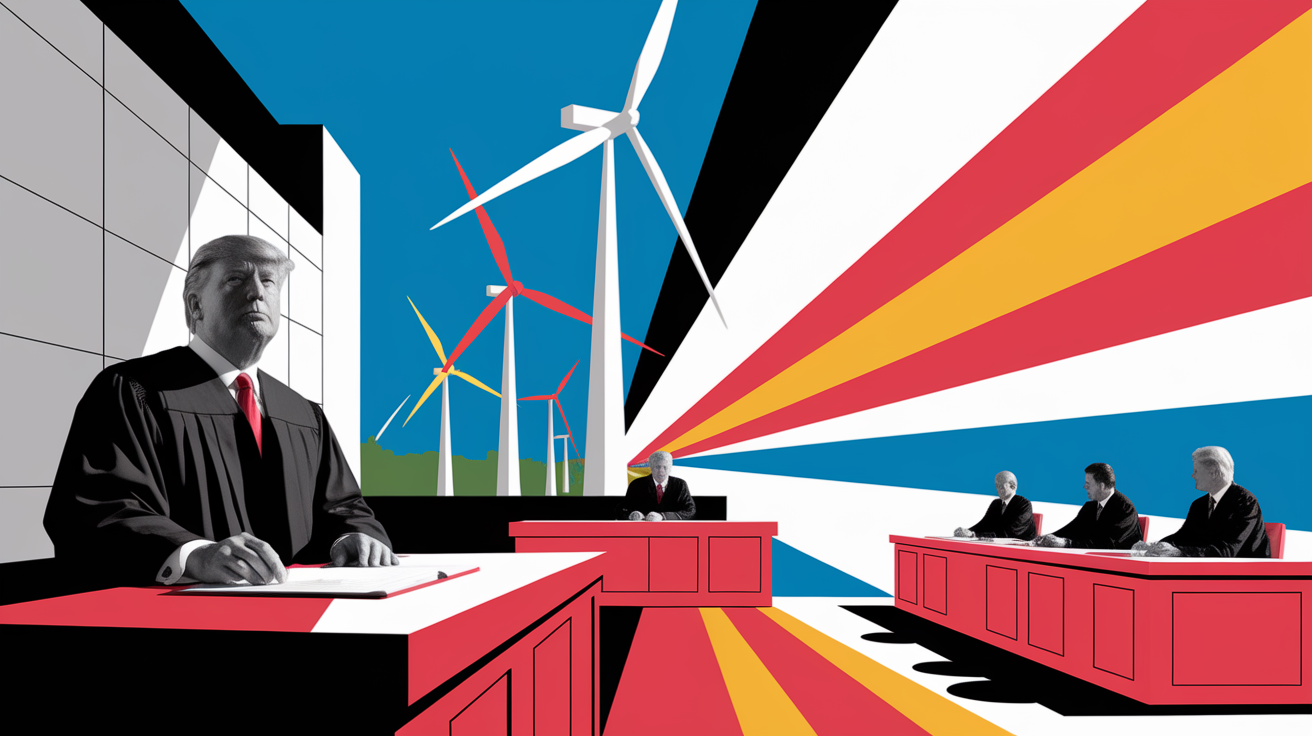
Overview of the Landmark Ruling
In a pivotal decision for the renewable energy sector, U.S. District Judge Patti Saris ruled on December 8, 2025, that former President Donald Trump’s executive order, which attempted to block the development of wind energy projects on federal lands and waters, was unlawful. The ruling came in response to a lawsuit filed by a coalition of 17 states and Washington, D.C., led by New York Attorney General Letitia James. Judge Saris declared the order “arbitrary and capricious,” emphasizing that it lacked a legal foundation and jeopardized crucial state investments in clean energy. This ruling represents a significant victory for advocates of renewable energy and the green job sector, as it opens the door for new wind energy projects and investments across the nation.
Context: The Impetus Behind Trump’s Executive Order
On January 20, 2025, President Trump issued an executive order aimed at halting leasing and permitting for wind energy projects, citing purported legal deficiencies in the Biden administration’s processes. This move aligned with his administration’s broader strategy to prioritize fossil fuel production over renewable energy sources. Critics viewed the order as a deliberate attempt to stifle the burgeoning wind energy sector, which has been integral to diversifying the U.S. energy portfolio and combating climate change. Under Trump’s administration, renewable energy initiatives faced significant regulatory pushback, particularly concerning offshore wind projects.
Legal Disputes and Judicial Proceedings
The lawsuit brought forth by the coalition of states argued that Trump’s executive order violated the Administrative Procedure Act (APA), which mandates a transparent regulatory process. The coalition asserted that the former president overstepped his authority by unilaterally freezing wind project permits, thus undermining state-level investments and climate goals. The Justice Department defended the order, claiming it was a necessary review of environmental impacts. However, Judge Saris’s ruling reinforced the need for adherence to established legal frameworks in energy policy, effectively striking down the executive order.
Key Legal Findings
- Judge Saris found the executive order to be “arbitrary and capricious.”
- The ruling emphasized that Trump lacked the authority to halt project permitting.
- The decision supports the states’ economic interests and climate commitments.
The Importance of Wind Energy in U.S. Energy Landscape
Wind energy stands as the largest source of renewable electricity in the United States, contributing approximately 10% to the nation’s electricity generation. This sector is recognized for its cost-effectiveness and scalability, playing a crucial role in reducing greenhouse gas emissions and achieving long-term climate objectives. States involved in the lawsuit have collectively invested hundreds of millions of dollars in wind energy infrastructure, underscoring the economic stakes associated with the judicial decision. As the ruling allows these projects to proceed, it is expected to stimulate job creation, bolster the economy, and enhance energy diversification.
Broader Implications for Energy Policy
With this ruling, stakeholders in the renewable energy sector can now pursue projects without the uncertainty imposed by Trump’s executive order. The decision has been lauded by state officials and environmental advocates as a necessary step towards a sustainable energy future. Massachusetts Attorney General Andrea Joy Campbell remarked on the ruling’s significance for protecting state investments in offshore wind energy. In contrast, Trump’s supporters continue to frame the executive order as a necessary measure to maintain energy independence through traditional fossil fuels.
Reactions from Stakeholders
The judicial ruling has sparked a wave of optimism among renewable energy advocates and state officials. Attorney General Letitia James expressed gratitude for the court’s intervention, highlighting the need for diverse energy sources in the face of rising costs. Meanwhile, opposition from the Trump administration underscores the ongoing tension between federal energy policy and state-led clean energy initiatives. The ruling not only protects existing investments but also sets a precedent for future renewable energy developments, ensuring that they are evaluated based on their merits rather than arbitrary political decisions.
As the renewable energy sector regains momentum, the implications of this ruling extend beyond just wind energy. It signals a broader commitment to advancing clean energy technologies and integrating them into the national energy framework, paving the way for a more sustainable and economically viable future.