The Bright Future of Solar-Powered Transport
The transportation sector stands at the cusp of a renewable revolution. As climate targets tighten and fossil fuel dependence becomes increasingly unsustainable, solar integration in transport infrastructure has emerged as a powerful solution for generating clean energy while utilizing existing spaces.
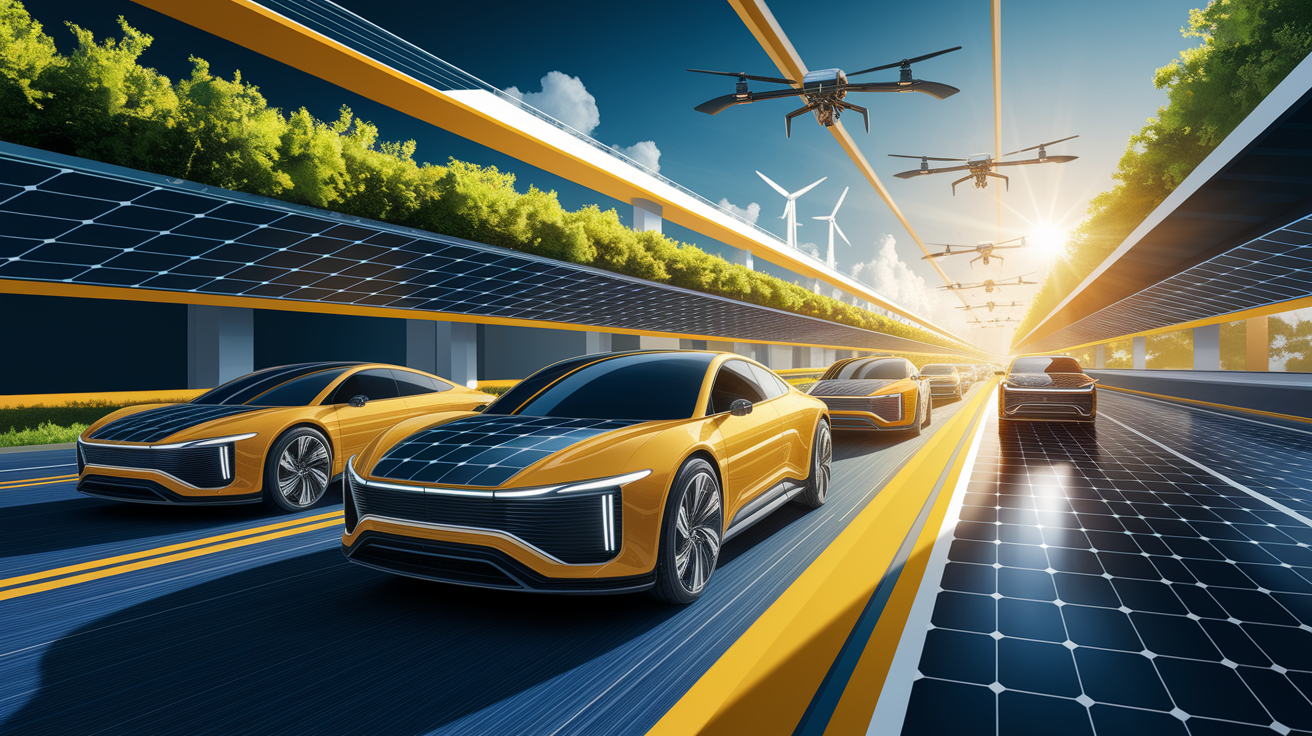
This approach transforms passive infrastructure into active energy producers—embedding photovoltaic (PV) systems into roads, railways, stations, and vehicles to power everything from electric vehicle charging stations to public transit operations. Unlike conventional energy systems that require dedicated land, these integrated solutions leverage surfaces that already exist in our built environment.
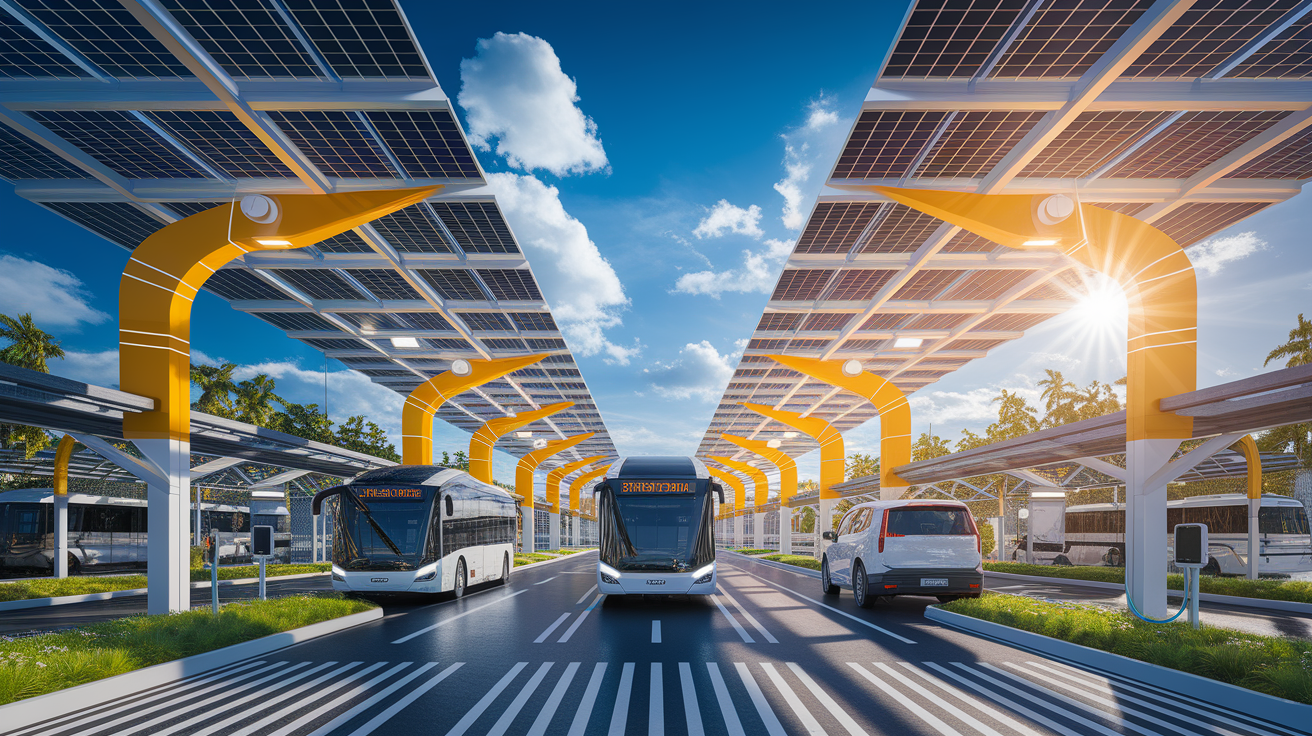
The concept is elegantly practical: solar panels integrated into highway sound barriers generate electricity while reducing noise pollution; station canopies produce power while sheltering passengers; and vehicle surfaces capture energy during transit. This dual functionality represents the kind of efficiency gains that modern infrastructure demands.
Benefits of Solar Integration in Transport
The integration of solar technology into transportation infrastructure delivers multiple advantages that extend beyond simple energy generation:
- Carbon Reduction: Solar-powered transit systems significantly decrease fossil fuel dependence, directly cutting carbon emissions. When electric vehicles charge from renewable sources, their environmental benefit multiplies.
- Economic Resilience: Transit authorities and operators reduce operational costs through energy independence. The Delhi Metro Rail Corporation, for example, saves millions annually through its solar installations.
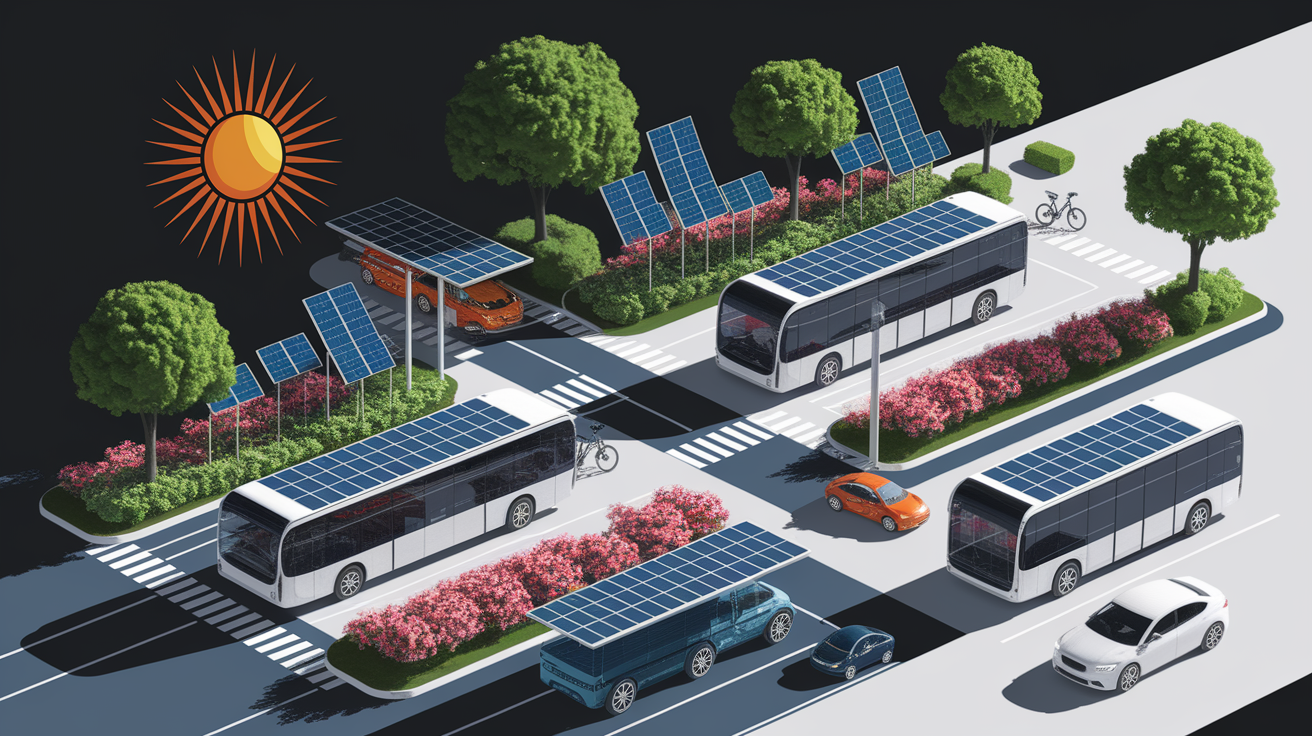
- Space Efficiency: By utilizing otherwise unused surfaces—medians, noise barriers, rooftops—solar integration maximizes land use efficiency in crowded urban environments.
- Grid Optimization: Transport-integrated PV systems often produce peak power during midday, aligning perfectly with many transportation energy needs and reducing strain on the broader electrical grid.
- Enhanced Resilience: Distributed solar generation creates transportation systems less vulnerable to central grid failures or fuel supply disruptions—a critical consideration as climate events increase in frequency and severity.
These benefits compound when systems are thoughtfully designed. For instance, solar canopies in parking areas both generate power and provide shade, reducing vehicle cooling needs and extending EV range—an example of how solar transport integration delivers multiple dividends from a single investment.
Challenges and Considerations
Despite its promise, widespread adoption of solar integration in transportation faces several hurdles that require thoughtful solutions:

Technical Hurdles
- Durability Requirements: Transportation environments subject solar installations to vibration, temperature extremes, and potential impacts. Panels designed for rooftops may fail prematurely when installed along highways or on vehicles.
- Efficiency Constraints: Space limitations on vehicles and infrastructure often necessitate high-efficiency panels, which typically come with higher costs. The power density challenge is particularly acute for direct vehicle integration.
- Intermittency Management: Solar generation fluctuates with weather and daylight hours, creating challenges for transportation systems requiring reliable, consistent power. Energy storage solutions become essential but add complexity and cost.
Implementation Barriers
- Initial Investment: Higher upfront costs compared to conventional infrastructure can deter adoption, despite favorable lifetime economics. Public projects often face budget constraints that prioritize immediate costs over long-term savings.
- Regulatory Frameworks: Many jurisdictions lack clear permitting pathways for combined transport-energy infrastructure, creating bureaucratic obstacles that slow deployment.
- Grid Integration: Connecting solar transport infrastructure to existing electrical grids often requires upgrades and specialized equipment, particularly when bidirectional power flow is desired.
These challenges highlight the need for collaborative approaches between transportation planners, energy specialists, and regulatory bodies. Projects that succeed typically address these issues through innovative engineering, creative financing mechanisms, and strategic phasing of implementation.
Real-World Examples of Solar Integration
The transition from concept to reality is well underway, with pioneering projects demonstrating the viability of solar-integrated transport across multiple contexts:
Rail Systems Leading the Way
The Delhi Metro exemplifies successful large-scale implementation, with solar panels installed on station rooftops and alongside tracks generating over 28 megawatts of power. This system offsets approximately 30,000 tons of CO₂ annually while reducing operating expenses. The solar installations power station operations, lighting, and auxiliary systems—providing both environmental and economic benefits.
Similarly, the Kaohsiung Metro in Taiwan has transformed its elevated stations into solar power plants, with extensive canopy installations that generate electricity while shading passengers. The system demonstrates how transit architecture can elegantly incorporate generation capacity without compromising primary functions.
Roadways and Highways
In Northern Europe, several hybrid solar-wind corridors line major highways, providing charging infrastructure for electric vehicles while feeding excess power to surrounding communities. These installations leverage highway median strips and sound barriers—spaces with minimal competing uses.
The Netherlands has implemented solar bike paths that generate power while providing safe cycling routes, demonstrating how even smaller-scale transportation infrastructure can contribute to energy production. These pathways use specially engineered solar pavement technology that withstands regular use while maintaining energy conversion efficiency.
Water Transport
Sydney Harbour now features solar-powered ferries that combine rooftop PV panels with battery storage, allowing zero-emission operation throughout their daily routes. These vessels showcase how solar technology can be adapted to maritime transport needs, reducing both local pollution and carbon emissions.
These real-world implementations provide valuable operational data and practical lessons for future projects. They demonstrate that solar integration in transport is not merely theoretical but a proven approach already delivering measurable benefits across diverse environments and transportation modes.
The Road Ahead: Future Prospects
The trajectory for solar integration in transport infrastructure points toward expanding capabilities and applications over the coming decades:
Technological Evolution
Next-generation technologies will overcome current limitations through several pathways:
- Advanced Materials: Perovskite solar cells and other emerging technologies promise higher efficiencies in limited spaces, potentially transforming the economics of vehicle-integrated photovoltaics.
- Smart Infrastructure: AI-managed energy systems will optimize power flow between vehicles, charging stations, and grids based on real-time conditions and needs.
- Storage Innovation: Solid-state batteries and other advanced storage solutions will address intermittency challenges, enabling more reliable operation of solar transport systems.
System Integration
Transport and energy systems will become increasingly unified through:
- Vehicle-to-Grid (V2G) Networks: Electric vehicles will serve as mobile storage units within broader energy ecosystems, balancing load and providing grid services when not in use for transportation.
- Multimodal Energy Hubs: Transit centers will evolve into community energy nodes, generating solar power for transportation needs while supporting local microgrids.
- Solar E-Fuel Production: Excess solar generation will power production of hydrogen and other e-fuels, creating storage pathways for renewable energy that can power heavy transport difficult to electrify directly.
These developments align with broader energy transition goals, with the International Energy Agency’s Photovoltaic Power Systems Programme projecting that integrated approaches could support full transport electrification by 2050. This timeline suggests accelerating deployment over the next decade will be critical to meeting climate targets.
Shining a Light on the Path Forward
Solar integration in transport infrastructure represents more than an incremental improvement—it fundamentally reimagines our transportation networks as energy-positive systems rather than energy consumers. The examples highlighted demonstrate that this transition is not only possible but already underway across multiple continents and transport modes.
For transportation planners, energy developers, and policy makers, several key considerations should guide future efforts:
- Prioritize projects with multiple benefits beyond energy generation, such as weather protection, noise reduction, or enhanced passenger experience
- Design systems that accommodate future technology upgrades as solar efficiency and energy storage continue to improve
- Develop standardized approaches to accelerate implementation and reduce costs through economies of scale
- Create supportive regulatory frameworks that remove barriers to innovative infrastructure models
The synergy between transportation infrastructure and solar energy represents one of our most promising paths toward sustainable mobility. By transforming the surfaces and structures that enable movement into clean energy generators, we create transport systems that lighten their environmental footprint with every journey.
The sun’s energy has always moved our planet. Now it can move our vehicles too—powering a cleaner, more resilient transportation future that connects people and places without compromising our climate goals.