
Introduction to Aiko’s Breakthrough
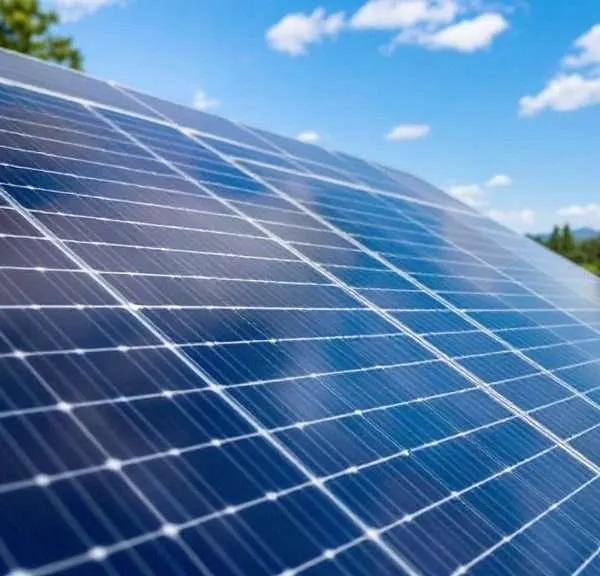
In a significant advancement for renewable energy technology, Aiko, a leading Chinese solar manufacturer, has achieved a remarkable power conversion efficiency of 34.76% for its lab-scale 2-terminal perovskite-silicon tandem solar cell. This achievement, developed in collaboration with Solarlab Aiko Europe and the company’s R&D center in Yuwi, China, positions Aiko at the forefront of solar innovation, edging closer to the theoretical efficiency limits for tandem cell architectures.
Understanding Perovskite-Silicon Tandem Cells
Perovskite-silicon tandem solar cells utilize a unique stacking approach, where a perovskite layer absorbs high-energy blue light, while the silicon layer captures lower-energy red light. This design enables these cells to exceed the 29.4% efficiency threshold established by single-junction silicon cells, as detailed by the National Renewable Energy Laboratory. The two-terminal (2T) configuration simplifies cell integration, although it necessitates precise current matching between the two sub-cells.
Recent Milestones in Efficiency
Aiko’s achievement reflects a broader trend in the solar industry, where efficiency milestones are rapidly being surpassed. Other recent records include:
- LONGi’s 34.85% efficiency for NREL-certified cells in 2025.
- Flexible tandem cells achieving 33.6% efficiency, as reported in Nature.
- JA Solar’s 31.27% efficiency on 210mm cells.
These advancements illustrate a promising trajectory towards commercial viability, with many companies targeting over 30% efficiency in future products.
Heterojunction Technology: A Key to Success
The heterojunction (HJT) technology employed by Aiko combines crystalline silicon with thin amorphous silicon layers. This combination minimizes recombination losses and enhances voltage, allowing for higher open-circuit voltages often exceeding 2V. This approach not only supports efficiencies above 34% but also offers stability advantages over traditional homojunction silicon cells, as highlighted by the U.S. Department of Energy.
Challenges and the Path to Commercialization
While Aiko’s lab-scale cell demonstrates significant potential, several challenges remain before these technologies can be scaled for widespread commercial use. Key hurdles include:
- Ensuring perovskite stability under varying environmental conditions.
- Scaling from small lab cells to larger modules without losing efficiency.
- Reducing production costs while achieving over 25% efficiency with a lifespan exceeding 20 years.
The industry is actively pursuing these objectives, with targets set for 30% efficiency in commercial modules by 2030. Chinese manufacturers like Aiko, LONGi, and JA Solar are leading this charge, aiming to maintain their competitive edge in the global market.
Conclusion and Future Implications
Aiko’s achievement of 34.76% efficiency in its 2-terminal perovskite-silicon tandem cell not only marks a significant milestone but also underscores the rapid advancements within the solar industry. As these technologies mature, they hold the potential to significantly reduce energy costs and enhance sustainability efforts worldwide.
For battery enthusiasts and renewable energy advocates, the ongoing developments in solar technology are vital, as they promise to improve energy storage solutions and overall system efficiency in the fight against climate change. The upcoming years will undoubtedly reveal further innovations that push the boundaries of what is possible in solar energy.