
The Intersection of Solar Energy and Biodiversity
As solar energy deployment accelerates globally, the industry faces increasing scrutiny over land use impacts. Forward-thinking developers are embracing innovative approaches that transform potential ecological conflicts into powerful environmental opportunities. Rather than viewing solar installations and wildlife habitat as competing interests, biodiversity-friendly solar farm design creates mutually beneficial systems that generate clean energy while enhancing local ecosystems.

This approach directly addresses concerns about greenfield development by applying Biodiversity Net Gain (BNG) principles—a framework requiring development sites to be left in a measurably better ecological state than before. Many projects now target a minimum 10% net gain through strategic habitat creation and management plans that span the operational lifetime of the installation.
The integration of renewable energy infrastructure with ecological engineering represents a paradigm shift in how we conceptualize solar development—moving from single-purpose land use to multifunctional spaces that serve both energy production and environmental stewardship goals.
Key Principles of Biodiversity Design in Solar Farms
Successful biodiversity-friendly solar farms incorporate several foundational design elements that enhance habitat value throughout the site:
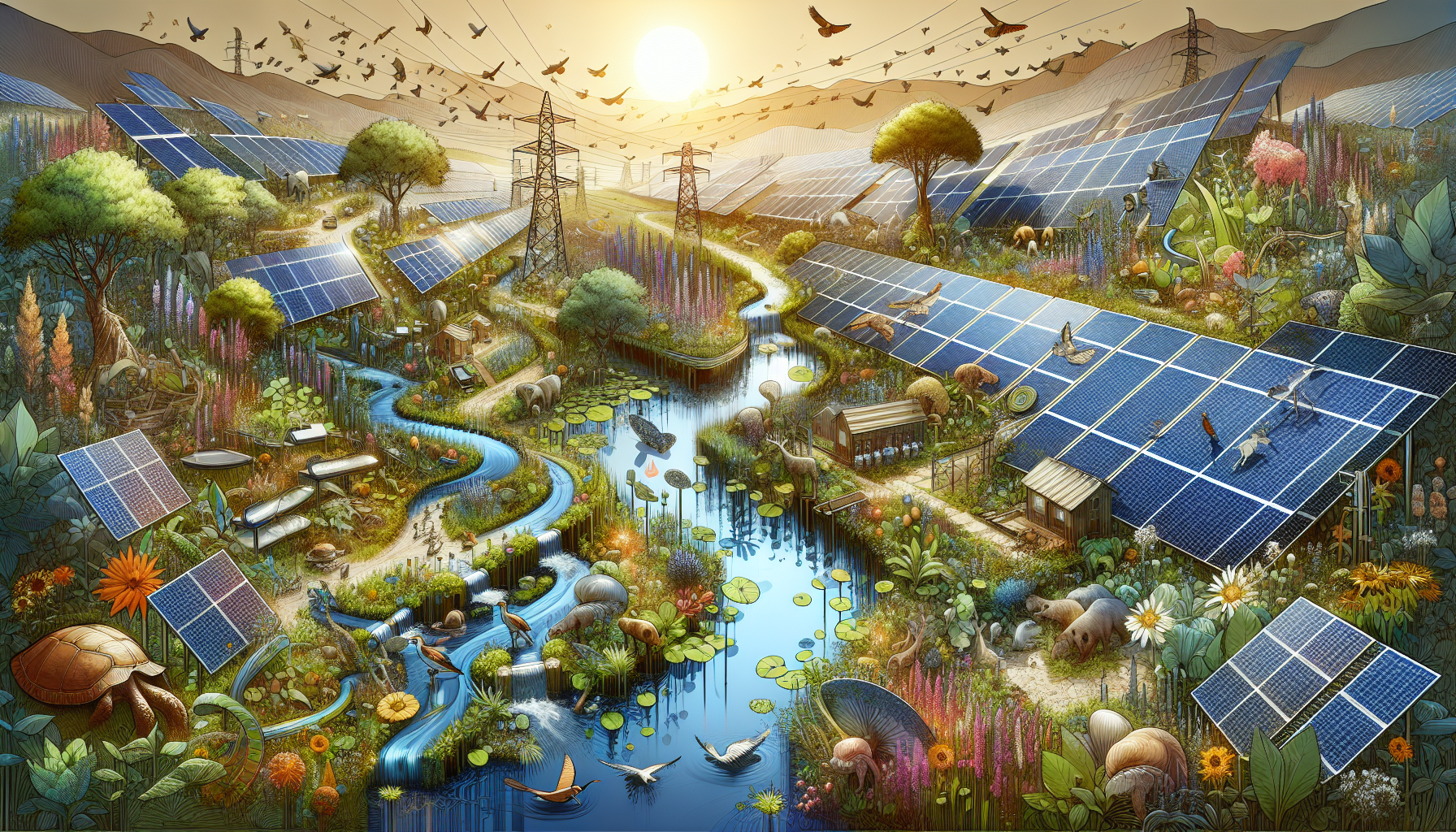
- Diverse Vegetation Management: Replacing monoculture grass with pollinator-friendly wildflower meadows under and between panel arrays creates habitat for bees, butterflies, and other beneficial insects.
- Ecological Connectivity: Installing wildlife corridors through hedgerow and tree planting helps species move safely across and around solar sites, strengthening regional ecological networks.
- Low-Impact Construction: Using screw piles instead of concrete foundations minimizes soil disturbance and compaction, preserving soil health and existing root systems.
- Water Feature Integration: Creating ponds, ditches, or seasonal wet areas provides critical habitat for amphibians and aquatic invertebrates while managing stormwater runoff.
- Buffer Zone Enhancement: Planting native shrubs in setback areas creates transition zones that protect sensitive species while screening infrastructure from view.
Timing is equally crucial—scheduling construction and maintenance activities outside breeding seasons demonstrates commitment to wildlife protection. These design principles work together to transform what might otherwise be single-purpose energy infrastructure into functioning ecosystems.
Specialized Design Considerations
Beyond these core strategies, advanced biodiversity design may include:
- Bird-friendly panel arrangements that minimize collision risks
- Designated “hedgehog highways” allowing small mammals to traverse the site
- Strategic panel spacing to optimize both energy capture and vegetation growth
- Native seed mixes specifically selected for local soil conditions and wildlife benefits
Benefits of Biodiversity in Solar Farms
The integration of biodiversity enhancement within solar farms delivers multiple measurable advantages that extend beyond ecological improvements:
Ecological Benefits
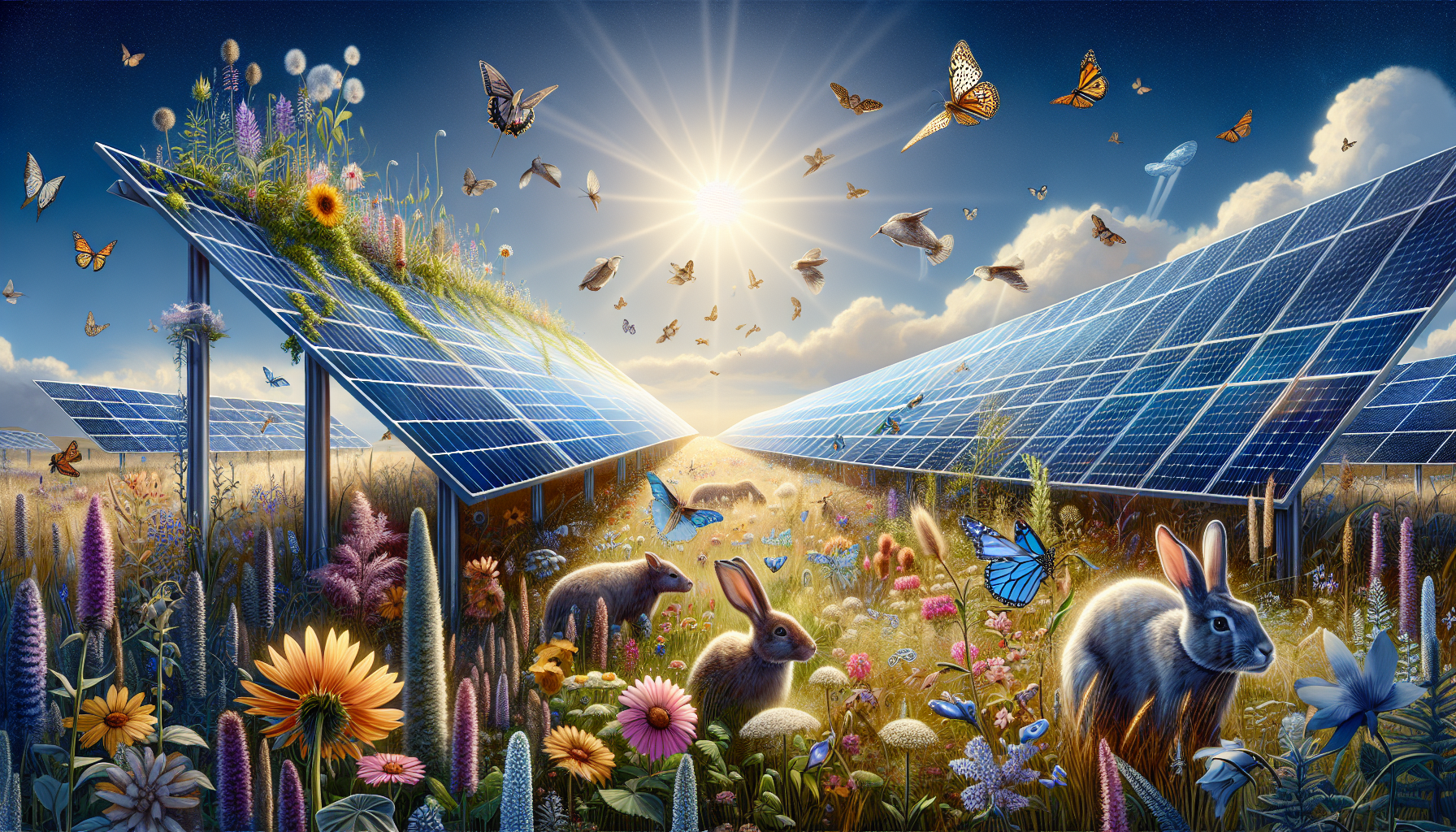
- Enhanced Pollinator Support: Solar sites with native wildflower meadows can significantly increase pollinator populations, benefiting nearby agricultural lands. UK solar farms with wildflower plantings have shown up to a 25% increase in butterfly species.
- Carbon Sequestration: Diverse vegetation under and between panels captures atmospheric carbon in plant matter and soil, enhancing the overall carbon benefits of solar energy.
- Habitat Restoration: Converting previously degraded or intensively farmed land into diverse habitat can create biodiversity hotspots where wildlife was previously scarce.
- Soil Health Improvement: Reduced mowing and elimination of agricultural chemicals allows soil microbial communities to recover and thrive.
Operational Advantages
- Natural Vegetation Management: Integrating sheep grazing (agrivoltaics) can reduce mechanical maintenance costs while providing additional farm income.
- Temperature Regulation: Diverse vegetation can create cooler microclimates around panels, potentially improving energy output in hot weather.
- Improved Stakeholder Relations: Biodiversity enhancements often increase community acceptance and support for solar projects.
These multiple benefits demonstrate how thoughtfully designed solar farms can generate positive outcomes for energy production, local ecology, and community acceptance.
Challenges and Considerations
Despite the clear advantages, implementing biodiversity-friendly solar design requires addressing several key challenges:
Application of the Mitigation Hierarchy
Responsible solar development follows the mitigation hierarchy—a sequential approach to environmental protection:
- Avoid: Selecting sites that minimize impacts on sensitive habitats
- Minimize: Designing layouts that reduce disturbance to valuable ecological features
- Restore: Rehabilitating areas temporarily affected during construction
- Offset: Creating or enhancing habitat to compensate for unavoidable impacts
This structured approach ensures environmental impacts are systematically addressed throughout the project lifecycle.

Monitoring and Management Requirements
Achieving true biodiversity benefits requires ongoing commitment. Biodiversity management plans must include:
- Long-term monitoring of species richness and habitat quality
- Regular assessment (typically every 3-5 years) to track ecological outcomes
- Adaptive management strategies to address underperforming areas
- Dedicated resources for habitat maintenance throughout the project lifespan
Without robust monitoring and management, initial biodiversity gains may diminish over time.
Balancing Technical and Ecological Requirements
Developers must carefully navigate potential tensions between energy production optimization and biodiversity goals. Considerations include:
- Panel height and spacing to accommodate both vegetation growth and energy capture
- Access requirements for maintenance versus habitat fragmentation
- Security needs versus wildlife movement
- Initial cost increases versus long-term ecological and operational benefits
Real-World Examples and Case Studies
Across the globe, innovative solar farm designs demonstrate how biodiversity enhancement can be successfully implemented:
United Kingdom: Butterfly Haven
Several UK solar installations have incorporated extensive wildflower meadows, resulting in documented increases in butterfly populations by approximately 25% compared to surrounding agricultural land. One notable project in Devon designed specific habitat features for the rare cirl bunting, demonstrating how solar farms can support conservation of threatened species.
Germany: Agrivoltaic Integration
German solar farms have pioneered the integration of sheep grazing beneath elevated panels. This approach maintains vegetation through natural means while providing additional agricultural value—a true dual-use system that maximizes land productivity.
Minnesota: Policy-Driven Habitat Creation
The Minnesota Pollinator-Friendly Solar Act established standards for habitat quality on solar sites. Projects meeting these criteria receive certification, creating market recognition for developments that incorporate substantial native plantings and habitat features.
Australia: Comprehensive Planning Approach
Australian developers have implemented thorough planning processes that identify and protect existing high-value habitat while creating enhancement opportunities throughout solar sites, demonstrating how early ecological assessment can inform optimal design.
These examples illustrate how biodiversity-friendly solar farm design principles can be adapted to diverse geographic contexts and regulatory environments.
The Future of Solar Farms and Biodiversity
The evolution of biodiversity-friendly solar development continues to accelerate, driven by several converging factors:
Emerging Design Innovations
- Specialized panel mounting systems that optimize light penetration for diverse vegetation
- Integrated water management features that maximize habitat value while protecting infrastructure
- Smart monitoring systems that track biodiversity outcomes alongside energy production metrics
- Novel panel arrangements that create varied microclimates supporting greater species diversity
Policy and Market Developments
The regulatory landscape increasingly favors biodiversity integration. The UK’s requirement for 10% biodiversity net gain signals a broader shift toward quantifiable ecological outcomes in development approval processes. Similar approaches are emerging worldwide as policymakers recognize the potential for renewable energy to contribute positively to nature restoration goals.
Market differentiation also drives innovation, with developers using enhanced biodiversity features to secure community support and distinguish their projects in increasingly competitive renewable energy markets.
Research Priorities
Several key research areas will shape future practice:
- Long-term studies of biodiversity outcomes across different solar farm designs
- Optimization models that maximize both energy yield and ecological benefits
- Cost-benefit analyses quantifying the economic value of ecosystem services provided by biodiverse solar farms
- Development of standardized metrics for biodiversity performance in solar developments
Conclusion: A Greener Path Forward
Biodiversity-friendly solar farm design represents a crucial evolution in renewable energy development—one that recognizes clean power generation and ecological enhancement as complementary rather than competing objectives. By thoughtfully integrating habitat features, implementing appropriate management regimes, and monitoring outcomes, solar developers can create installations that produce both electricity and tangible environmental benefits.
The most successful projects demonstrate that meeting our renewable energy targets need not come at the expense of biodiversity. Instead, solar farms can actively contribute to ecological restoration by converting agricultural land into diverse habitat mosaics that support pollinators, birds, small mammals, and countless other species.
As we scale up solar deployment to meet climate targets, integrating biodiversity principles into standard development practice will ensure that the renewable energy transition delivers the broadest possible range of environmental benefits. For developers, landowners, and communities, this approach offers a path to truly sustainable energy production that strengthens rather than diminishes our natural systems.