The Bright Side of Community Solar
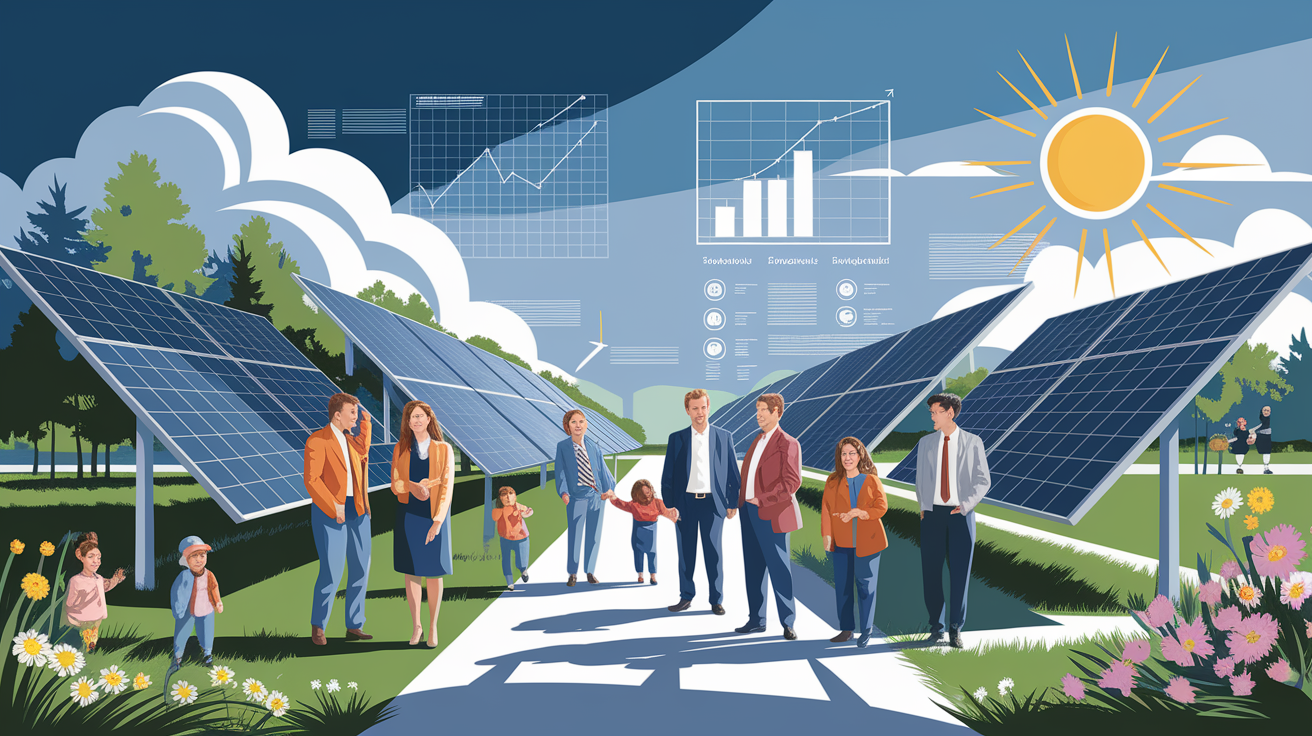
Community solar represents a transformative approach to renewable energy adoption, bringing clean power and economic advantages to neighborhoods across America. Unlike traditional rooftop installations, these shared solar projects allow multiple subscribers to benefit from a single solar array, democratizing access to clean energy while generating substantial economic returns.

As the fastest-growing segment of the U.S. solar market, community solar is revolutionizing how we think about energy production and distribution. The model addresses a fundamental challenge in renewable energy adoption: approximately half of American households cannot install rooftop solar due to unsuitable roof conditions, rental status, or financial constraints. Community solar programs bridge this gap, extending solar benefits to previously excluded demographics while stimulating local economic development.
The distributed generation model creates multiple economic ripple effects:
- Direct subscriber savings on electricity bills
- Job creation across various skill levels
- Increased tax revenue for local governments
- Billions in private investment flowing into communities
- Enhanced grid resilience reducing outage-related economic losses
Empowering Local Economies
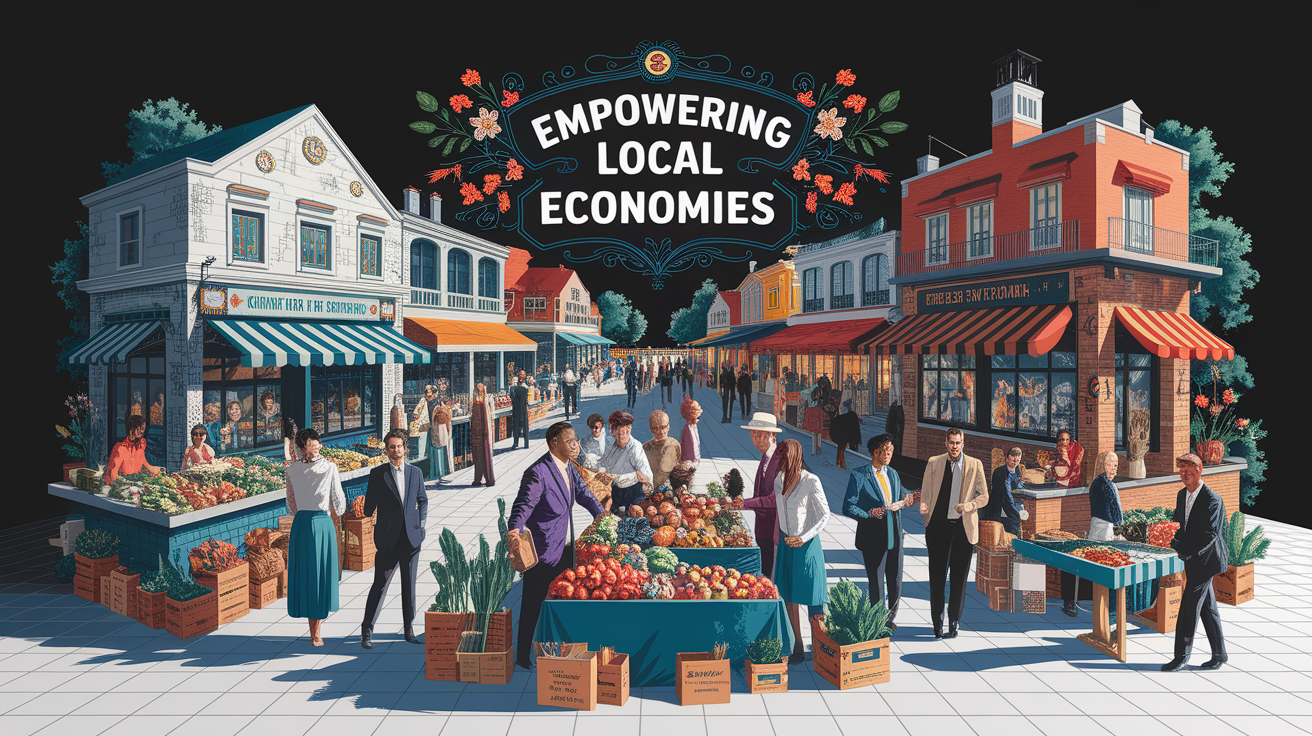
The economic impact of community solar extends far beyond energy production, serving as a powerful engine for local economic growth and workforce development. One of the most immediate benefits is substantial job creation across multiple sectors and skill levels.
According to comprehensive analysis from the Coalition for Community Solar Access, every 750 megawatts (MW) of community solar development generates over 14,000 jobs in construction, operations, maintenance, and engineering. These employment opportunities primarily benefit local communities, with projects in California projected to create approximately 25,000 jobs and New Mexico’s first phase generating 3,760 positions.
Beyond employment, community solar installations attract significant capital investment that circulates through local economies. The same 750 MW of development delivers approximately $2.1 billion in economic impact, while Colorado has already seen $1.4 billion invested in its community solar market. These investments create powerful economic multipliers as funds flow through:
- Local construction and electrical contractors
- Materials and equipment suppliers
- Professional services including engineering, legal, and financial firms
- Ongoing operations and maintenance activities
Perhaps most significantly for rural communities, solar farms generate substantial property tax revenue that directly funds essential public services. Each project contributes hundreds of thousands of dollars over its lifetime to support local schools, road maintenance, libraries, and emergency services. This represents new revenue without requiring taxpayer-funded initial investments, creating sustainable funding streams in areas that often struggle with limited tax bases.
Financial Incentives and Savings
The direct financial benefits of community solar for individual subscribers represent one of the model’s most compelling advantages. Participants typically receive credits on their electricity bills for their share of the solar array’s output, resulting in immediate cost savings without any upfront installation expenses.
According to analysis from Pivot Energy, these savings typically range from 10-20% off standard utility rates. In Colorado’s programs, subscribers save an average of $382 annually per household, with some low-income-focused initiatives delivering even greater benefits. When scaled nationally, the National Renewable Energy Laboratory (NREL) projects $110-330 million in yearly reductions for subscribers at 20 gigawatts of deployment.
This subscription model breaks down traditional barriers to solar participation by:

- Eliminating upfront installation costs that typically range from $15,000-25,000
- Making solar accessible to renters and apartment dwellers
- Providing clean energy options for properties with unsuitable rooftops
- Creating pathways for low-income households to reduce energy burdens
- Offering solar access to approximately 50% of Americans who otherwise couldn’t participate
The financial return on investment for community solar subscribers is both immediate and long-term. Unlike traditional investments that may take years to generate returns, bill credits begin appearing on the first billing cycle after subscription, creating instant positive cash flow for participants while contributing to local economic development.
As GRESB reports, these programs also create unique opportunities for property owners to participate in the renewable energy transition while generating additional revenue streams, particularly beneficial for multi-family housing developments and commercial properties.
Community Solar: A Win-Win for All
The economic benefits of community solar extend well beyond direct subscriber savings and job creation, delivering broader advantages that strengthen entire communities. One critical area is enhanced grid resilience, which provides substantial economic value by reducing vulnerability to outages and price volatility.
As NREL research demonstrates, distributed community solar installations provide $50-160 million in annual resiliency value when deployed at scale. This comes through multiple mechanisms:
- Reduced impact from widespread outages through localized generation
- Support for peak demand periods, preventing costly brownouts
- Decreased vulnerability to fossil fuel price fluctuations
- Infrastructure upgrades often funded by developers
- Enhanced energy independence for communities
The local tax benefits create another win-win scenario. Community solar installations increase local tax bases through property value growth and infrastructure improvements without requiring public funding. This creates new revenue streams for municipal services while landowners receive steady income through lease payments, particularly valuable for agricultural properties seeking to diversify income sources.

An often-overlooked economic advantage is the wealth-building effect in communities historically excluded from clean energy participation. By making solar benefits accessible to renters and low-income households, community solar helps reduce energy burden—the percentage of income spent on energy costs—which disproportionately affects disadvantaged communities. This keeps more money circulating in local economies rather than flowing to distant utility companies.
The economic benefits of community solar projects are particularly transformative for rural areas. These projects generate substantial lease payments to landowners—often farmers and ranchers seeking to diversify income—while creating skilled jobs that help retain working-age residents in communities that might otherwise face population decline.
Shining a Light on the Future
The economic trajectory for community solar points decisively upward as policies evolve and deployment accelerates. Current projections from industry analysts indicate community solar capacity could reach 30 gigawatts by 2030, generating hundreds of thousands of jobs and tens of billions in economic activity.
Economic benefits will continue expanding through several key developments:
- Increasing integration with energy storage to enhance grid services and value
- Growing corporate participation as businesses seek affordable clean energy options
- Expansion into new states as regulatory frameworks evolve
- Enhanced focus on workforce development programs tied to project development
- Innovation in financing models to further reduce barriers to participation
The convergence of environmental and economic benefits positions community solar as a centerpiece of sustainable development strategies nationwide. As economic impact analyses consistently demonstrate, these projects deliver multiple layers of value: subscriber savings, job creation, tax revenue, grid benefits, and community wealth-building.
For communities considering solar development, the economic case has never been stronger. The combination of immediate subscriber savings, significant job creation, and long-term revenue generation creates a compelling value proposition for local governments, businesses, and residents alike.
As we look toward a more distributed, resilient energy future, community solar stands out not just as an environmental solution, but as an economic engine delivering tangible benefits to diverse stakeholders across American communities.