
Global solar installations now exceed 2 gigawatts daily—matching what the entire world installed annually in 2004. This acceleration defines solar technology advancements in 2025, where photovoltaic systems have shattered efficiency records, storage solutions have scaled to grid-level impact, and policy frameworks have aligned to make renewables the default choice for new power generation. You’ll discover how tandem cell breakthroughs, AI-optimized systems, and strategic storage deployments are transforming solar from an alternative energy source into the backbone of modern electricity grids.
The Dawn of Next-Gen Solar Panels
Qcells achieved a 28.6% efficiency milestone with silicon-perovskite tandem cells in 2025, fundamentally changing the economics of solar deployment. These dual-layer cells capture a broader spectrum of sunlight than conventional silicon alone, delivering more power per square meter—a critical advantage for space-constrained installations on commercial rooftops or urban environments. The breakthrough addresses a persistent challenge: maximizing energy output without expanding physical footprint.
Traditional silicon panels plateau around 22-24% efficiency, but perovskite-silicon tandems layer a perovskite top cell optimized for blue light wavelengths above a silicon bottom cell that captures red and infrared. This tandem architecture reduces the number of panels needed for equivalent output by approximately 15-20%, cutting installation labor, racking materials, and land requirements proportionally. For utility-scale projects, this translates to millions in avoided infrastructure costs.

Manufacturing scalability remains the next frontier. While lab efficiencies exceed 33% for experimental tandem cells, commercial production must maintain these performance levels across millions of units while ensuring 25-year durability standards. Early 2025 deployments focus on premium markets—data centers and industrial facilities where space constraints justify higher upfront costs—before economies of scale drive residential adoption by 2027.
Concentrated solar power systems like China’s Shouhang Dunhuang plant demonstrate an alternative high-efficiency approach. Using 12,000 mirrors to focus sunlight onto a central tower, the facility heats molten salt to 565°C, storing thermal energy for 24/7 electricity generation even after sunset. This thermal storage capability addresses intermittency without lithium batteries, though geographic requirements—high direct sunlight and available land—limit deployment to specific regions.
Innovations in Solar Energy Storage
Battery storage capacity in the United States reached 37.4 gigawatts by October 2025, with 15 GW added during the year and another 24 GW planned for 2026. This explosive growth transforms solar from a daytime-only resource into a dispatchable power source that utilities can deploy during evening peak demand. Texas, California, and Arizona account for 80% of planned 2026 installations, strategically positioned where solar generation peaks but evening loads create supply gaps.
Solar-plus-storage pairings now constitute over half of utility-scale projects entering development, according to Deloitte’s 2026 renewable energy outlook. These integrated systems charge batteries during midday solar surplus and discharge during evening peaks, capturing higher electricity prices while providing grid stability services. A typical 100 MW solar farm paired with 50 MW/200 MWh storage can shift 40-50% of daily generation to high-value hours, improving project economics by 25-35% compared to solar-only installations.
Lithium iron phosphate (LFP) chemistry dominates 2025 deployments due to superior safety profiles and 6,000+ cycle lifespans. While energy density lags lithium nickel manganese cobalt (NMC) batteries, stationary grid applications prioritize longevity and fire safety over weight considerations. LFP costs dropped below $100/kWh at the pack level in late 2024, making four-hour duration storage economically viable without subsidies in most US markets.
Duration diversity emerges as the next storage challenge. Four-hour batteries address daily cycling, but seasonal storage requires different technologies. Compressed air energy storage, hydrogen electrolysis, and thermal storage systems enter pilot phases to bridge multi-day weather events and seasonal generation variations. The 19 GW of storage currently under construction through 2026 includes experimental long-duration projects that will inform the next deployment wave.
Solar Technology in Urban Environments
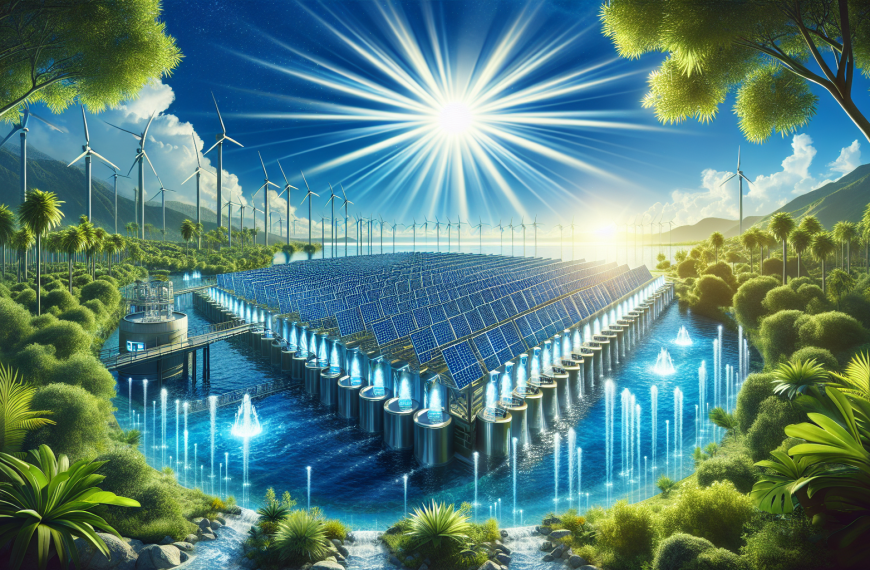
Floating solar installations solve the urban density puzzle by utilizing reservoirs, wastewater treatment ponds, and coastal areas unsuitable for traditional development. The floating solar market is projected to grow from $35.6 million in 2022 to $180 billion by 2030, driven by land scarcity in densely populated regions. These systems deliver 5-10% higher efficiency than ground-mounted equivalents due to water cooling effects that reduce panel operating temperatures.
Annual floating solar installations are expected to exceed 6 gigawatts by 2031, with Asia-Pacific markets leading adoption. Singapore’s 60 MW Tengeh Reservoir installation demonstrates urban-scale potential, covering 45 hectares of water surface while preserving land for housing and commerce. The dual-use approach provides additional benefits: reduced water evaporation (up to 70% in arid climates) and algae suppression through shading, improving water quality for municipal supplies.

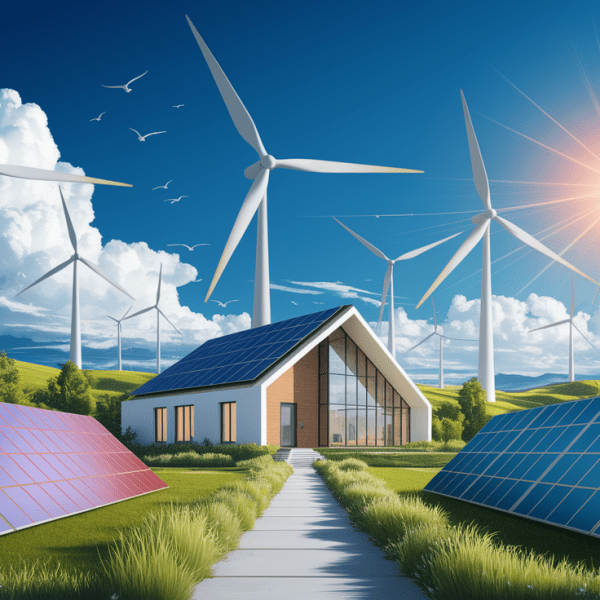
Building-integrated photovoltaics (BIPV) transform urban structures into power generators without requiring dedicated space. Solar roof tiles, facade panels, and window coatings generate electricity while serving architectural functions. While BIPV costs remain 20-40% higher than conventional rooftop systems, aesthetic integration and eliminated racking expenses narrow the gap. European cities mandate solar-ready construction in new commercial buildings, accelerating BIPV adoption as architects design generation capacity into initial blueprints rather than retrofitting.
Urban microgrids combine rooftop solar, community batteries, and smart inverters to create neighborhood-scale resilience. Brooklyn’s Park Slope microgrid connects 500+ buildings through blockchain-enabled peer-to-peer energy trading, allowing excess solar generation to flow directly to neighbors rather than back-feeding the utility grid. These localized systems reduce transmission losses, defer infrastructure upgrades, and maintain power during grid outages—critical capabilities as extreme weather events increase.
The Role of AI and IoT in Solar Advancements
Artificial intelligence optimization increased solar fleet performance by 3-7% in 2025 through predictive maintenance, cloud forecasting, and real-time inverter adjustments. Machine learning algorithms analyze satellite imagery, weather patterns, and historical generation data to predict output 48-72 hours ahead with 95%+ accuracy. This forecasting precision allows grid operators to schedule backup generation more efficiently, reducing curtailment of solar power during oversupply periods.
IoT sensor networks monitor individual panel performance across utility-scale installations, identifying underperforming modules before they significantly impact array output. Thermal imaging drones equipped with AI detection algorithms scan 100+ MW installations in hours, flagging hot spots, micro-cracks, and soiling patterns that reduce efficiency. Automated cleaning systems activate based on real-time soiling sensors rather than fixed schedules, cutting water consumption by 40% while maintaining optimal generation.

Hyperscaler data centers drive AI-solar integration as companies like Microsoft and Google pursue 24/7 carbon-free energy matching. These facilities use AI to synchronize computing workloads with renewable generation patterns, shifting non-urgent tasks like model training to solar production peaks. The 35% US solar surge in 2025 directly correlates with data center expansion, as AI infrastructure demands clean power at unprecedented scales.
Smart inverters with grid-forming capabilities replace traditional grid-following technology, allowing solar installations to stabilize voltage and frequency without fossil fuel backup. These advanced inverters use AI-controlled algorithms to provide synthetic inertia—mimicking the stabilizing effect of spinning turbines—enabling grids to operate reliably with 70%+ instantaneous renewable penetration. California’s grid successfully managed multiple days above 100% instantaneous solar penetration in spring 2025 using these technologies.
Policy and Market Trends Shaping Solar in 2025
The United States added 27 gigawatts of solar capacity in 2025, generating 85 TWh of electricity and covering two-thirds of total demand growth. Solar generation is forecasted to reach 286 billion kWh by year-end—a 75% increase from 2023 levels—overtaking hydropower for the first time in US history. This milestone reflects policy stability from the Inflation Reduction Act’s extended tax credits and state-level renewable portfolio standards that mandate utility procurement.
Global market dynamics shifted dramatically as 35 countries now host gigawatt-scale solar markets, up from 18 in 2020. China installed 309-357 GW in 2024 alone—60% of global additions—absorbing domestic manufacturing overcapacity through aggressive deployment targets. This concentration creates supply chain vulnerabilities but drives cost reductions that benefit worldwide adoption. Panel prices dropped another 15% in 2024 despite tariff pressures, making solar the lowest-cost generation source in markets representing 80% of global electricity demand.
The United Kingdom’s Clean Power 2030 initiative targets 45-47 GW of solar capacity, requiring 8-10 GW annual additions through decade-end. Policy mechanisms include streamlined planning approvals for projects under 50 MW and contracts-for-difference auctions guaranteeing 15-year revenue stability. The European Union saw solar lead electricity generation in June 2025, demonstrating seasonal capability to meet majority demand during high-insolation months.
Interconnection queue reforms address the primary bottleneck constraining US solar growth. Projects totaling 2,600+ GW await grid connection studies—four times existing capacity—with average wait times exceeding four years. FERC Order 2023 implements first-ready, first-served processing and requires financial commitments to reduce speculative applications. Early results show 30% queue withdrawal rates as developers focus on viable projects, accelerating timelines for serious installations.
The Future is Bright: Solar’s Path Forward
Solar technology advancements in 2025 establish photovoltaics as the dominant new generation source, with tandem cell efficiencies, grid-scale storage, and AI optimization solving previous limitations. The combination of 28.6% efficient panels, 37.4 GW of operational US storage, and policy frameworks supporting 30-66 GW annual additions through 2030 creates unprecedented momentum. Key takeaways include prioritizing solar-plus-storage configurations for new projects, leveraging AI for performance optimization, and recognizing that floating and building-integrated systems expand deployment beyond traditional ground-mount constraints.
The path forward requires addressing manufacturing concentration risks, accelerating interconnection processes, and developing long-duration storage for seasonal balancing. As global cumulative capacity exceeds 2,260 GW and daily installations reach 2 GW, solar transitions from alternative energy to grid foundation. For developers, utilities, and policymakers: the question is no longer whether solar scales to meet climate targets, but how quickly infrastructure and markets adapt to accommodate its exponential growth.