

In today’s rapidly evolving market landscape, understanding the economic fundamentals behind any project or technology investment has become increasingly critical. Whether you’re evaluating renewable energy installations, infrastructure development, or technology implementation, the concepts of economic viability and cost analysis provide the framework for sound decision-making.
The Essence of Economic Viability
Economic viability represents more than just profitability—it’s the cornerstone of sustainable development and long-term success. At its core, economic viability refers to a project’s ability to generate sufficient financial returns to justify its implementation and continued operation without requiring ongoing external support.
For projects to achieve viability, they must demonstrate:
- Positive net present value (NPV) over their operational lifetime
- Reasonable payback periods aligned with investor expectations
- Sustainable profit margins that account for market fluctuations
- Resilience against economic indicators and changing market conditions
The assessment of economic viability plays a decisive role across numerous sectors, particularly in renewable energy, where initial capital expenditure is often substantial but operating costs remain relatively low over time. This dynamic creates unique evaluation challenges that standard financial metrics might not fully capture.

According to established economic viability frameworks, decision-makers must consider both quantitative financial returns and qualitative factors such as environmental benefits, regulatory compliance, and social acceptance—especially in sustainability-focused ventures.
Cost Analysis: The Backbone of Viability
Effective cost analysis forms the foundation of any credible economic viability assessment. This process involves systematic identification, categorization, and evaluation of all expenses associated with a project throughout its lifecycle.
The most comprehensive approach to cost analysis incorporates:
- Capital Expenditure (CAPEX): Initial investment costs including equipment, installation, and commissioning
- Operational Costs (OPEX): Ongoing expenses for maintenance, personnel, consumables, and administrative overhead
- Financing Costs: Interest payments, loan fees, and other costs of capital
- Decommissioning Expenses: End-of-life removal, recycling, and site remediation costs
Modern cost analysis has evolved beyond simple spreadsheet calculations to incorporate sophisticated financial modeling techniques that account for time value of money, risk factors, and sensitivity to variable inputs. Tools such as Discounted Cash Flow (DCF) analysis allow for more accurate budget forecasting and help quantify the impact of delayed revenues or unexpected expenses.
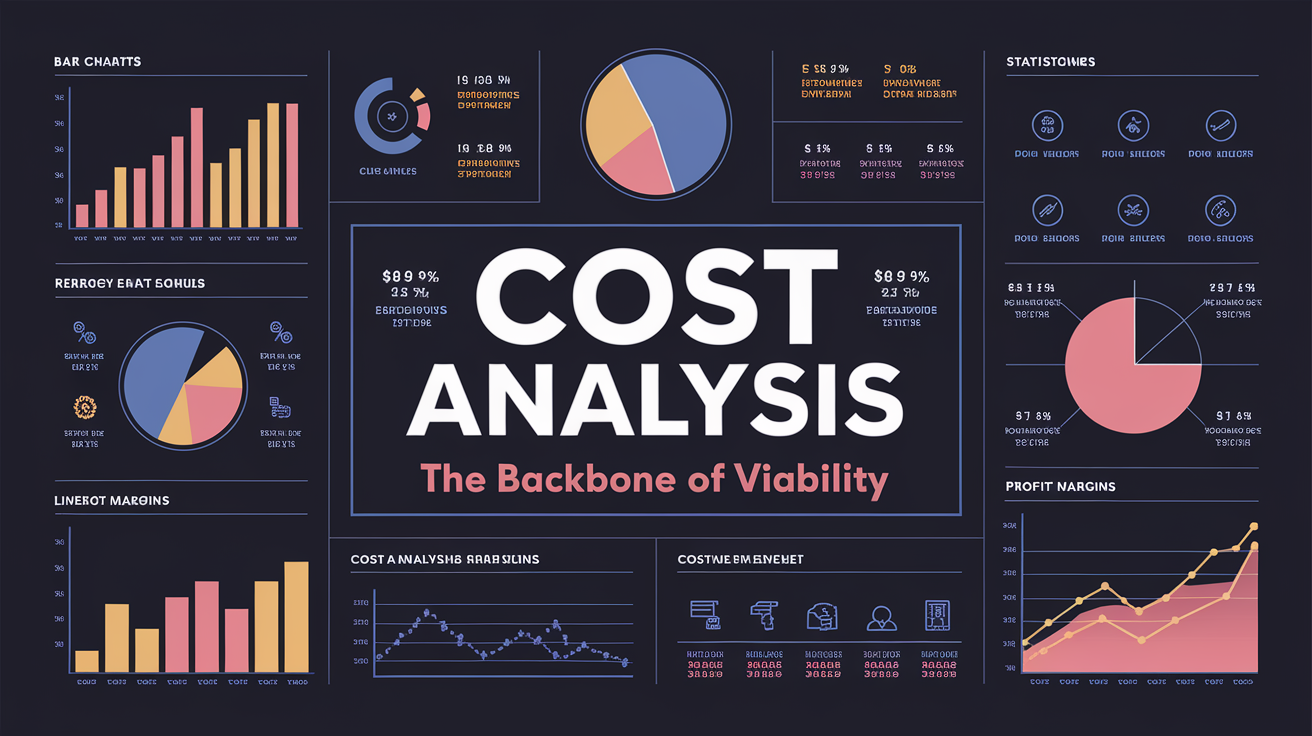
When conducting cost analysis, practitioners often employ both deterministic approaches (using single-point estimates) and probabilistic methods that account for uncertainties through Monte Carlo simulations or other risk assessment frameworks. This combination provides a more realistic picture of potential financial outcomes across various scenarios.
Connecting Viability and Cost: A Symbiotic Relationship
The relationship between economic viability and cost analysis is inherently symbiotic—each informs and strengthens the other. While cost analysis provides the raw data, economic viability assessment interprets this information within broader market contexts to determine feasibility and attractiveness.
This connection manifests through several key financial metrics:
- Return on Investment (ROI): Measures the efficiency of an investment by comparing gains against costs
- Break-even Point: Identifies when cumulative revenues equal cumulative costs
- Cost-Benefit Ratio: Quantifies the relationship between a project’s costs and its expected benefits
- Internal Rate of Return (IRR): Calculates the annual growth rate an investment is expected to generate
The integration of these concepts enables what experts at the Hydro Sustainability organization call “comprehensive project appraisal”—an approach that considers not just direct financial returns but also broader economic impacts, including job creation, infrastructure development, and resource allocation efficiency.
This holistic perspective is particularly valuable when evaluating projects with significant externalities or public benefits that traditional financial metrics might undervalue. For example, renewable energy installations often deliver community benefits beyond their direct revenue streams, requiring more sophisticated economic evaluation frameworks.
Navigating Challenges in Viability and Cost Analysis
Even the most rigorous economic viability and cost analyses face inherent challenges that can impact their accuracy and reliability. Recognizing these challenges is essential for developing realistic assessments and avoiding common pitfalls.
Key challenges include:
- Data Uncertainty: Limited historical information or rapidly changing market conditions can undermine the reliability of input data
- Time Horizon Complexity: Long project lifecycles introduce significant uncertainty in revenue projections and operational efficiency estimates
- Externality Valuation: Quantifying environmental and social impacts remains difficult despite advances in economic assessment methodologies
- Regulatory Flux: Evolving policy frameworks can dramatically alter economic outcomes through incentives, penalties, or compliance requirements
To address these challenges, analysts increasingly rely on sensitivity analysis to test how variations in key parameters affect overall viability. This approach helps identify critical variables that warrant additional scrutiny or risk mitigation strategies.
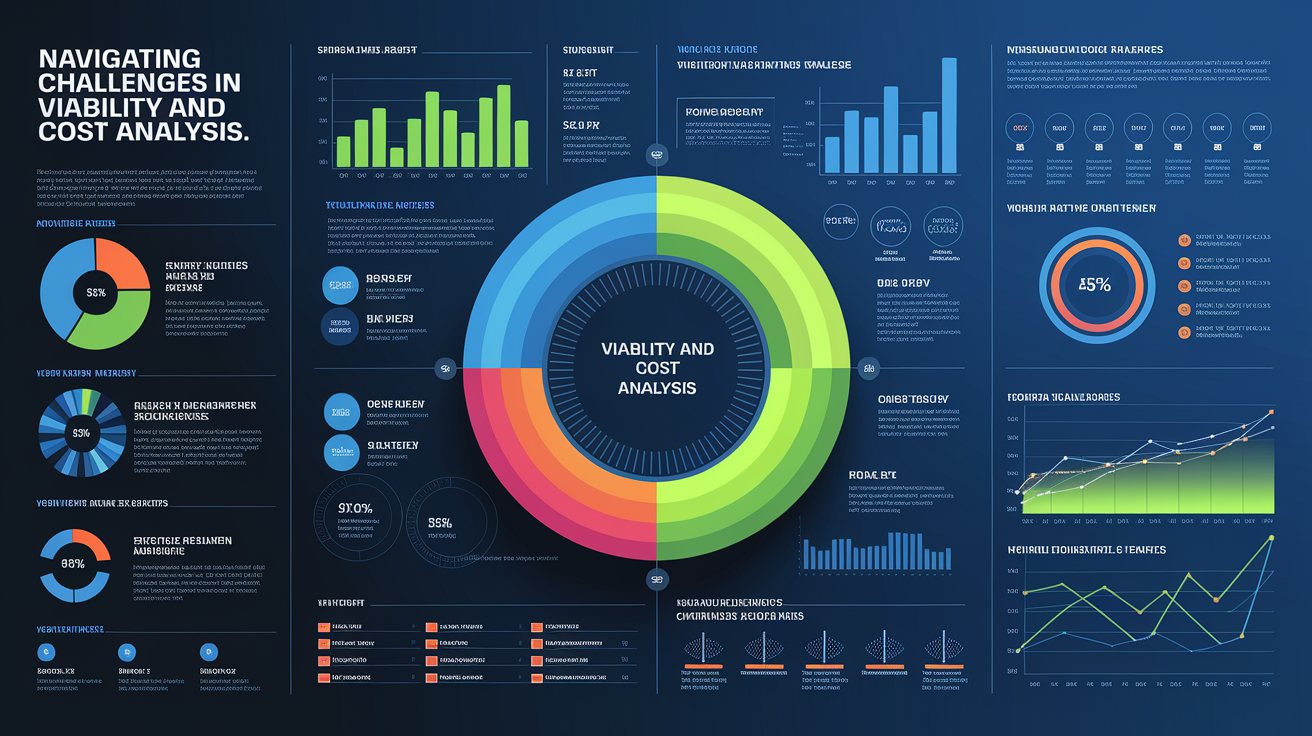
Additionally, incorporating scenarios that reflect different future states—from conservative to optimistic—provides decision-makers with a more nuanced understanding of potential outcomes. This scenario-based approach acknowledges the limitations of point forecasts and encourages contingency planning.
The Path Forward: Making Informed Decisions
Translating economic viability and cost analyses into actionable decisions requires balancing quantitative results with qualitative considerations and strategic objectives. The most effective decision frameworks integrate financial metrics with broader business sustainability goals and market positioning priorities.
For project developers and investors, this integration might include:
- Establishing clear thresholds for key financial performance indicators
- Developing standardized methodologies for project feasibility studies
- Creating decision matrices that weight different factors according to strategic importance
- Implementing regular review cycles to reassess viability as conditions change
The U.S. Department of Energy’s approach to technological feasibility and cost analysis offers a practical model that balances technical performance with economic considerations. This approach recognizes that viability exists on a spectrum rather than as a binary condition, with projects becoming increasingly viable as technology matures and markets evolve.
Ultimately, economic viability and cost analysis serve not as definitive answers but as essential tools in an ongoing process of evaluation and adaptation. By employing these tools with rigor, transparency, and an appreciation for their limitations, decision-makers can significantly improve their ability to identify truly viable opportunities and allocate resources effectively.
As markets continue to evolve and new analytical techniques emerge, the practice of economic viability assessment will undoubtedly grow more sophisticated—but its fundamental purpose of connecting costs to value creation will remain unchanged.