
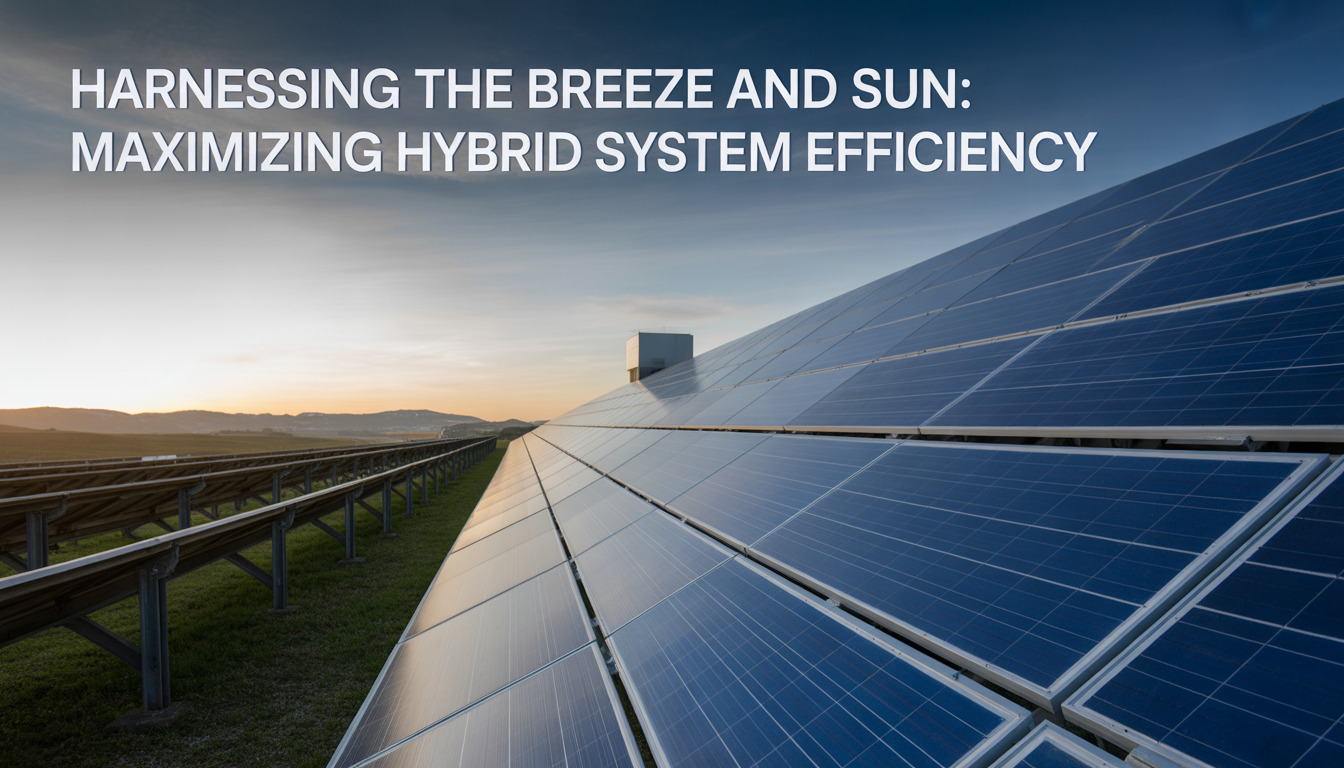
The Power Duo: Wind and Solar
Wind-solar hybrid systems represent one of the most promising developments in renewable energy technology, combining two powerful natural resources to create a more reliable and consistent power generation solution. These integrated systems merge wind turbines and solar panels into a single power generation unit, effectively addressing one of the most significant challenges in renewable energy: intermittency.

The fundamental principle behind these systems is elegantly simple yet technologically sophisticated. Wind-solar hybrid systems leverage the complementary nature of these energy sources—solar panels generate electricity during daylight hours, while wind turbines can produce power day or night, often with increased output during evening hours and inclement weather when solar production diminishes.
This natural synergy creates several immediate benefits:
- More consistent power generation throughout the 24-hour cycle
- Reduced dependence on battery storage systems
- More efficient use of land and grid connection infrastructure
- Greater stability in power output regardless of seasonal variations
Efficiency Unveiled
The efficiency advantages of hybrid renewable energy systems extend well beyond simple power generation. When properly designed, these systems achieve performance metrics that single-source installations simply cannot match.

A well-optimized wind-solar hybrid system typically delivers 5-25% more energy than standalone installations of equivalent capacity, depending on local conditions. This efficiency boost stems from several key factors:
- Resource complementarity: When solar production decreases during cloudy periods or nighttime, wind turbines often experience increased output due to weather patterns
- Enhanced capacity utilization: Shared infrastructure operates closer to maximum capacity more frequently
- Advanced power conversion: Modern hybrid inverters optimize energy harvesting across multiple sources simultaneously
- Intelligent energy management: Sophisticated controllers direct power flow to maximize efficiency and minimize losses
Energy storage solutions further amplify these efficiency gains. Modern battery systems integrated with hybrid installations capture excess production and provide supplementation during peak demand periods, creating a more reliable energy profile. Research on hybrid system optimization indicates that properly sized battery storage can improve overall system efficiency by an additional 10-15% through strategic load management.
Technological Innovations
Recent technological breakthroughs are rapidly transforming the capabilities and performance of wind-solar hybrid systems. These innovations focus on three primary areas: optimization algorithms, integration technologies, and advanced control systems.
Enhanced genetic algorithms (GA) and machine learning approaches have revolutionized hybrid system design. These computational methods analyze years of meteorological data—including sun radiation patterns, wind velocity profiles, and seasonal variations—to determine optimal component sizing and configuration. The result is hybrid systems precisely tailored to their specific geographic location and energy demand profile.

The National Renewable Energy Laboratory (NREL) has pioneered many of these advancements through their Hybrid Optimization and Performance Platform (HOPP). This robust, open-source modeling tool enables developers to analyze countless design variations to maximize energy yield while minimizing costs. HOPP simulations have demonstrated potential efficiency improvements of up to 30% compared to conventional design methodologies.
On the hardware side, next-generation hybrid controllers now offer millisecond-level response times, allowing systems to rapidly adapt to changing weather conditions and grid requirements. These controllers seamlessly manage the complex interplay between:
- Multiple energy generation sources (wind turbines and solar arrays)
- Various energy storage technologies (batteries, thermal storage, etc.)
- Grid interconnection systems and load management
- Predictive production based on weather forecasting
Real-World Applications
The theoretical benefits of wind-solar hybrid systems are impressive, but their real-world implementation is proving even more compelling. These systems are finding successful applications across diverse settings, from utility-scale installations to off-grid microgrids.
Utility-scale hybrid plants are becoming increasingly common globally, with installations demonstrating capacity factors 15-20% higher than comparable standalone renewable facilities. These large-scale systems often incorporate sophisticated power quality control mechanisms that enable them to provide grid services previously available only from conventional power plants.

In the commercial and industrial sector, hybrid systems are helping businesses simultaneously reduce energy costs and meet sustainability targets. Manufacturing facilities with substantial roof space and surrounding land are ideal candidates for hybrid installations, often achieving payback periods of 5-7 years while hedging against future energy price increases.
Perhaps most transformative are the off-grid hybrid renewable energy systems bringing reliable power to remote communities worldwide. These installations typically combine wind turbines, solar panels, and robust battery storage to create independent microgrids that eliminate the need for diesel generators. In these applications, hybrid systems have demonstrated 99% reliability while reducing operating costs by up to 70% compared to fossil fuel alternatives.
Challenges and Considerations
Despite their substantial benefits, wind-solar hybrid systems face several challenges that require careful consideration during planning and implementation phases.
System sizing represents perhaps the most critical decision point. Oversized systems increase capital costs unnecessarily, while undersized installations fail to meet energy needs reliably. Professional site assessment, including at least 12 months of local wind and solar resource data, is essential for accurate sizing. For residential applications, hybrid systems typically range from 5-15kW total capacity, while commercial installations often start at 50kW and scale upward based on energy requirements.
Weather dependency, while mitigated through hybridization, remains a consideration. Geographic locations experiencing extended periods with both minimal wind and solar resources may require oversized battery storage or supplemental generation capacity. Advanced weather forecasting integration can partially address this challenge by optimizing energy management ahead of low-production periods.
Maintenance requirements, though less intensive than fossil fuel alternatives, must be factored into operational planning:
- Wind turbines typically require inspection and servicing every 6-12 months
- Solar panels need cleaning frequency based on local conditions (dust, snow, etc.)
- Battery systems require monitoring and periodic component replacement
- Control systems need software updates and occasional calibration
Finally, initial investment costs remain higher than single-source renewable systems, though this gap continues to narrow. Current installed costs range from $3,000-$5,000 per kilowatt for residential systems and $1,800-$3,000 per kilowatt for utility-scale installations, with continued downward price pressure expected as manufacturing scales increase.
The Future is Hybrid
The trajectory for wind-solar hybrid systems points decisively upward. As technology costs continue to decline and efficiency improves, these integrated renewable energy systems are positioned to become the dominant form of new power generation in many markets worldwide.
Several emerging trends will likely accelerate this transition:
- Integration of green hydrogen production, using excess hybrid system energy to produce renewable hydrogen fuel
- AI-powered predictive management systems that further optimize energy production and storage
- Advanced materials science improving both solar PV efficiency and wind turbine performance
- Standardized modular designs reducing installation complexity and costs
Beyond the technology itself, policy frameworks increasingly recognize the value hybrid systems bring to grid stability and resilience. Many jurisdictions are implementing specific incentives for hybrid installations that provide dispatchable renewable energy, acknowledging their superior grid services compared to single-source renewables.
For energy consumers considering renewable options, hybrid systems offer the most complete package of benefits currently available: maximum energy production efficiency, reduced storage requirements, superior reliability, and optimized land use. As we move toward a fully renewable energy future, the integration of complementary generation sources will become not just preferred but essential to meeting our growing energy needs sustainably.
The evidence is clear: while single-source renewable energy has paved the way, hybrid systems represent the logical evolution toward a more efficient, resilient, and sustainable energy landscape.