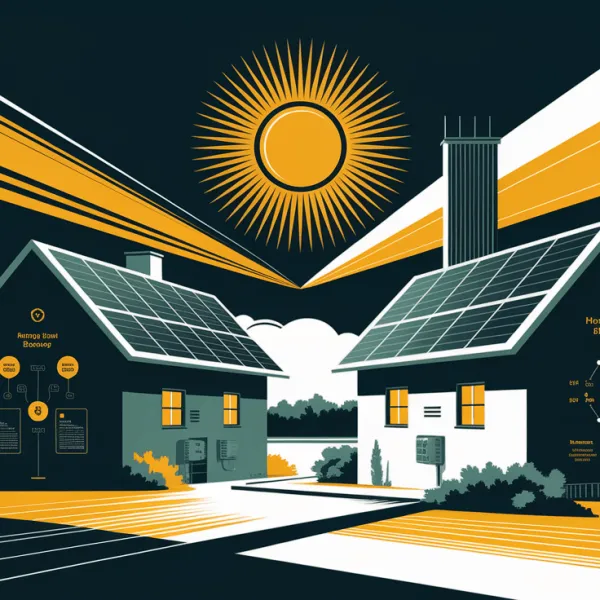
Solar Symphony: Introducing Balance-of-System Components
When most people think of solar energy, they picture solar panels capturing sunlight. Yet, the panels alone don’t power your home or business—the unsung heroes are the Balance-of-System (BOS) components. These are the critical photovoltaic system components that handle the transfer, conversion, safety, and management of the generated energy. BOS includes everything from racking systems and inverters to wiring harnesses, combiner boxes, and monitoring devices. Together, they form the PV system infrastructure that ensures efficiency, safety, and long-term reliability.

In many installations, BOS components can account for up to two-thirds of total system costs, including not just the hardware but also installation labor, permits, and interconnection fees as noted in industry cost analyses. Proper selection and integration of these elements is not just an engineering decision—it’s a safeguard for performance, safety, and financial return.
Racking and Mounting Systems
The physical stability of a solar array begins with robust mounting systems and racking structures. These solar panel support structures anchor modules securely, whether on rooftops, ground mounts, or solar carports.

- Fixed-tilt racking systems—simple, economical solutions with no moving parts.
- Adjustable tilt systems—allow seasonal angle changes to maximize energy yield.
- Solar tracking systems—motorized units that follow the sun’s path, increasing efficiency, common in utility-scale projects.
For residential rooftops, choosing installation mounting hardware that integrates with roof type (asphalt shingle, tile, or metal) prevents structural damage and leakage. In commercial or ground applications, engineered racking systems withstand wind loads, seismic forces, and snow accumulation.
Inverters and Power Conversion
Solar inverters are the electrical balance components that transform the panels’ direct current (DC) into alternating current (AC) for appliances and grid compatibility. The choice of inverter impacts efficiency, monitoring capabilities, and installation flexibility.

- String inverters—centralized devices managing multiple panels connected in series.
- Microinverters—mounted behind each panel, allowing individual optimization and easier fault detection.
- Power optimizers—panel-level electronics paired with string inverters to boost output in shaded or unevenly performing arrays.
High-quality inverters typically achieve 96–99% conversion efficiency. For grid-tie equipment, advanced models incorporate anti-islanding protection—automatically shutting down if the grid loses power for technician safety.
Wiring, Connectors, and Combiner Boxes
Electrical conduits, wiring harnesses, and connectors form the arteries of a solar installation, moving DC power from panels through the DC combiner box to inverters. A DC combiner box consolidates multiple panel strings into a single output, housing overcurrent protection like fuses or circuit breakers.

- Wiring and connectors—UV-rated, double-insulated cables resist weather exposure for decades.
- Junction boxes—sealed enclosures protecting wire terminations at the module level.
- Combiner boxes—contain safety devices and simplify maintenance by localizing distribution points.
Attention to conductor sizing, insulation type, and routing minimizes transmission losses and meets electrical code compliance for solar wiring components.
Safety and Protection Components
No PV system is complete without layers of electrical safety devices. These components ensure fault isolation, surge mitigation, and compliance with standards.
- Disconnect switches—DC and AC isolation points for maintenance or emergencies.
- Surge protection devices—absorb voltage spikes from lightning or grid disturbances.
- Grounding equipment—protects both people and hardware by safely channeling stray currents.
- Safety switches—provide manual and visible means of circuit isolation.
Modern systems integrate these solar system protection devices directly into BOS enclosures to reduce footprint and installation complexity.
Monitoring and Control Systems
Monitoring systems are the nerve center of modern PV installations, offering real-time data on performance, fault detection, and predictive maintenance. As outlined by the U.S. Department of Energy, integrated energy management systems can enhance output by quickly identifying and correcting under-performance.
- Electrical meters—measure production and consumption for net metering programs.
- Software dashboards—allow system owners to track energy yield, system uptime, and degradation rates.
- Advanced analytics—AI-driven modules forecast performance losses due to soiling, shading, or component wear.
For commercial operations, monitoring systems can connect to building management software for integrated renewable energy equipment oversight.
Optional Energy Storage and Charge Controllers
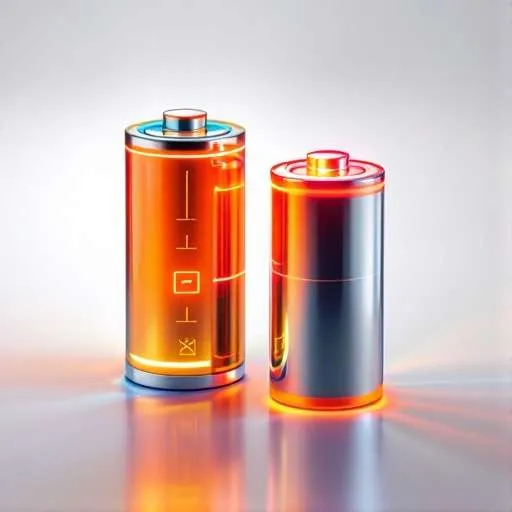
For off-grid or hybrid configurations, energy storage converts intermittent sunlight into round-the-clock power supply. Battery banks and charge controllers form the storage BOS elements.
- Battery banks—store surplus energy, ranging from lithium-ion for high efficiency to lead-acid for lower upfront costs.
- Charge controllers—regulate charging speed and prevent deep discharge, extending battery life.
- Maximum Power Point Trackers (MPPT)—optimize the match between panel output and battery charging voltage to harvest the most energy possible.
For grid-connected users, battery addition supports time-of-use optimization—storing power when solar production is high and electricity prices are low, then discharging during peak rates.
Powering Forward: Wrapping Up Your BOS Knowledge
A well-designed BOS is more than a collection of accessories—it is the backbone of solar photovoltaic system performance. Understanding components such as inverters, racking, monitoring tools, safety devices, and optional storage helps both professionals and informed consumers select solutions tailored to project scale, budget, and environmental conditions.
When planning your solar system, consider the BOS with the same seriousness as the panels. The right balance-of-system ensures your installation delivers reliable, efficient, and safe renewable power for decades—transforming sunlight into tangible energy independence.