
The Power of Solar in Agriculture
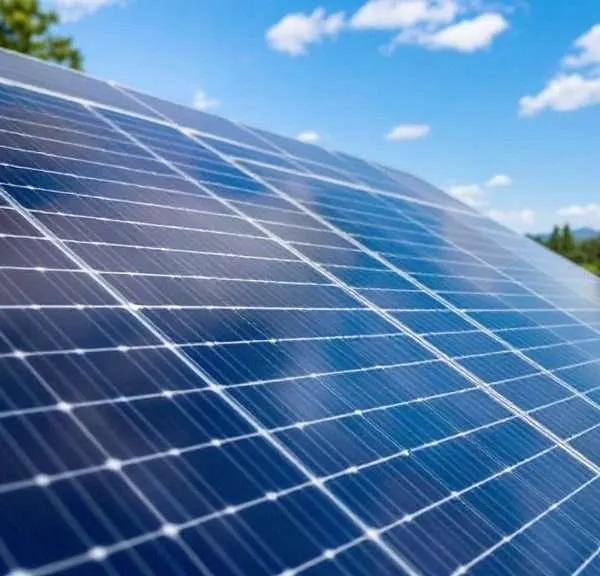
The marriage between solar energy and agriculture represents one of the most promising developments in sustainable farming today. This integration, known as agrivoltaics or dual-use solar, is transforming how we think about land use efficiency and renewable energy deployment in agricultural settings.
Agrivoltaics refers to the simultaneous use of land for both solar photovoltaic energy production and agricultural activities—whether crop cultivation, livestock grazing, or habitat preservation. Rather than competing for land, these systems work in harmony, often enhancing both energy generation and agricultural productivity.
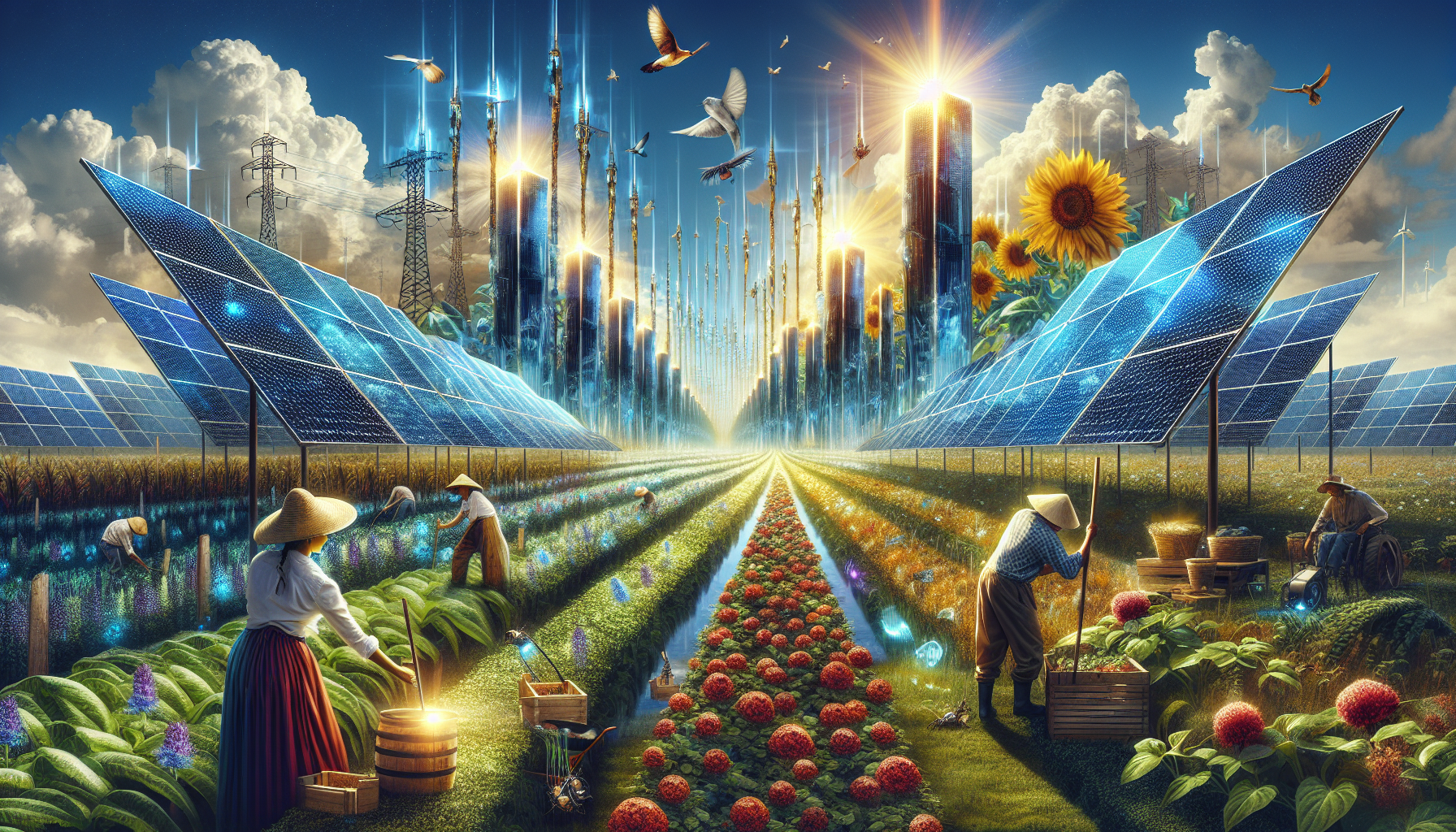
According to the National Renewable Energy Laboratory (NREL), these dual-purpose installations address critical land-use conflicts while creating resilient food-energy systems. With over 1 gigawatt of U.S. photovoltaic installations already utilizing dual-use approaches, farmers across the country are discovering that solar panels and agriculture don’t just coexist—they thrive together.
The benefits extend beyond simple space-sharing. Solar arrays create beneficial microclimates for certain crops, reduce water consumption, and provide farmers with steady, reliable income streams in addition to their agricultural revenue—a game-changer for rural economies facing climate uncertainty.
Solar-Powered Irrigation Systems
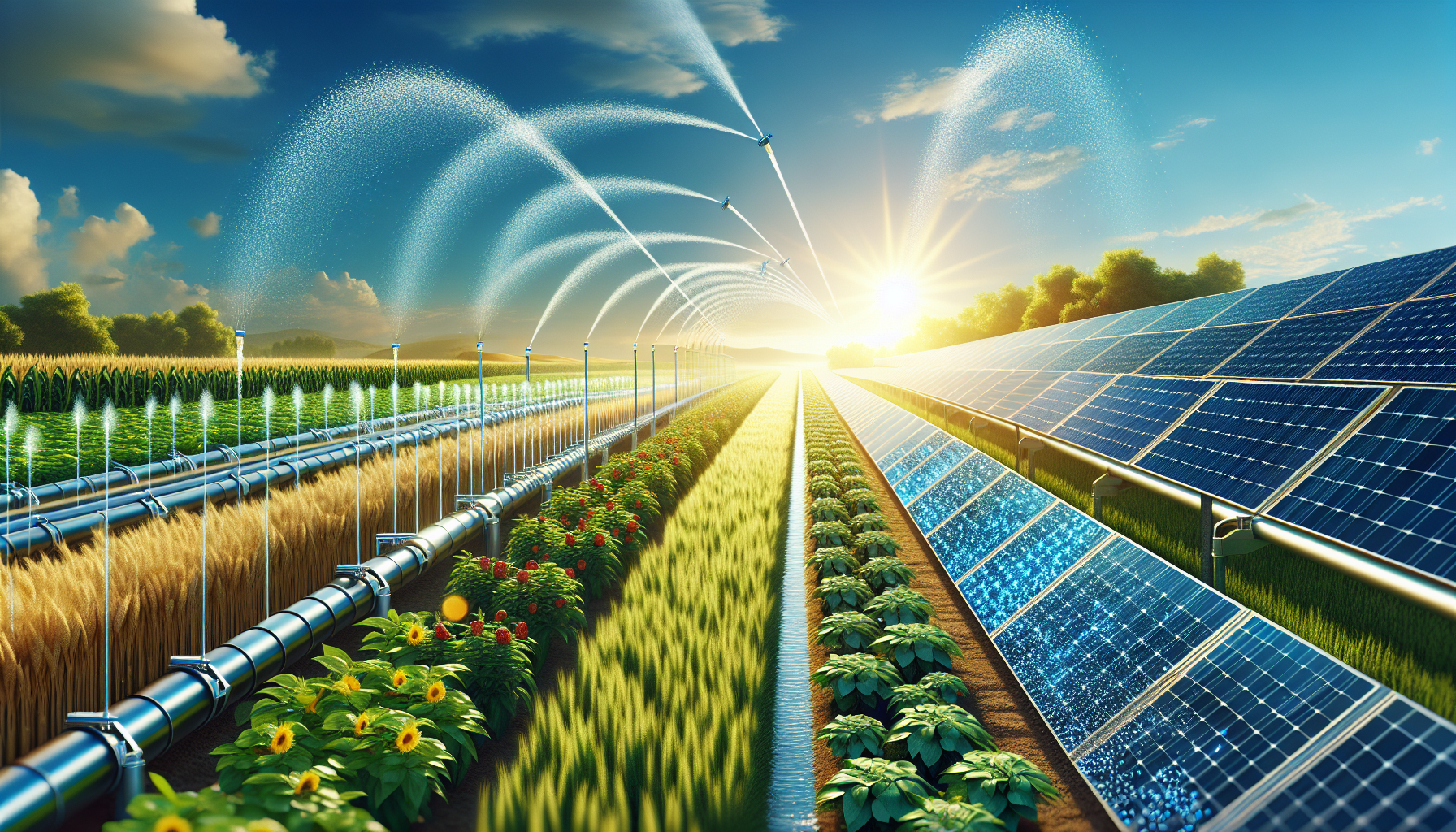
Perhaps the most immediate impact of solar in farming comes through solar-powered irrigation systems, which are revolutionizing water management across agricultural operations of all sizes.
These systems harness photovoltaic technology to power pumps that draw water from wells, reservoirs, or other water sources, eliminating the need for grid electricity or diesel generators. The advantages are particularly significant for remote farming operations where grid connections are unreliable or nonexistent.
The economic benefits are compelling:
- Long-term cost savings on electricity and fuel
- Minimal maintenance requirements compared to conventional systems
- Independence from fluctuating energy prices
- Consistent irrigation capability even in off-grid locations
According to reports from agricultural solar integrators, these systems provide critical self-sufficiency for farmers in remote areas, reducing reliance on distant power infrastructure while ensuring reliable irrigation precisely when crops need it most.
What makes solar irrigation particularly powerful is its scalability—systems can be designed for operations of any size, from small family farms to large commercial enterprises. The technology is especially valuable during peak growing seasons when electricity demand and costs typically surge.
Solar Greenhouses: A New Era of Crop Production
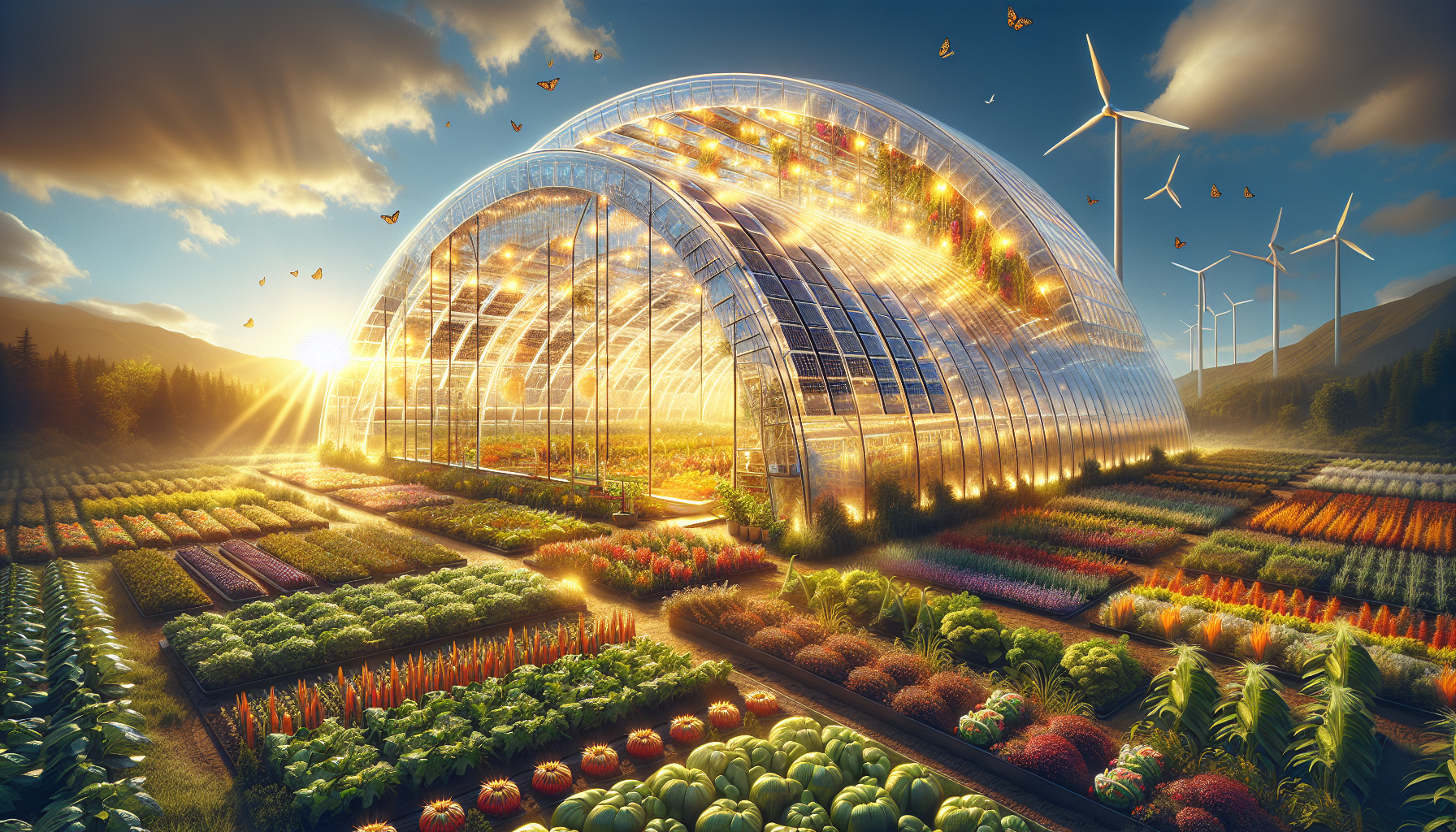
Solar greenhouses represent another frontier in agricultural innovation, merging controlled environment agriculture with renewable energy generation.
Unlike conventional greenhouses that focus solely on creating optimal growing environments, solar greenhouses incorporate photovoltaic technology directly into their design. These structures can feature semi-transparent solar panels embedded in roofing materials or strategically placed standard panels that allow for calculated light filtration.
Research documented by the USDA Climate Hubs demonstrates several key advantages of these systems:
- Temperature regulation that reduces heating and cooling costs
- Extended growing seasons beyond traditional limitations
- Partial shading that benefits shade-tolerant crops like leafy greens
- On-site power generation that covers greenhouse operational needs
The microclimate benefits are particularly noteworthy—studies show soil temperatures in agrivoltaic systems can be 2-5 degrees Celsius lower on hot days, while retaining more moisture and reducing irrigation requirements. As detailed by Enel North America, these conditions not only protect crops from extreme heat but also support pollinators that contribute over $18 billion annually to U.S. crop production.
For crops like blueberries that naturally prefer partial shade, the strategic placement of solar panels can actually increase yields while simultaneously generating clean energy—a true win-win scenario.
Challenges and Considerations
While the potential of solar-integrated agriculture is immense, several important challenges must be addressed for widespread adoption.
The initial investment remains a significant barrier for many farmers. High upfront costs for quality solar equipment, mounting structures, and specialized designs can be prohibitive without proper financing mechanisms or incentives. Though long-term savings are substantial, the return on investment timeline may extend beyond what some operations can accommodate.
Technical and design considerations also present challenges. According to NREL’s agrivoltaics research, finding the optimal balance between energy generation and crop production involves complex tradeoffs that vary by:

- Climate region (arid versus wet)
- Crop selection and growth requirements
- Panel height, spacing, and orientation
- Seasonal changes in sun angles and agricultural activities
Land use concerns also persist. Without careful policy development, there’s risk that solar development could displace prime farmland. In fact, analysis indicates that approximately 83% of new U.S. solar installations may be sited on agricultural land if current trends continue—highlighting the urgent need for dual-use approaches rather than single-purpose development.
Maintenance considerations cannot be overlooked either. Agricultural environments present unique challenges for solar equipment, from dust accumulation during planting and harvesting to potential damage from agricultural equipment. Designing systems that can withstand these conditions while remaining accessible for maintenance is essential for long-term success.
Future Prospects of Solar Integration in Agriculture
Despite these challenges, the future of solar-integrated agriculture appears exceptionally bright, with innovation accelerating across multiple fronts.
Advanced panel designs specifically engineered for agricultural applications are emerging rapidly. These include:
- Bifacial panels that capture reflected light from ground surfaces
- Vertical installations that allow for maximum land utilization
- Tracking systems that follow the sun while enabling crop growth underneath
- Semi-transparent options that provide calibrated levels of shading
As detailed by industry analysts, these configurations optimize both energy capture and agricultural productivity, with each design offering specific advantages depending on farm type, location, and crop selection.
Research institutions are increasingly focused on quantifying the benefits of agrivoltaics for different crop types, climates, and configurations. These studies are providing farmers with data-driven guidance on which approaches will work best for their specific operations. The U.S. Department of Energy is actively supporting research and demonstration projects that explore the full potential of solar-agriculture co-location.
Policy frameworks are also evolving to better support dual-use installations. As legislators and regulators recognize the value of preserving agricultural capacity while expanding renewable energy, new incentives and zoning accommodations are emerging that specifically encourage agrivoltaic development over conventional single-use solar farms.
Perhaps most encouragingly, market researchers note that agrivoltaics is increasingly viewed as a key strategy for balancing renewable energy goals with food security needs—particularly crucial as climate change continues to stress agricultural systems worldwide.
Shining a Light on Sustainable Farming
Solar integration in agriculture represents more than an incremental improvement—it’s a paradigm shift in how we conceptualize productive land use in an era of climate change and energy transition.
For farmers considering this path, the evidence increasingly suggests that well-designed solar integration can:
- Diversify and stabilize farm income
- Reduce operational costs and climate vulnerability
- Improve growing conditions for certain crops
- Generate clean energy while maintaining agricultural productivity
As we look toward a future where both food and energy security are paramount concerns, the synergy between solar power and agriculture offers a compelling blueprint for resilient, productive land use. The sun that has always nourished our crops can now power the farms that grow them—a full-circle solution that honors agriculture’s past while securing its future.