Photovoltaic-Thermal (PVT) Solar Systems: When One Roof Needs Electricity and Heat
Is a PVT system a good fit?
Photovoltaic-thermal (PVT) collectors make electricity and useful heat from the same roof area. They are most potential when roof space is tight and a building has a steady use for low-temperature heat, such as domestic hot water, pool heating, ventilation-air preheating, or a designed heat-pump source loop.
The thermal output only has value when the building can use or store it. A house with little hot-water demand, long pipe runs, or no practical place for a tank may be better served by standard PV plus an efficient electric water heater or heat pump.
Three questions to answer before requesting quotes
- Where will the heat go each month? Estimate hot-water, pool, ventilation, space-heating, or process-heat demand by season.
- Is roof area the real constraint? PVT becomes more attractive when separate PV and solar-thermal collectors would compete for limited unshaded space.
- Who will service both sides? The project needs clear responsibility for the electrical array, thermal loop, controls, tank or heat pump, freeze protection, and roof penetrations.
How photovoltaic-thermal collectors work
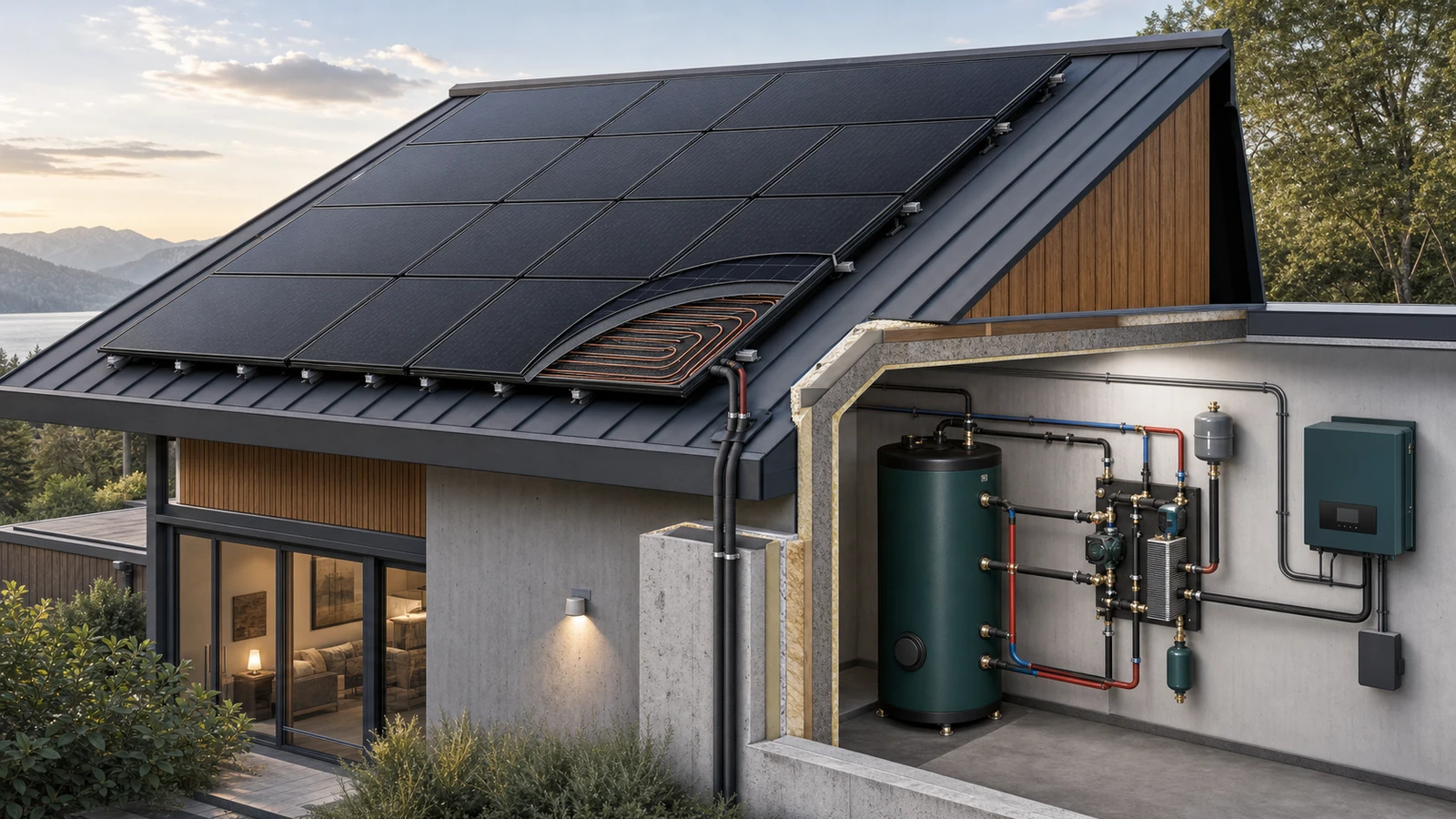
A PVT collector combines a photovoltaic module with an absorber that removes heat from the module or the air behind it. The PV cells send direct-current electricity to an inverter. The thermal side moves heat with liquid or air to a tank, heat exchanger, ventilation system, pool, process load, or heat pump.
Removing heat can reduce PV cell temperature under some operating conditions, but that does not guarantee a large electrical gain. Pump or fan energy, pipe losses, tank losses, control settings, weather, and the temperature required by the building all affect useful output. Evaluate the electrical and thermal results separately rather than relying on one combined efficiency percentage.
Choose the collector around the heat load
- Unglazed liquid PVT: often suited to lower-temperature loads and heat-pump source loops. Lower operating temperature can favor PV performance, but the design still needs condensation, freeze, corrosion, and fluid-service planning.
- Glazed liquid PVT: adds insulation and glazing to retain more heat. It can deliver warmer fluid, while the added optical and thermal conditions may change electrical output. The collector data should show both sides across expected operating temperatures.
- Air PVT: moves air behind or through the collector for ventilation or space preheating. Duct resistance, fan power, filtration, noise, moisture, fire separation, and seasonal bypass matter as much as collector area.
Where PVT can solve a real building problem
- Homes with limited roof area and steady hot-water use: a properly matched tank can use heat that would otherwise be rejected.
- Multifamily buildings, hotels, laundries, gyms, and care facilities: frequent hot-water demand can improve thermal utilization.
- Pools: a large, low-temperature seasonal load can match unglazed collectors, subject to climate and operating season.
- PVT-assisted heat pumps: the collector can serve as one heat source in a designed system. The installer should model source temperature, flow, compressor electricity, defrost or frost behavior, storage, and backup heat.
- Commercial or industrial preheating: useful when a process repeatedly needs water or air warmed through a temperature range the collectors can supply.
For higher-temperature applications, compare PVT with dedicated solar-thermal collectors. For industrial projects, start with the actual heat profile described in NerdVolt's solar process-heat guide, not only annual energy totals.
When standard PV may be the better choice
- The building has little daytime or year-round heat demand.
- A simple PV array can power a high-efficiency heat-pump water heater without a roof-to-tank thermal loop.
- The tank, heat exchanger, pipes, ducts, pumps, or controls would require a disruptive retrofit.
- Roof shading, orientation, structural limits, fire access, or plumbing distance undermine the combined layout.
- Local installers cannot provide product data, commissioning records, warranty coordination, or long-term thermal service.
Ask every bidder to compare three cases on the same assumptions: PVT; standard PV plus electrified water or space heating; and side-by-side PV with dedicated solar thermal. Include auxiliary electricity, storage losses, maintenance, inverter replacement, pump or fan replacement, fluid service, and the value of heat that the building can actually use.
Size electricity and heat as two linked systems
- Build monthly load profiles. Use electric bills and measured or estimated thermal demand. Annual averages can hide a summer heat surplus or winter shortfall.
- Define usable temperature ranges. Pool heating, heat-pump source loops, domestic hot water, and process preheating need different temperatures.
- Model the thermal destination. Specify tank volume, heat exchanger, setpoints, backup heater, pipe length, insulation, circulation schedule, and heat-dump or stagnation strategy.
- Model PV output separately. Use the collector's electrical ratings and temperature behavior, plus site-specific shade, orientation, inverter, wiring, and system losses.
- Compare monthly useful energy. Do not give full value to heat that arrives when the tank is already hot or the load is off.
NerdVolt's PV thermal-management guide explains why cell temperature matters, while the solar district-heating guide covers the larger storage and distribution questions for network-scale projects.
PVT quote checklist for homeowners and facility teams
- Collector make, model, electrical rating, thermal rating, and the standard or method behind each rating.
- Monthly electrical and useful-heat estimates at the proposed operating temperatures.
- Pump or fan electricity, controls, heat exchanger, tank, backup heat, and expected standby losses.
- Freeze, stagnation, over-temperature, pressure-relief, condensation, corrosion, and leak-response design.
- Roof attachment, flashing, drainage, structural review, fire access, electrical shutdown, grounding, and permits.
- Commissioning records: flow, pressure, sensor readings, control setpoints, inverter output, and owner instructions.
- Separate warranties for the PV module, thermal absorber, seals, pump or fan, tank, controls, workmanship, and roof.
- One named party responsible for diagnosis when the electrical and thermal subsystems interact.
Safety and professional scope
PVT combines energized DC equipment with hot fluid or moving air, roof work, pressure, pumps or fans, and building plumbing or ductwork. Designs may also involve potable-water separation, glycol, scald protection, expansion control, pressure relief, freeze protection, stagnation, fire access, and utility interconnection. Use qualified solar, electrical, plumbing, mechanical, structural, and roofing professionals as required by the project and local rules. Follow the collector, inverter, tank, heat-pump, and control manufacturers' instructions.
Plan maintenance before installation
Owners should be able to see both electrical and thermal performance. Record inverter production, collector inlet and outlet temperatures, flow or fan status, tank temperatures, pressure, alarms, and backup-heater use. A falling thermal yield can come from air in the loop, low pressure, pump or fan faults, sensor drift, fouling, blocked filters, heat-exchanger scale, damaged insulation, or a control change.
Service intervals depend on the product and fluid. The owner documentation should state how to inspect roof seals, fluid condition, filters, pressure, relief devices, expansion equipment, sensors, pumps, fans, and storage. A leak, repeated pressure loss, damaged cable, burning odor, unusual heat, or recurring fault is a reason to stop and call the appropriate professional.
Bottom line
PVT deserves consideration when the same site needs solar electricity and predictable low-temperature heat, especially where usable roof area is scarce. The deciding metric is not the collector's peak combined output. It is the amount of electricity and heat the building can use after pumps or fans, piping or duct losses, storage, controls, weather, backup energy, and maintenance are included.
Sources and further reading
- IEA SHC Task 73: PVT Heating Systems — the active 2025–2028 international research project on liquid- and air-based PVT heating systems.
- IEA SHC Task 60: Application of PVT Collectors — system research focused on where PVT offers an advantage over separate PV and solar-thermal installations.
- IEA SHC Solar Heat Worldwide — broader market and technology context for solar heating and cooling.
Technical context updated July 20, 2026. Product performance, permits, installer capability, and operating economics vary by location and system design.
How to verify the numbers on this page
This page covers Photovoltaic-Thermal (PVT) Solar Systems: When One Roof Needs Electricity and Heat. Figures here depend on the exact model, site, policy, study, test method, operating conditions, system boundaries, and comparison baseline. Verify current manufacturer, regulator, standard, or primary-research documents before acting.