Cutting the Island: A Practical Guide to Anti-Islanding and Detection Techniques
Kickstarting Safety: Defining Anti-Islanding
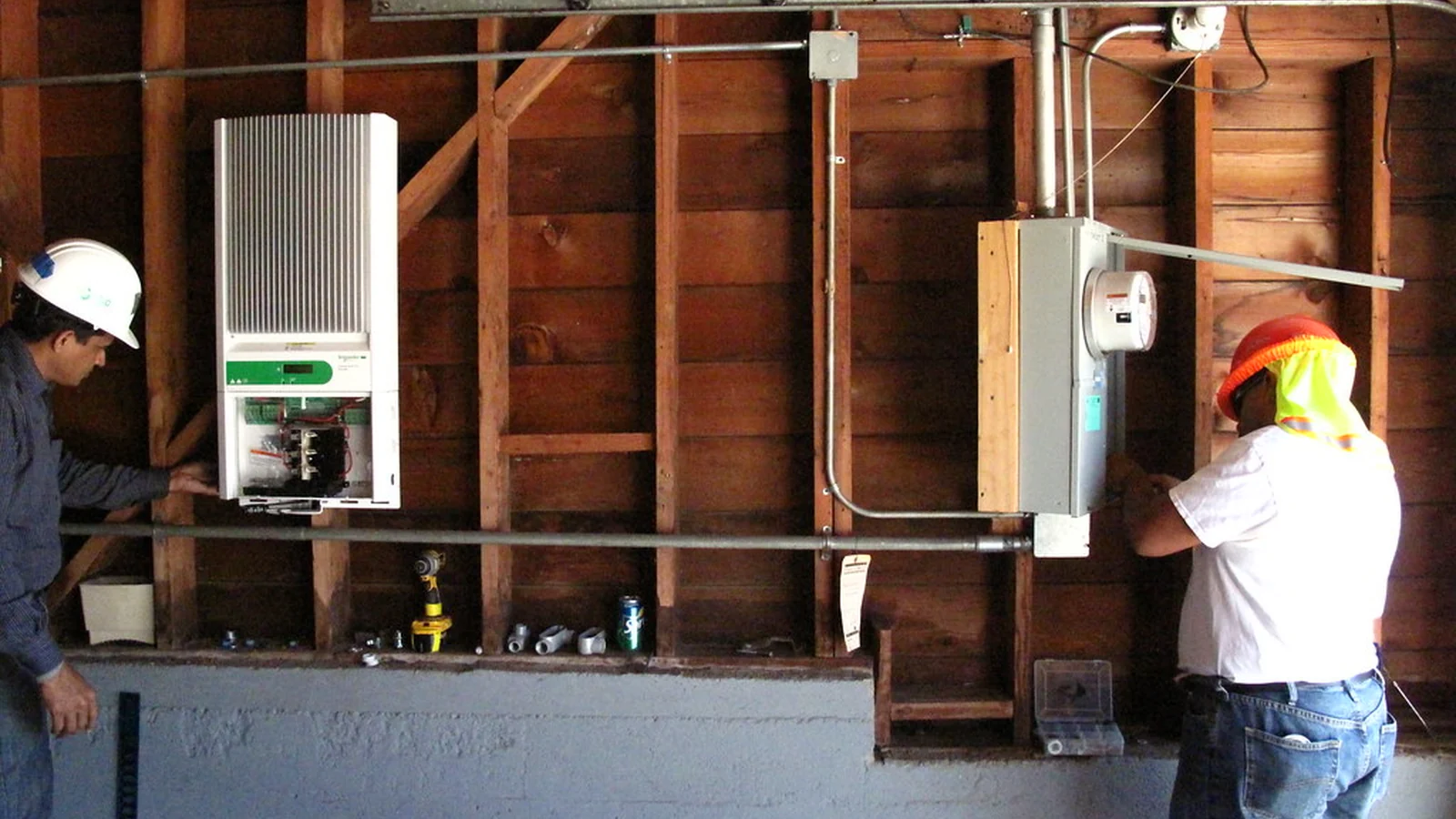
In grid-connected renewable energy systems—such as photovoltaic arrays and wind turbines— anti-islanding protection is a cornerstone of operational safety. Islanding occurs when distributed generation continues to power a part of the electrical network even after it has been cut off from the main utility grid. This situation poses significant electrical safety hazards for utility workers, risks damaging equipment, and can impact power system stability.
Apply the safety concept to a system choice: the grid-tied versus off-grid guide explains outage behavior, while backup-system integration covers critical loads and transfer equipment.
By continuously monitoring the grid connection, anti-islanding ensures grid-tied inverters disengage during faults or network maintenance. This aligns with modern grid codes and safety standards, ensuring that renewable energy systems operate without putting the broader grid or personnel at risk.
Mapping the Terrain: Categories of Detection Techniques
Islanding detection methods fall into three major categories, each with distinct operational mechanisms and reliability characteristics:
- Passive Detection Methods – Relies on real-time monitoring of grid parameters such as voltage, frequency, and phase shifts.
- Active Detection Methods – Involves injecting deliberate disturbances and assessing the system's response.
- Hybrid Methods – Combines active and passive detection to reduce the risk of undetected islanding and false trips.
These methods are detailed extensively in research from the National Renewable Energy Laboratory and the Electric Power Research Institute, offering practical performance insights for engineers and system designers.
Passive Detection Methods
Passive anti-islanding techniques depend solely on measuring deviations in electrical parameters that occur when the grid is disconnected. These methods do not influence the system but instead identify abnormal patterns indicative of islanding:
- Over/Under Voltage and Frequency Trips – Disconnects the inverter if parameters exceed predefined ANSI or IEEE thresholds.
- Rate of Change of Frequency (ROCOF) – Detects sudden grid frequency changes via precise measurement algorithms.
- Voltage Phase Jump – Identifies abrupt shifts in voltage phase through phase-locked loop monitoring.
- Harmonic Detection – Monitors harmonic distortion patterns that emerge when grid reference stability is lost.
The advantage of passive methods is their simplicity and low equipment overhead. However, their effectiveness can be limited by the non-detection zone—a range of load-generation conditions where disturbances are too small to trigger shutdowns.
Active Detection Methods
Active detection methods introduce controlled perturbations into the inverter's output and analyze the system's feedback. Common approaches include:
- Sandia Frequency Shift (SFS) – Gradually alters frequency output; without the damping effect of the grid, the change accumulates and triggers disconnection.
- Sandia Voltage Shift (SVS) – Adjusts output voltage magnitude to force a parameter drift noticeable without grid synchronization.
- Slip Mode Frequency Shift – Uses phase angle perturbations to increase instability under islanding.
- Impedance Measurement – Injects small test signals to detect changes in system impedance that occur when the utility grid is absent.
By proactively stimulating the system, active methods can sharply reduce the detection time and mitigate large non-detection zones. They do, however, risk affecting power quality in normal operation, requiring careful design and tuning.
Hybrid Approaches for Enhanced Reliability
Hybrid approaches combine the strengths of passive and active methods, minimizing both false positives and undetected events. For instance, passive monitoring may run continuously, triggering an active perturbation only when initial anomalies appear. This strategy reduces unnecessary disturbances while maintaining high sensitivity.
Research in computational intelligence, including artificial neural network-based models, is advancing hybrid detection accuracy. Such methods assess multidimensional data—like phase noise, harmonic distortion, and load matching characteristics—yielding faster and more reliable islanding identification across varied operating conditions.
Compliance and Standards
Required trip behavior depends on the locally adopted interconnection rule, inverter certification, utility settings, and the specific abnormal grid condition. Verify the current requirements for the project rather than applying one universal clearing time.
In North America, compliance evaluation under UL 1741 certification verifies that inverters meet both performance and safety criteria. Evaluation procedures, as outlined by the U.S. Department of Energy, ensure coordinated operation between distributed generation resources and grid protection relays.
Utilities increasingly integrate communication-assisted anti-islanding—coordinated through supervisory controls—to add a further layer of certainty in high-penetration renewable environments.
Best Practices for Implementation
Maximizing the effectiveness of anti-islanding protection in distributed generation systems requires a balanced approach:
- Perform detailed site-specific studies to determine load-generation match scenarios prone to non-detection zones.
- Combine detection methods to improve both sensitivity and reliability.
- Regularly update inverter firmware to match evolving grid code requirements and IEEE 1547 amendments.
- Validate settings through the inverter’s listed certification and the utility’s current compliance process; the applicable test edition and supplemental requirements can change.
- Integrate coordinated utility communication methods where available, particularly in microgrid and high-DER penetration scenarios.
Shore Up Your System: Final Thoughts
Anti-islanding protection is more than a technical requirement—it’s a mission-critical safeguard for modern renewable energy infrastructure. By leveraging the appropriate balance of passive, active, and hybrid detection methods, renewable developers and operators can protect utility workers, maintain power quality, and keep systems aligned with regulatory mandates.
Looking ahead, the integration of machine learning, distributed control, and smarter grid synchronization protocols will enhance resilience while reducing false trips. For any organization committed to scaling distributed generation, robust anti-islanding strategies are an investment in safety, compliance, and grid stability.
How to verify the numbers on this page
This page covers Cutting the Island: A Practical Guide to Anti-Islanding and Detection Techniques. Figures here depend on the exact model, site, policy, study, test method, operating conditions, system boundaries, and comparison baseline. Verify current manufacturer, regulator, standard, or primary-research documents before acting.