Calculator

Inverter Size Calculator: Continuous Watts, Surge Watts, and Battery Limits

By NerdVolt Editorial TeamJune 16, 2026Estimate tool

Last reviewed July 6, 2026. Confirm equipment settings, utility rules, incentives, warranties, safety requirements, and local code with current official documents and qualified professionals before acting.

Inverter Size Calculator

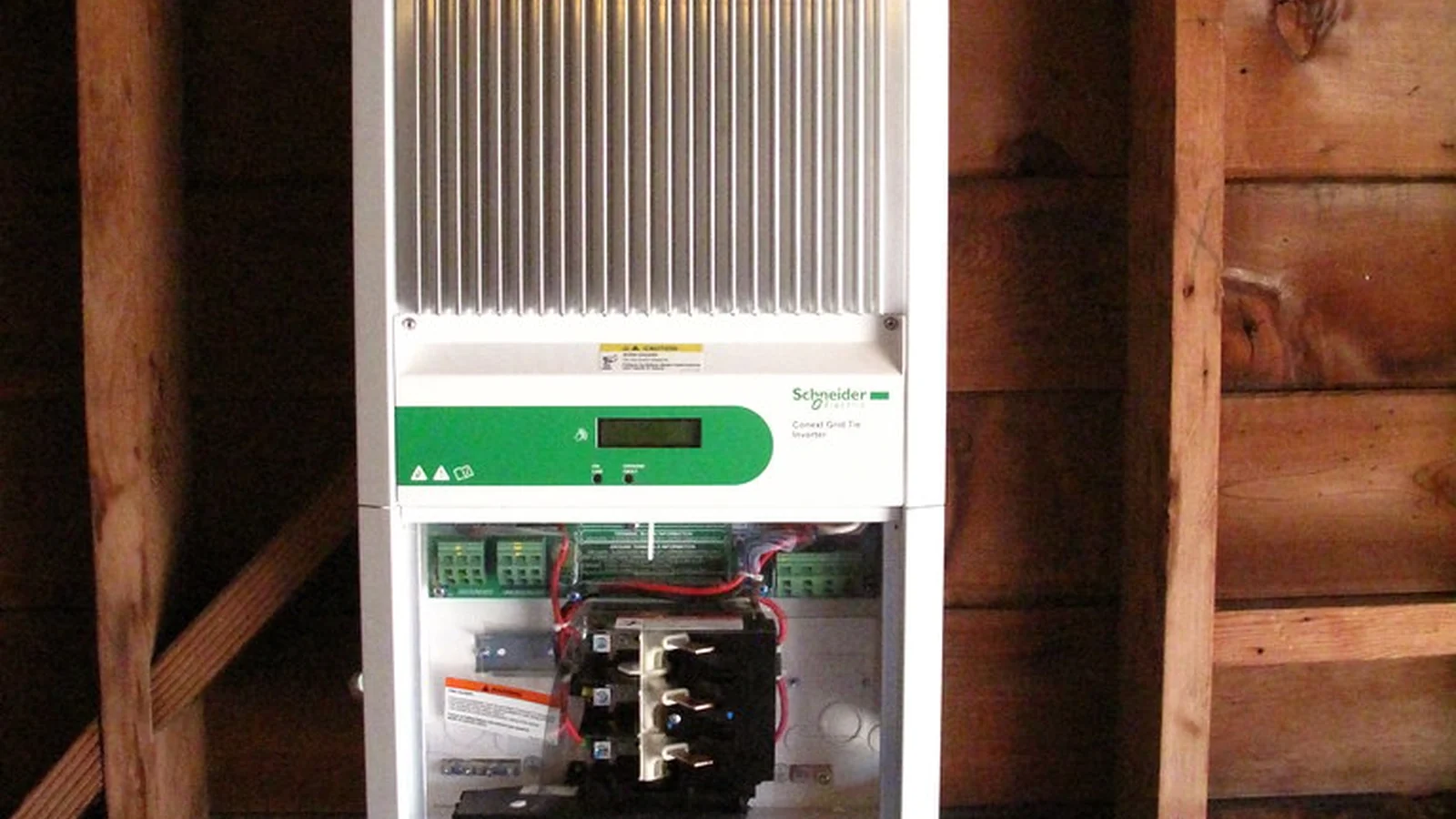
Inverter note: An inverter must match the system type, load profile, battery limits, surge requirements, output voltage, transfer equipment, and listing requirements.

Use the calculator as a shortlist, not a final design

This calculator estimates the continuous inverter wattage and surge capacity to investigate for a small solar, battery, RV, backup, or off-grid system. It is most useful before reading datasheets, not after equipment has already been bought.

The final inverter choice must still match battery discharge limits, output voltage, neutral bonding, transfer equipment, grid-interactive listing, wiring, breakers, ventilation, and local electrical rules.

Inputs that change the answer

Two systems with the same daily energy use can need different inverters if one has motor loads, a low battery voltage, or equipment that cannot surge safely.

  • Add only loads that may run at the same time; do not size from every nameplate in the building unless they are truly simultaneous.
  • Handle motor startup separately from running watts for refrigerators, well pumps, sump pumps, compressors, and shop tools.
  • Check the battery bank voltage and maximum discharge current before assuming the inverter can deliver its rated AC output.
  • Confirm whether the system needs single-phase, split-phase, or three-phase output and whether transfer equipment is manual or automatic.
  • Use a qualified electrician or solar designer for permanent building wiring, utility-connected systems, and any installation involving life-safety loads.

Result

How to use this calculator

Use this calculator to shortlist inverter capacity before comparing datasheets and installation manuals.

What the result means

The result estimates continuous inverter watts and highlights why surge capacity matters.

What the result does not settle

It does not confirm grid-interactive approval, battery communication, neutral bonding, split-phase output, or local installation requirements.

Inputs that change the answer most

  • Simultaneous running watts
  • Largest motor or compressor surge
  • Battery voltage and maximum discharge current
  • Single-phase, split-phase, or three-phase output needs
  • Grid-tied, off-grid, or hybrid operating mode

Readable method

Planning inverter size = realistic simultaneous load plus a margin; surge rating must separately cover short motor-starting events.

Before you act

Compare the result with manufacturer surge curves, battery discharge limits, transfer-switch requirements, utility rules, and qualified electrical design.

How this is calculated

Continuous inverter watts ≥ simultaneous running watts × safety margin. Surge watts ≥ running watts + largest startup adder. DC current ≈ AC watts ÷ (battery volts × efficiency).

Choosing an Inverter Beyond the Wattage

The calculator helps estimate continuous inverter capacity, but inverter selection also depends on surge rating, split-phase or single-phase output, battery voltage, grid-interactive certification, transfer switching, and whether the system is grid-tied, off-grid, or backup-only. Motors, pumps, compressors, and power tools can require a much larger starting surge than their nameplate running watts suggest.

Common Sizing Mistakes

  • Adding every circuit in the house instead of the loads that will actually run at the same time.
  • Ignoring surge loads from refrigeration, HVAC blowers, well pumps, and garage equipment.
  • Choosing an inverter that is larger than the battery can safely support.
  • Forgetting local interconnection and listing requirements for grid-connected equipment.

Use the result as a shortlist filter, then check the manufacturer's surge curve, battery discharge limit, and installation manual before buying equipment.

Assumptions and formula

Use these inputs as planning assumptions, not as a final design, tax filing, permit package, or equipment approval.

  • simultaneous running load
  • largest surge load
  • system voltage
  • battery discharge limit
  • single-phase or split-phase output needs

Formula

Planning inverter watts = realistic simultaneous watts plus a margin; surge rating is confirmed separately against motor-starting loads.

Inverter Sizing Guide

An inverter must be sized for continuous load, surge load, battery capability, and system type. A grid-tied solar inverter is evaluated differently from an off-grid inverter or a hybrid inverter that backs up household circuits. The calculator gives a planning number, but the equipment choice should be confirmed against datasheets and local requirements.

Continuous vs surge power

Continuous watts describe what the inverter can deliver over time. Surge watts describe what it can deliver briefly to start motors and compressors. Refrigerators, pumps, garage door openers, power tools, and HVAC equipment can require a short surge several times higher than their running load.

Compatibility checklist

  • Battery voltage and maximum discharge current
  • Split-phase or single-phase output requirements
  • Grid-interactive listing and utility approval where applicable
  • Transfer switching and neutral bonding requirements
  • Communication compatibility with batteries and energy-management hardware

Frequently Asked Questions

Can an inverter be too large?

Yes. Oversizing can increase cost, idle consumption, and battery stress if the bank cannot safely supply the inverter's maximum draw.

Should I size for every breaker in the panel?

No. Size for realistic simultaneous loads and any required surge events, then use load management for circuits that should not run together.

Sources

Source notes

Use these as starting points when the page affects a purchase, design, tax, utility, or safety decision.

Sources and details to confirm

Use these sources as starting points when the page affects a purchase, design, tax, utility, or safety decision.